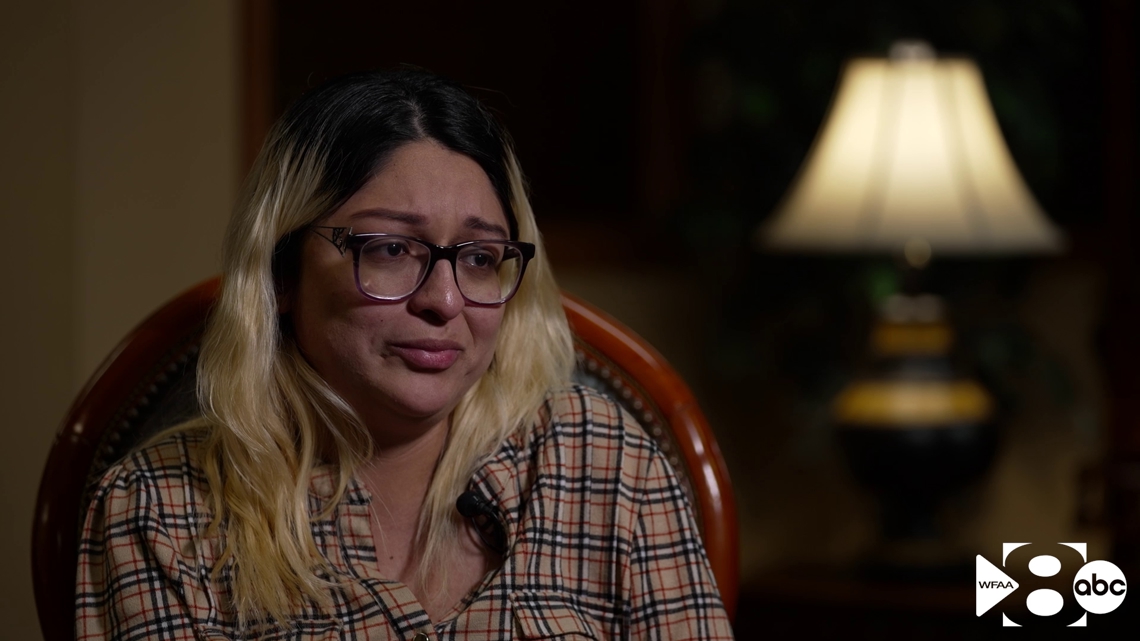
According to the letter, USCIS approved Miguel Angel Garcia’s immigration case more than two months after he was killed.
DALLAS — What should have been a moment of relief instead reopened deep grief for Stephany Gauffeny.
More than two months after her husband was shot and killed in the sniper attack at a Dallas ICE facility, Gauffeny received a letter on Dec. 15 from U.S. Citizenship and Immigration Services approving his immigration case to obtain legal status in the United States.
“It was like a slap in the face,” she said.
The letter, which is dated Dec. 9, is more than two months after her husband, Miguel Angel Garcia, died while in federal custody. According to USCIS’s letter, it would’ve granted Garcia the ability to begin applying for a visa or permanent residence, something that would allow him to remain in the U.S. under legal status.
Gaffeny said they spent about five years on the process of obtaining legal status for Garcia.
He had been transferred to ICE custody following a DUI arrest. Garcia was shot while inside a transport van during the attack. Days later, he died in the hospital while Gauffeny, who was pregnant at the time, was days away from giving birth to their son.
“He never got to meet the baby,” she said.
Gauffeny said the timing of the letter made the pain even more difficult to process.
“Imagine receiving this right after his passing and before Christmas. It was awful. If he had been here, it would’ve been a happy moment,” she said. “I remember just reading it, and I just broke down crying.”
She described the last two months as traumatic, especially navigating grief while caring for a newborn and her other children.
Gauffeny launched a GoFundMe to support her family’s needs following her husband’s death.
Adding to the heartbreak is learning how Garcia spent his final moments. Gauffeny said another detainee told her Garcia shielded him during the attack.
“He said, ‘Get under me. Use me as your protection,’ and he did,” she said. “This young man told me, ‘I owe my life to Miguel.’”
Gauffeny said sharing her husband’s story is now her way of honoring him and demanding accountability.
“I feel like I’m his voice now,” she said. “I just want justice for him and for our children.”
WFAA reached out to U.S. Citizenship and Immigration Services for comment about the letter, but has not heard back.