How were these areas chosen?
Williams said the city prioritizes areas for twice-weekly trash pickup based on several factors, including population density, the concentration of multifamily housing with little storage space for trash during the week and the prevalence of litter and dumping.
He said the city has found that densely populated communities with multifamily properties and limited storage capacity for trash “are most likely to dump in remote locations.”
Have twice-weekly trash pickups worked so far?
City sanitation officials hope collecting trash more frequently will curb illegal dumping of residential waste, and reduce the need for city staffers to clean up dumping.
Williams said that while the “most egregious” cases of illegal dumping come from contractors, tire shops and commercial establishments, illegally dumped residential waste generates the most complaints.
“It could be found on vacant spots, on street corners, in front of Big Belly trash cans and then in parks and recreation centers,” he said. “Normally, what occurs is that once they see one or two bags, it attracts other people to do it and then, unfortunately, you have a dumping problem.”
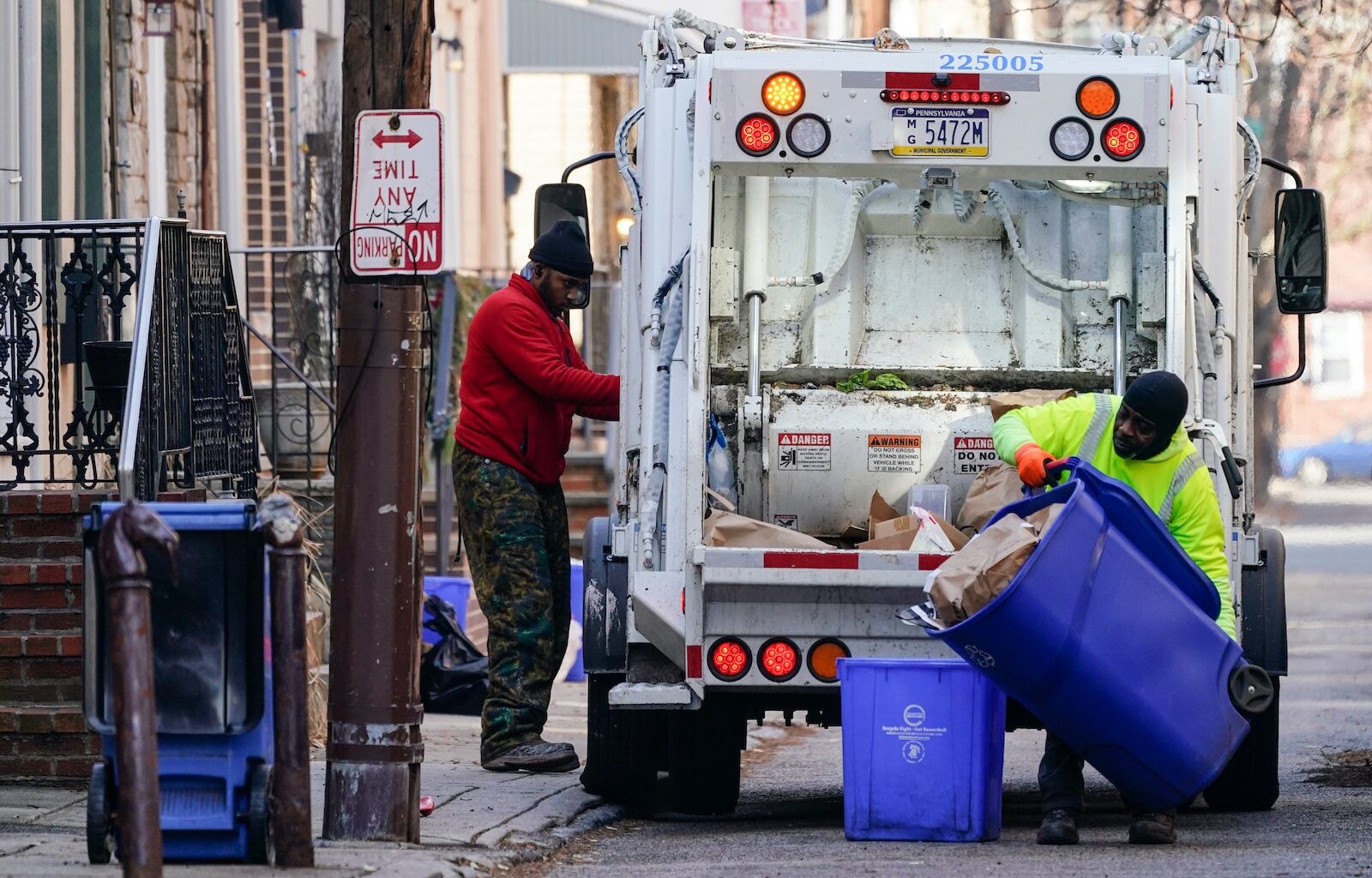
The Sanitation Department rolled out the first phase of its twice-weekly pickup program in areas of South Philly and Center City last year.
Some residents complained that the program actually made litter conditions in their neighborhoods worse. They said two weekly pickups meant more trash spilling out of trash cans and bags when sanitation crews tossed them into trash trucks.
But Williams said that overall, the program has shown promising results. Calls to 311 to report illegal dumping in South Philly have decreased slightly since the program started, he said, and scores on a Community Appearance Index improved. Community Appearance Index data have not been released publicly.
“That is progress that we’re happy to continue here in North Philadelphia to try to mitigate these conditions,” Williams said.