One of the abiding pleasures of the holiday season is carving out time to sink into books or meaty articles — for a few hours, a day, a whole weekend. To that end, for several years I’ve asked my colleagues in the Food section to look back over the year and name the favorite stories they wrote. Here are some of their personal standouts published by The Times in 2025.
Stories covering a year like no other in L.A.
To look back inevitably means revisiting the catastrophes that shaped life in Los Angeles this year, beginning with the Eaton and Palisades fires that broke out the same week in early January.
“’Favorite’ feels like the wrong adjective, but my story on the Eaton fire and how its Black community — one of the largest in L.A. County — was impacted, is the most important one that I wrote this year,” says senior editor Danielle Dorsey. “I spoke to a handful of Black restaurant owners and chefs about their ties to the community, including the Little Red Hen Coffee Shop, a soul food cafe in its third generation of ownership that was founded in 1972. The article demonstrates how integral Altadena is to the larger fabric of Black Los Angeles, and why so many from all over felt compelled to visit the area to offer direct support.”
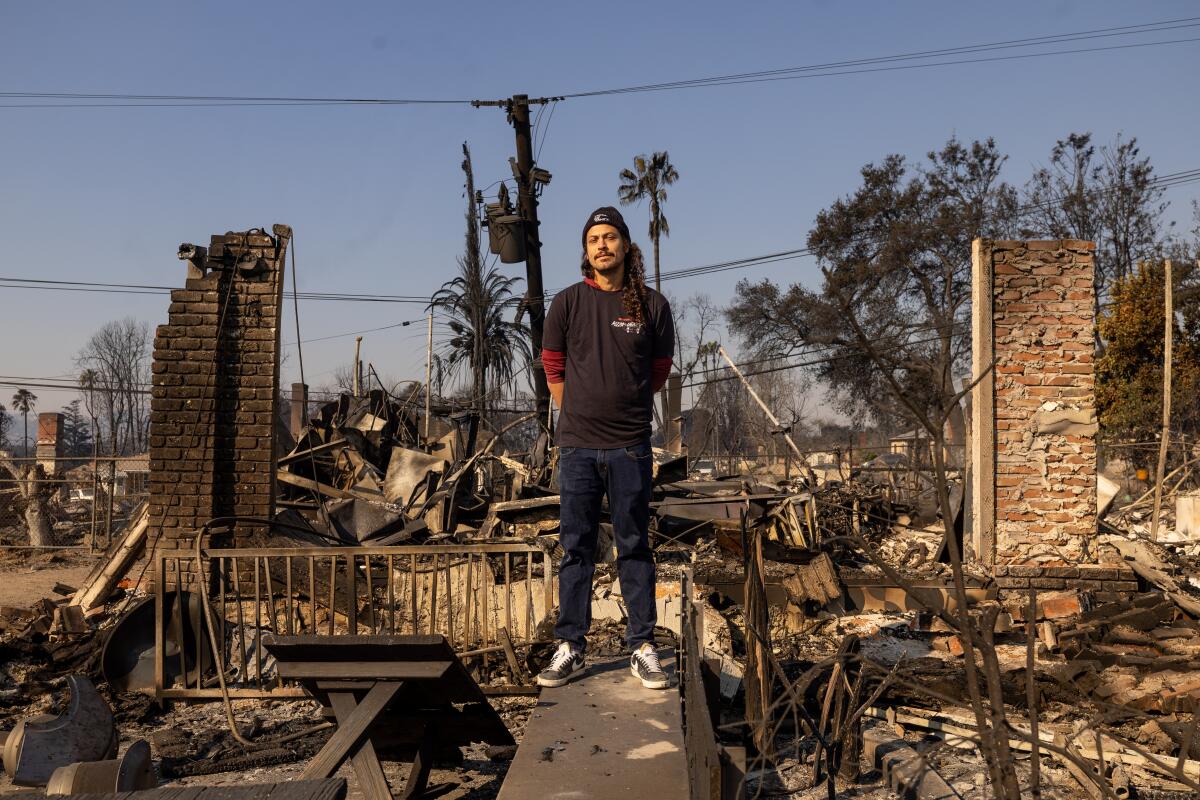
Pizza of Venice owner Sean St. John stands in front of his restaurant that was burned down by the Eaton fire on Saturday, Jan. 11, 2025 in Altadena.
(Jason Armond / Los Angeles Times)
Laurie Ochoa, general manager of Food and a resident of Pasadena, echoed Dorsey’s sentiments. “After seeing the damage done in Altadena, so close to my own home, I felt it was important to give a more personal view of the shops and restaurants that were destroyed,” she says. Her piece opens by detailing a walk through Altadena, passing business after business that would soon endure neighborhood-altering tragedy. “Especially because the fires stopped the momentum of a fresh generation of small-business owners who had joined so many long-time entrepreneurs who built up the area and were bringing new life to the neighborhood.”
In August, Ochoa followed up by detailing an outdoor summer pop-up series hosted by Good Neighbor, the first new cocktail bar to open in Altadena in decades, and West Altadena Wine + Spirits. They were informal events — where restaurants including Casa, For the Win, Triple Beam Pizza and nearby Miya Thai served different nights of the week — that drew crowds, mending spirits and community.
The calamitous start to 2025 sent shock waves through the whole of the Los Angeles restaurant industry, and the unpredictable tariffs on imported goods from around the world added compounded stress for many operators. In April, columnist Jenn Harris interviewed chefs and restaurateurs behind a half-dozen acclaimed restaurants serving cuisines with origins across Asia, who couldn’t afford double- or triple-digit tariffs on coconut cream from Thailand, or specific peppercorns from Cambodia, or spices from Sri Lanka. “Changing ingredients,” she wrote in the story, “threatens the integrity of the entirety of the restaurant and its signature dishes, many stemming from family recipes that have been developed over decades.”
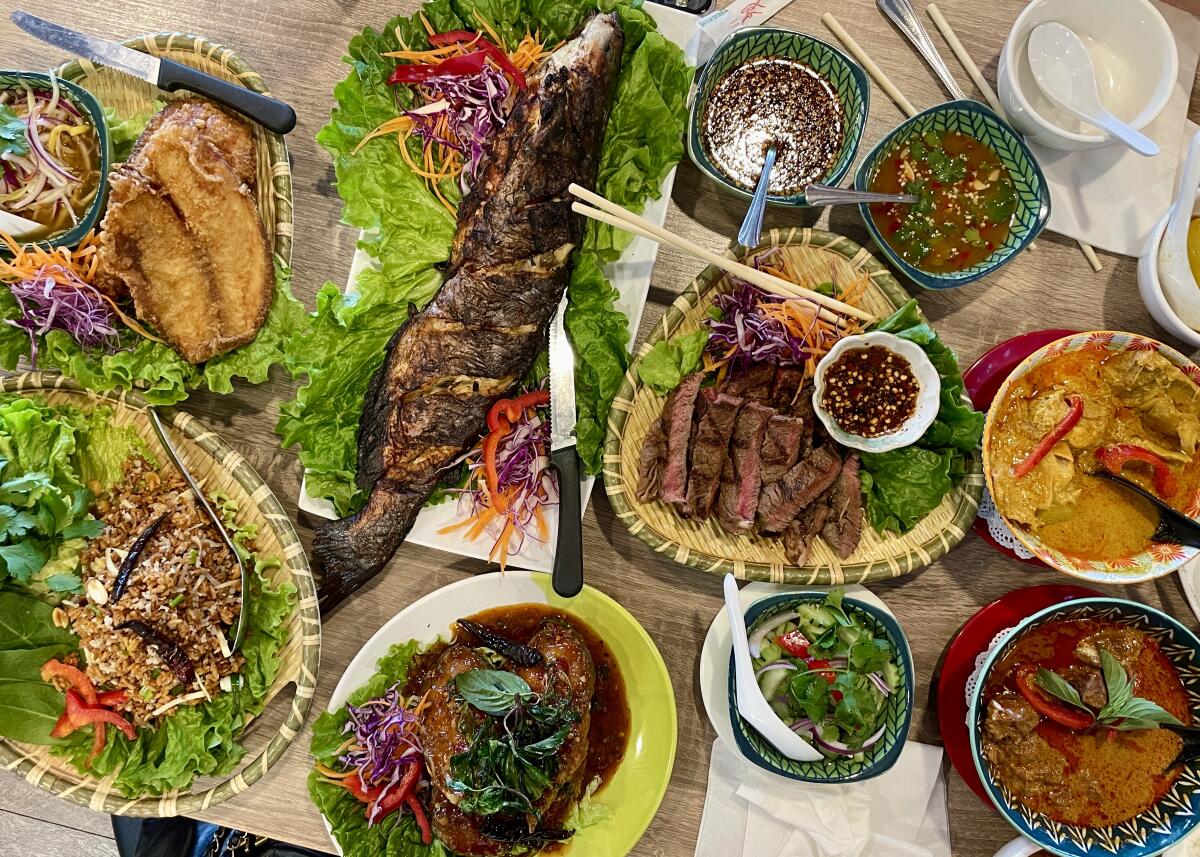
A variety of dishes at Thai Nakorn in Stanton, including whole, grilled fish, curries and crispy rice salad.
(Jenn Harris / Los Angeles Times)
The tariffs were billed as an “America first” initiative. About writing the story, Harris says: “What does the concept of ‘America first’ mean when applied to the restaurant industry? Whose cuisine is ‘American?’ The tariffs, and many of the current administration’s policies threaten the diversity of the culinary landscape in Southern California, and the very heart of what makes L.A. one of the greatest cities in the world.”
On a personal note, Harris also points out the column she wrote about her grandmother, Phyllis Harris, who inspired her granddaughter to become a food writer — and who passed away in July.
Cooking is good for the soul
Deputy Food editor Betty Hallock points readers to her profile of Ari Kolender, the chef and co-owner of Found Oyster and Queen St., who had recently published his first cookbook, “How to Cook the Finest Things in the Sea,” co-written with Noah Galuten. “By the time he opened Found Oyster in L.A. in 2019, he’d shucked countless bivalves; worked at seafood temple Providence in Hollywood; and helped open Leon’s Oyster Shop and run the raw bar at the Ordinary in Charleston, a brasserie celebrating the bounty of the coastal Carolinas,” she wrote.
Hallock’s distillation of Kolender’s philosophy for cooking seafood doubles as an invitation: “Do less — less handling, less fussing, less worrying about how delicate or weird or finicky seafood might or might not be.” The approach comes through in two recipes that accompanied the piece: scallops broiled with espelette butter and mackerel tartare with horseradish and dill.
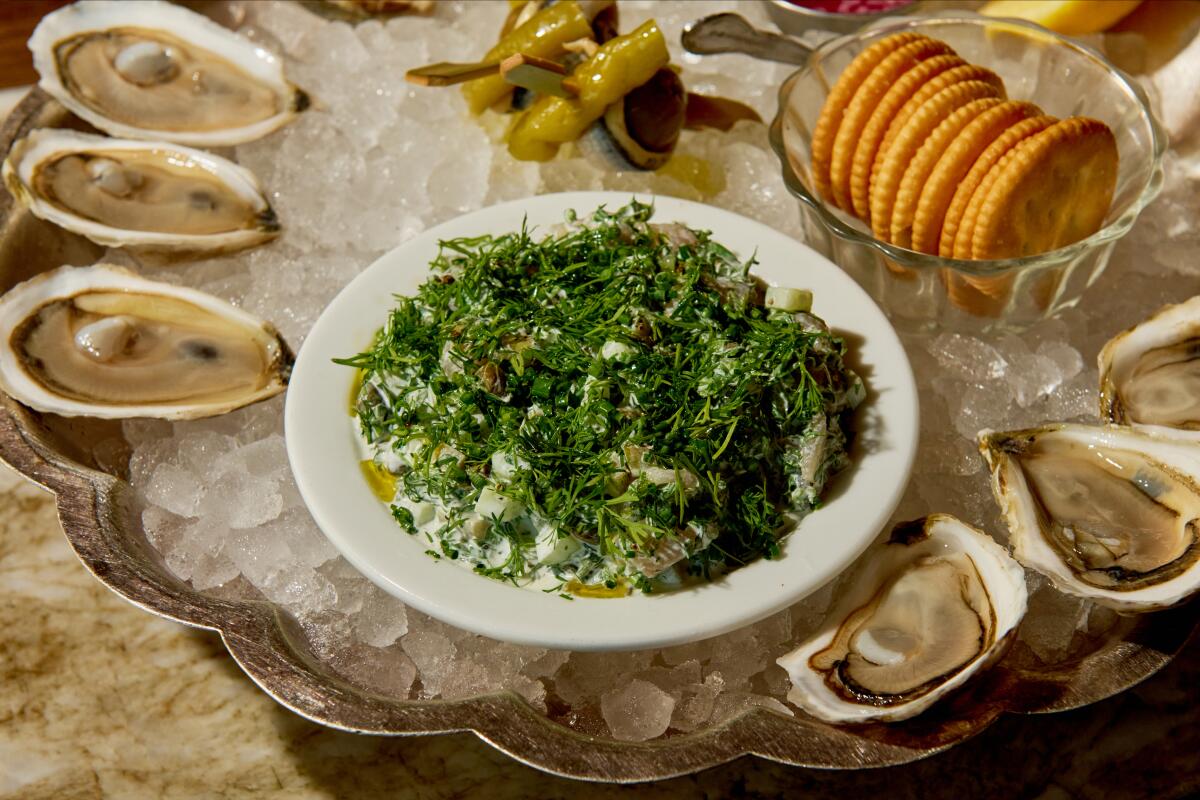
The Mackerel Tartare served with Crowes Pasture oysters, cape cod and Mere Point oysters at Queen Street Raw Bar & Grill.
(Yasara Gunawardena / For The Times)
Sometimes the most ubiquitous dishes merit deeper consideration. Consider the headline to Food editor Daniel Hernandez’s February feature: “It’s time to drop tomato and onion from your guacamole, America.” Hernandez argues for a streamlined approach he learned while living in Mexico City, made using avocado, sea salt and two crucial additions. “Why serrano and not japaleño, the preferred pepper in mainstream guacamole? Jalapeño is a bit too dark in color for this guacamole, and too meaty in texture,” he wrote. “Plus, serrano seeds have a more aggressive heat profile, and the chile’s smallish size makes it ideal to slice into penny-size discs for a final bit of garnish. Why garlic? With its inherent bite, garlic for me is key, clearing the nostrils and complementing the pepper.”
For exact proportions, consult his recipe.
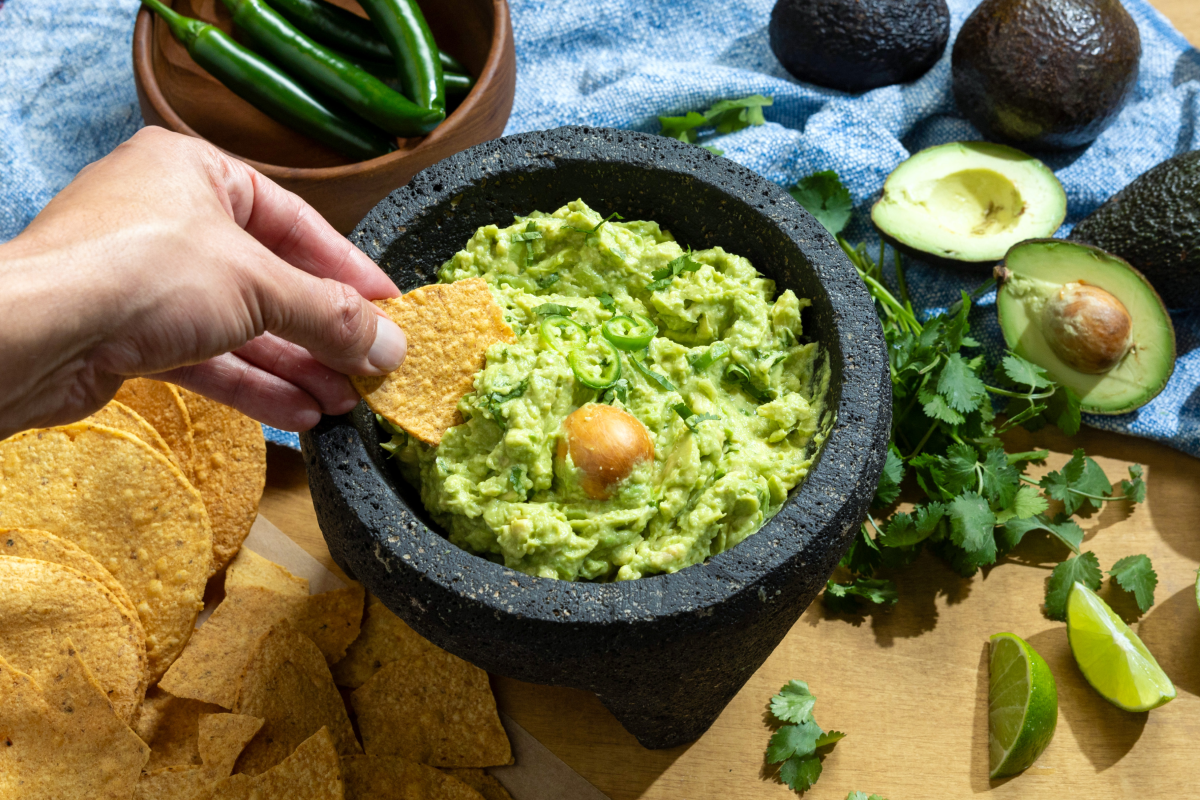
Food editor Daniel Hernandez makes his spicy guacamole at the Los Angeles Times Test Kitchen.
(Myung J. Chun / Los Angeles Times)
Escapism, on the road and in a glass
As part of a food and travel package celebrating motel culture, published by The Times in May, Stephanie Breijo visited the iconic Madonna Inn in San Luis Obispo for her year’s favorite story. She reported on the rigor, and the local culinary influences on the inn’s restaurants, behind its over-the-top kitsch. Of the signature pink Champagne cake, she wrote: “It’s a bit of a misnomer; there’s no pink Champagne in the cake at all. Bakery manager Margie Peau says it was served during the hotel’s ‘Champagne hour’ and the name stuck. Since its inception roughly 50 years ago, the recipe remains nearly identical and closely guarded. Layers of springy, fluffy white cake are surrounded by a butter-yellow Bavarian cream and whipped cream, all frosted and coated in shards and ribbons of custom-dyed pink chocolate and a dusting of confectioner’s sugar, a textural, creamy delight.”
Breijo did score a recipe for the inn’s pink cloud cocktail.
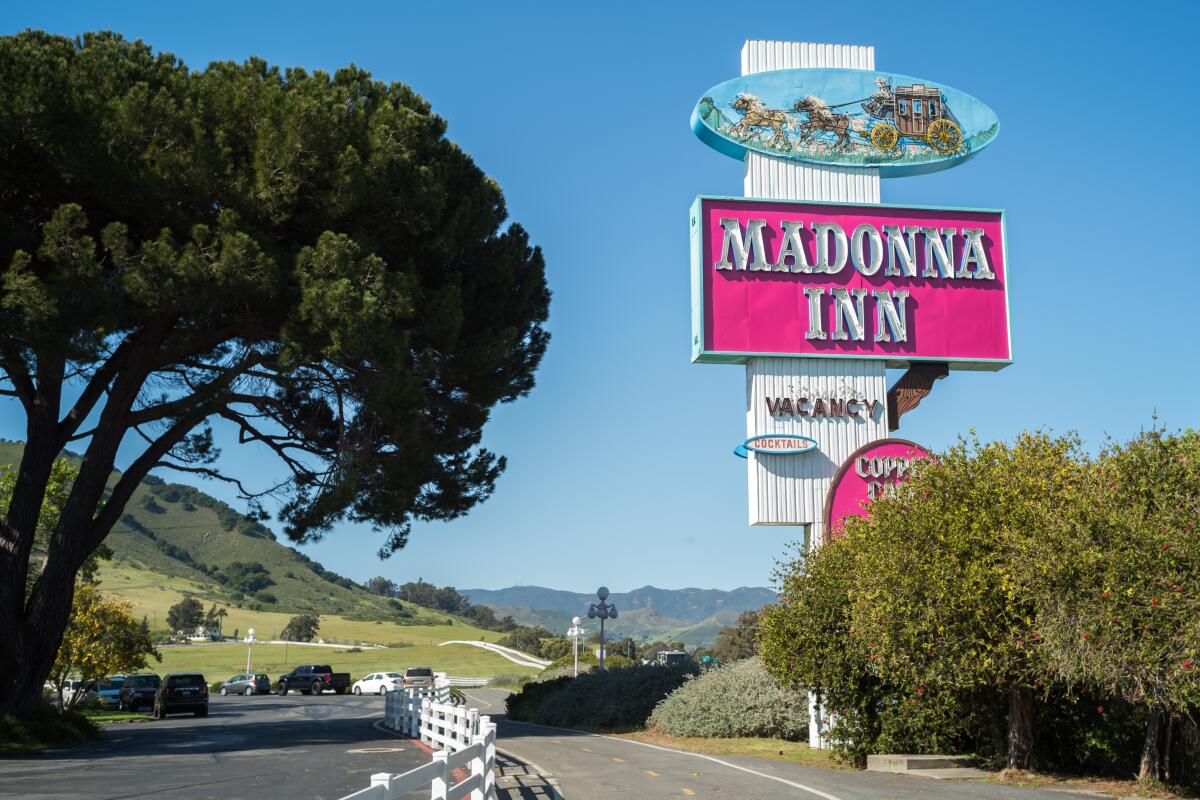
The neon sign for Madonna Inn in San Luis Obispo, Calif.
(Nic Coury / For The Times)
As for me? I remember whizzing by the pink blur of the Madonna Inn at least half a dozen times during the year-plus I spent weeks at a time on the road, eating through as many restaurants as I could around our Golden State. The result was The Times’ first-ever 101 Best Restaurants in California, a project spun off from the annual 101 Best Restaurants in Los Angeles guide — the latest of which, written by me and Jenn Harris, went live online last week.
Researching the CA 101 took me as far north as Fort Bragg (the seascapes alone made me want to keep on driving to the Oregon border) and as south as Bonita, for tacos at TJ Oyster Bar, 12 miles from the U.S.-Mexico border. While this project was a cornerstone of my year — and my career, really — it was in a hotel room during nearly two weeks in Sacramento that I wrote my favorite story of the year: a personal and cultural consideration of the martini that begins at my place of conversion, Musso & Frank Grill.
As for my preferences, which any martini purist winds up cultivating? There is also a recipe.
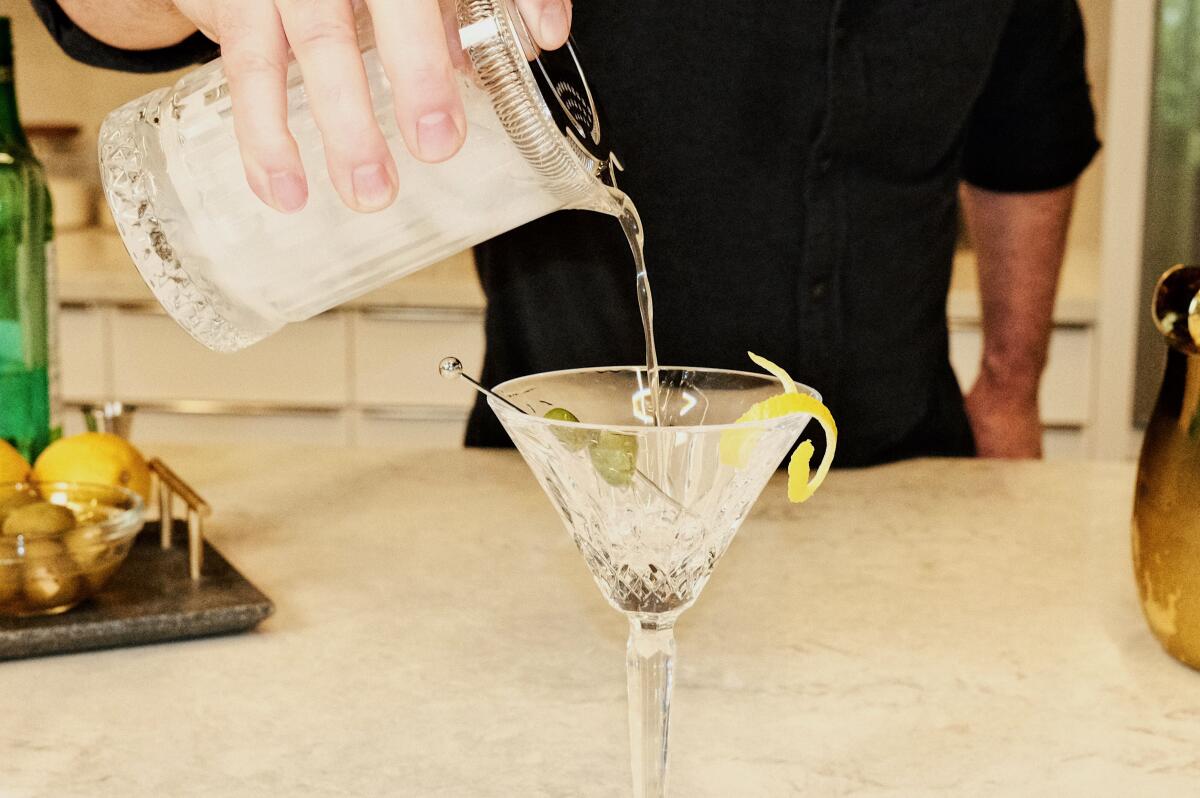
Los Angeles Times Food critic Bill Addison prepares his ultimate martini in the L.A. Times Test Kitchen.
(Stephanie Breijo / Los Angeles Times)
Best Cookbooks of the Year
It’s the 11th hour of end-of-year list extravaganzas — but here is one more worth your time, for last-minute gift-giving or evergreen inspiration. We’re in a golden age of cookbooks filled with cultural delving, personal narratives and single-subject deep-dives. The Food team named 33 of our favorites from the year.
There are four terrific books on baking, including from L.A.’s queen of pie Nicole Rucker. Cuisines span the globe: Korean, Pakistani, Mexican, Tuscan, French (by way of Le Bistrot Paul Bert in Paris), Palestinian and Caribbean Kwéyòl via St. Lucia.
I’ll be carrying a copy of Sean Sherman’s “Turtle Island” (the title comes from a Native creation-story name for what we call North America) for reading during holiday travels. It’s an incredible illumination of Native foodways, packaging history, travelogue and memoir into 13 chapters grouped by regions across the continent. Of the place that became known as California, he writes: “Upward of one-third of Turtle Island’s First Peoples resided there, speaking more than one hundred different languages and trading extensively with one another. … Since time immemorial, they have tailored their lifeways to their respective landscapes and moved across those spaces in harmony with the seasons.”
You’re reading Tasting Notes
Our L.A. Times restaurant experts share insights and off-the-cuff takes on where they’re eating right now.
By continuing, you agree to our Terms of Service and our Privacy Policy.
Also …