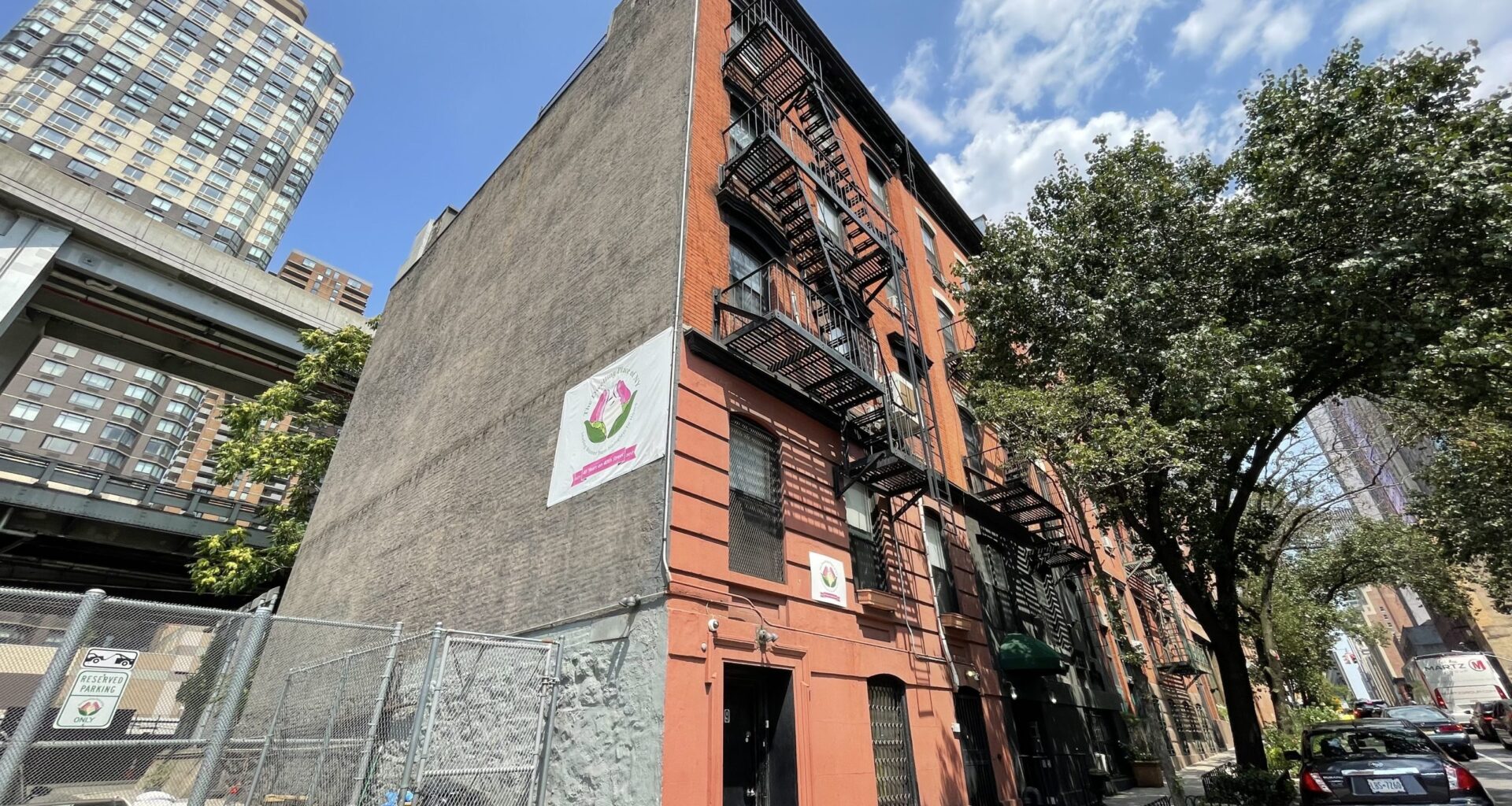
Nearly 50 years ago, four Franciscan Sisters who worked as nurses witnessed the plight of homeless women roaming the Port Authority building on W42nd Street and imagined a place where women in need could find shelter. Today the building is the dwelling place of just one, and that dream is in ruins.
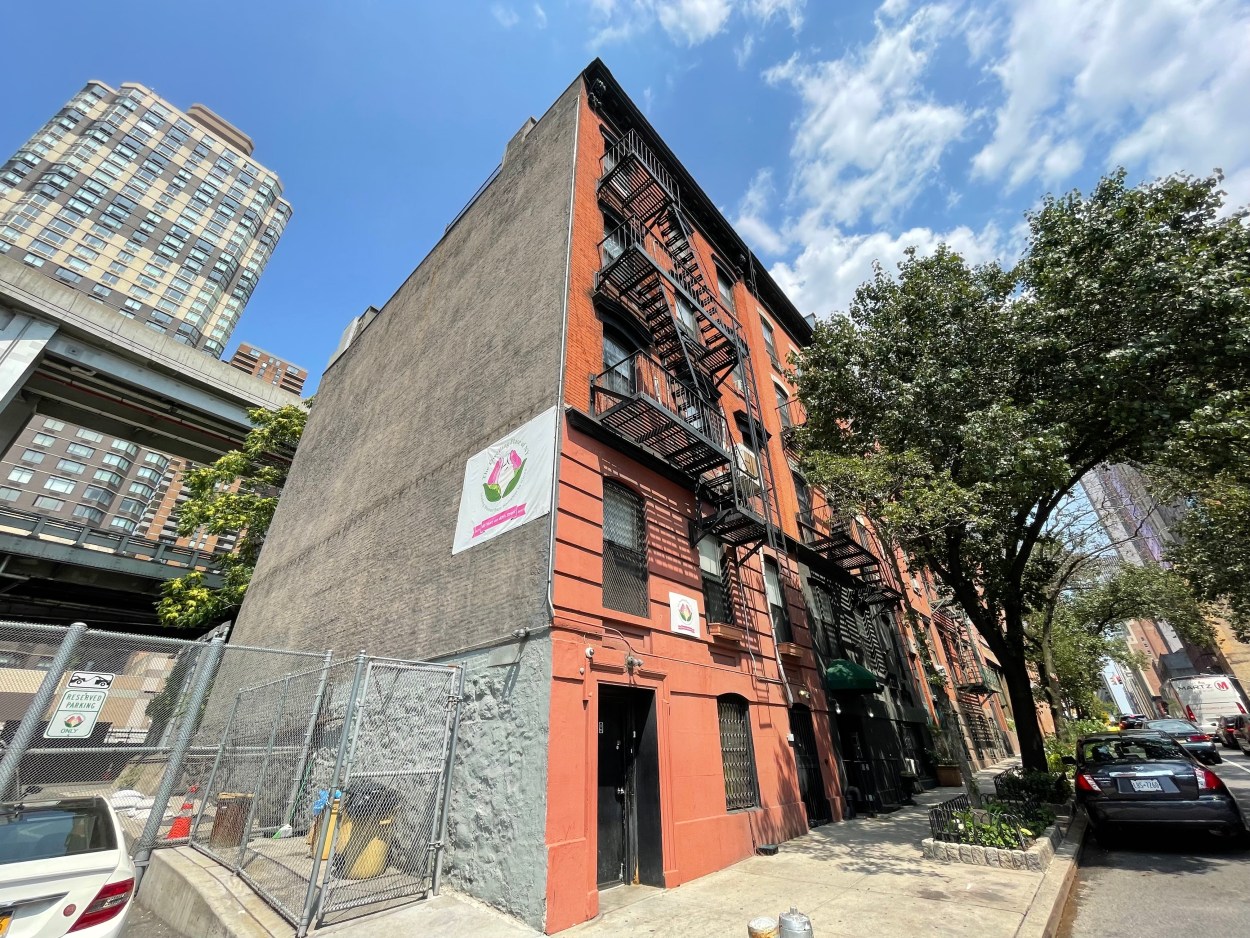 The Dwelling Place is located on W40th Street between 9th and Dyer Avenues. Photo: Catie Savage
The Dwelling Place — a haven for women in Hell’s Kitchen for the past 46 years — closed its doors for good on July 12, 2023. Now it appears that the struggle to revive the W40th Street shelter is over.
The transitional shelter served about 3,000 women in its 46 years. On average, residents stayed for six months. The women were served breakfast and dinner and required to be out of the shelter in-between meals for work or to receive help to regain their stability. It also operated as a soup kitchen and food distribution center on Wednesday evenings.
In June 2023, the Franciscan Sisters of Allegany suddenly shut down the institution they had begun 46 years earlier, seizing more than $500,000 in assets. Lawyer Arthur Schwartz filed suit to try and stop them but after a few months of legal fighting, followed by almost two years spent waiting on a decision, in August the case was quietly closed.
“It started with a bang,” said Schwartz, “and ended in a whimper.”
 Lines for food were a familiar sight during the COVID-19 pandemic at The Dwelling Place. Photo: The Dwelling Place Instagram
How did this Hell’s Kitchen institution, which did so much good for so long, go so wrong?
Deborah Pollock was hired to run The Dwelling Place in 2020. Raised Jewish, Pollock knew little about Catholicism or the Franciscan Sisters of Allegany, but she did share an awareness of the dire needs of women in New York.
“There are very few New York City shelters or residences for people who are either survivors of assault or domestic violence,” she told W42ST. As a survivor of rape, the cause was personal.
The four Sisters who opened the Dwelling Place in 1977 in a former convent at 409 W40th Street (between 9th and Dyer Avenues) ran it as a drop-in shelter. Pollock proposed something bolder: a full-time residence for 14 women where they could meet case managers, take life skills classes and stay as long as they needed. “As long as they were a partner in finding themselves a job and a place to live, nobody had to leave by a certain date,” Pollock said.
 (From left) Executive Director Deborah Pollock, Board Member Joseph Morandi and Council Member Erik Bottcher at The Dwelling Place’s Gala in May 2023. Photo: CM Bottcher Twitter
Four years later, more than 100 women had found a fresh start through the facility. “What they were doing was really important,” says John Mudd, president of the Midtown South Community Council. “It was a great set up, and there is such a need.”
But behind the scenes, there were issues. According to legal documents, over the years Dwelling Place board chair Kim Vaccari had to talk with Pollock more than once about cash withdrawals not properly accounted for. Eventually Vaccari canceled the institution’s debit card.
The Franciscan Sisters had turned oversight of the Dwelling Place to a lay board but by-laws still gave them ultimate authority, including a “nuclear option” to remove the director or the board if they felt it necessary. Alerted to the financial questions, in early 2023 the Sisters asked for a forensic accounting. The board refused.
The Sisters uncovered that in 2001 Pollock had pled guilty in a welfare housing scam which saw fake eviction notices used to steal emergency welfare checks. Pollock insists that she concealed nothing when she applied for the job. “I was always pretty open about my background,” she said. But she had changed the spelling of her last name from Pollack, a move the Sisters interpreted as an attempt to hide her past.
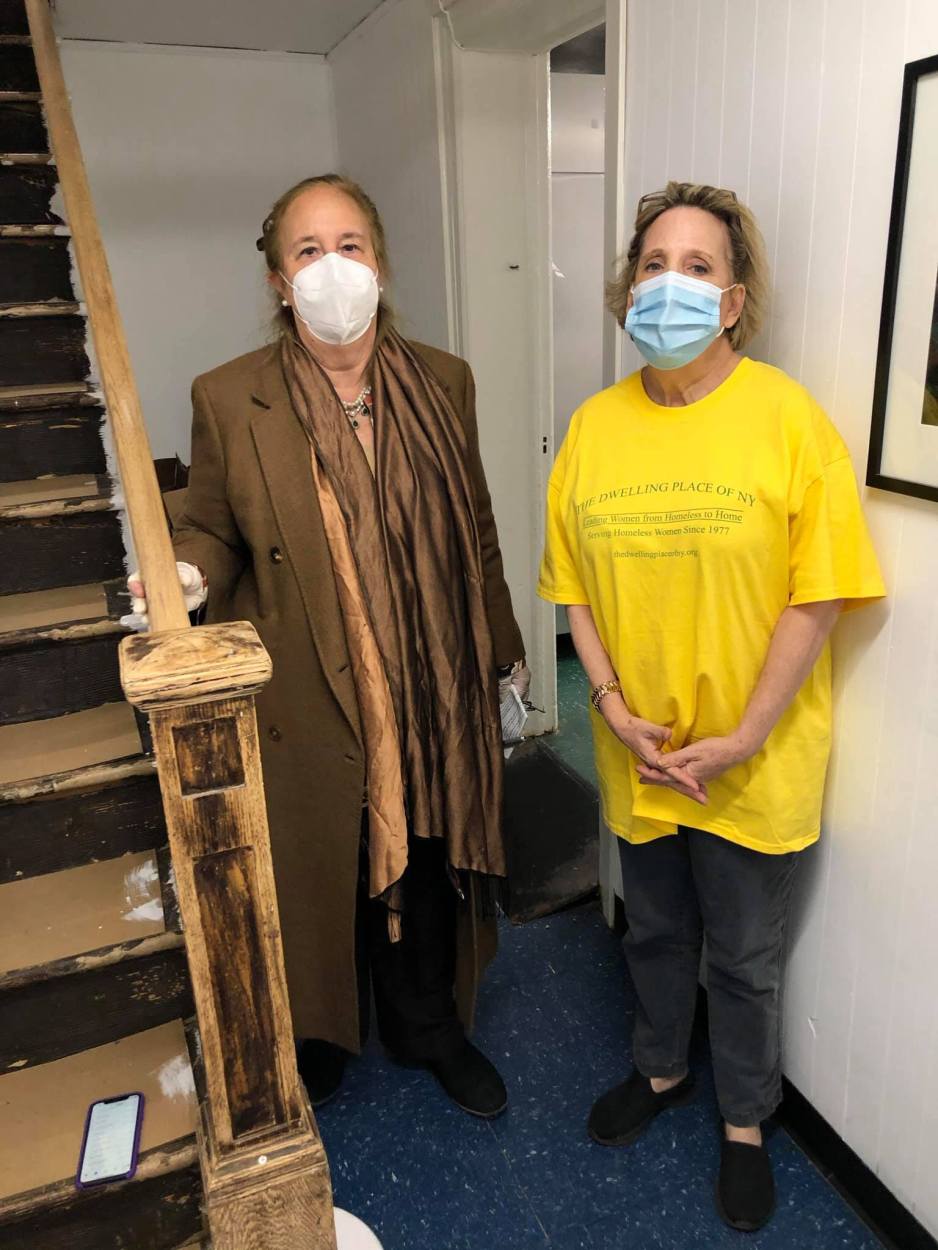 Council Member Gale Brewer and Exec Director Deborah at The Dwelling Place. Photo: CM Brewer Facebook
In spring 2023, the Franciscans demanded that Pollock be terminated. When the board voted to keep her, the sisters fired Pollock, dissolved the board, seized the organization’s funds and announced the immediate closure of the Dwelling Place, a move that stunned the local community. Seeing that the Sisters seemed to have already spent almost half of the institution’s $500,000+ in assets on attorneys, Schwartz filed suit. “To my reading of the law, the money should have gone to a similar shelter or service for battered women,” he said.
Mudd had grown suspicious of Pollock’s leadership and reached out to the Sisters, offering to help them transition to new management. “I’d talked to groups I know,” he said. “I could have brought in social workers, case managers.”
State Supreme Court Judge James d’Auguste likewise pushed the Sisters to find a way to continue the institution’s service to homeless women. “Supportive housing is in short supply,” he told them. But the Franciscans’ lawyers refused, claiming Mudd, Schwartz, even the archdiocese of New York were in cahoots with Pollock. “It looked to me like they were looking to continue the case to make money,” Mudd said.
Meanwhile Pollock, who lived at the Dwelling Place, refused to move out. And while the Sisters publicly said that the residents could stay, behind the scenes they pushed to get every resident to sign a form promising to look for other housing.
They also repeatedly sent men to the building who refused to identify themselves and went around seizing files, including HIPAA-protected information. One such visit in July 2023 was so traumatizing for women — there because they had experienced violence at the hands of men — seven different residents called EMS over the course of the day, including Pollock, who thought she was having a heart attack.
The next day one of the same men used a police officer to force his way back into the building. “They went room to room; women were half-dressed,” Schwartz told the judge. “They handed them a piece of paper that said, ‘This place is closed.’”
Judge d’Auguste had frozen the organization’s assets and asked the Attorney General’s office whether it wanted to get involved in the question of the future use of those funds. For 20 months both sides waited for an answer.
In the meantime, with the help of local charities and the archdiocese, which paid utility bills, did repairs and provided things like a Thanksgiving meal, the Dwelling Place continued to function to some extent. “I made a promise to them that nobody’s putting you out on the street,” said Pollock. With the help of Catholic Charities and others, the remaining women found permanent housing. Late this summer the last resident moved out, just as the Attorney General decided not to act on the assets. “No action was deemed warranted,” the office wrote in a statement to W42ST.
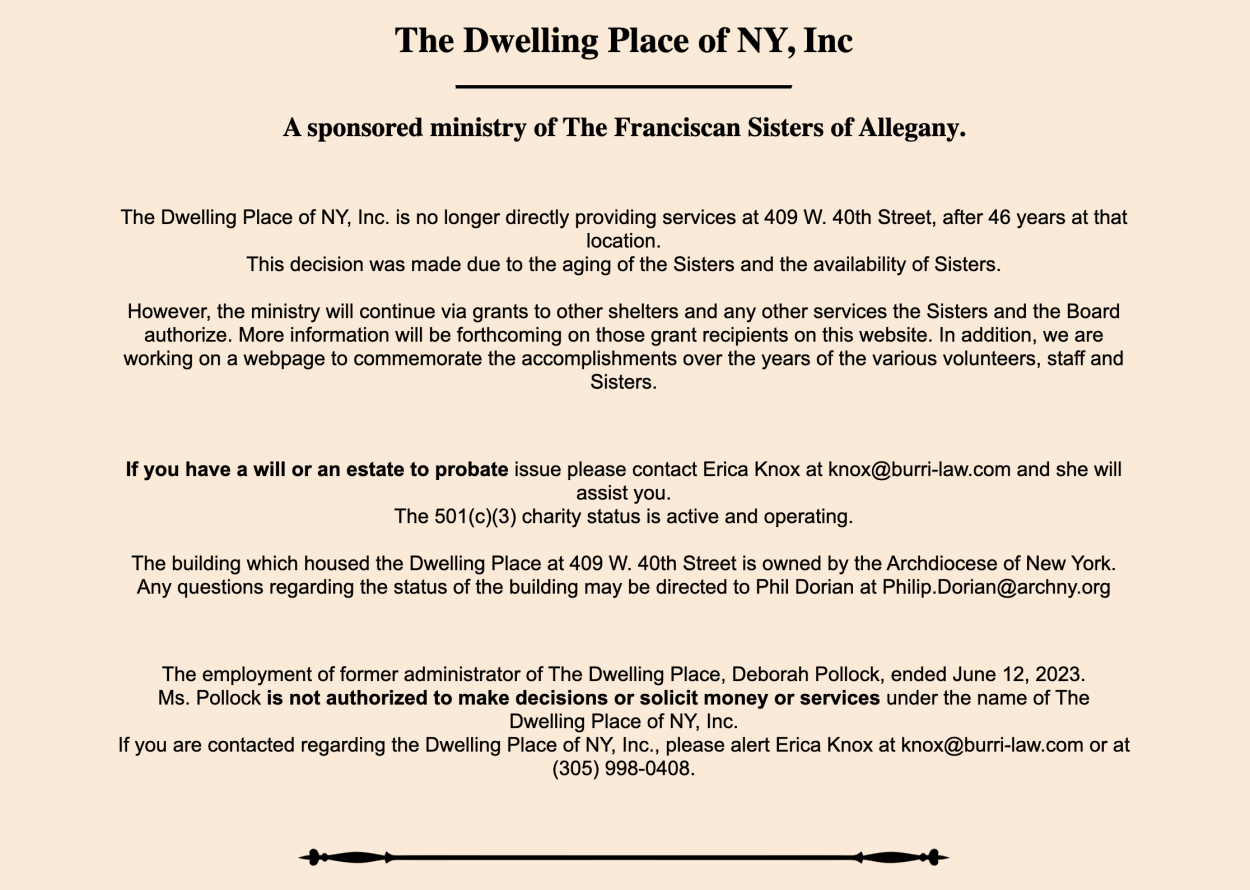
From the beginning, their lawyers insisted that the institution’s assets were needed to cover the money Pollock had pocketed. Schwartz continues to dispute that assertion. “I looked at all the books. There wasn’t any malfeasance. Somebody discovered that Deborah had some sort of sordid past, and they went after her.” Nevertheless in October the sisters filed suit against Pollock for fraud, theft and breach of fiduciary responsibility.
It’s unclear what will happen to the property. “The decision by the Franciscan Sisters of Allegany to close the Dwelling Place was a great loss for our community,” wrote Councilmember Erik Bottcher, who had joined Schwartz’ suit against the Sisters. “I am eager to collaborate with the Archdiocese to ensure that this site remains a place that provides help and hope for those who need it most.”
Archdiocesan Director of Communications Joseph Zwilling told us, “The future use of the building is still under discussion. It is not currently on the market.”
In mid-November Pollock was set to finally move out. But then she didn’t. “We postponed until next week,” she texted W42ST weeks later. Others tell similar stories of Pollock saying she was about to move, then not leaving. Said Zwilling, “We are in conversation with Ms Pollock about her departure.”
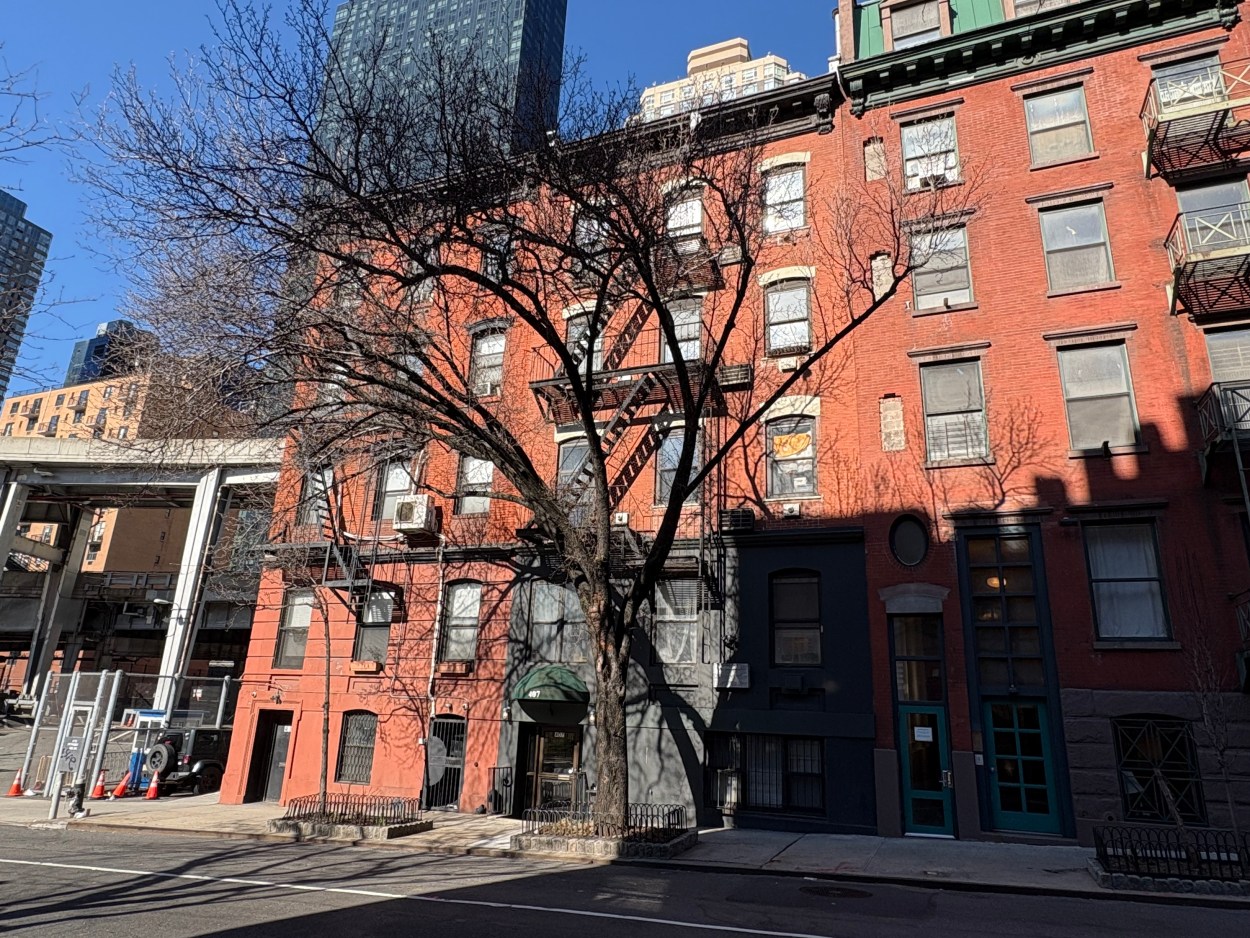 The Archdiocese says the future use of the building is still under discussion. Photo: Catie Savage