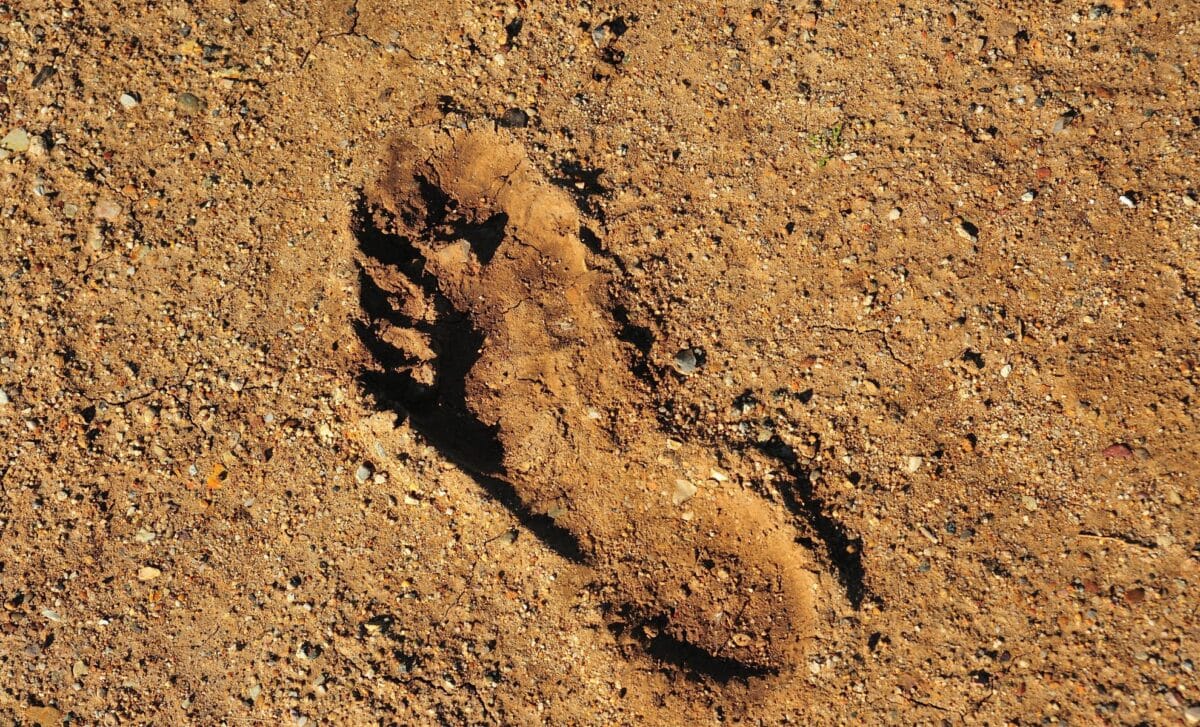
A fossilized human footprint found in southern Chile has been dated to 15,600 years ago, making it the oldest known footprint in the Americas. The discovery suggests that humans may have reached South America more than 1,000 years earlier than previously believed.
Unearthed in the city of Osorno, the footprint was first discovered in 2010 but only recently confirmed after nearly a decade of analysis. If validated, the find could reshape our understanding of early human migration across the continent.
Dating a Footprint From the Distant Past
The fossil was studied by researchers from Universidad Austral de Chile and led by Karen Moreno, whose findings were published in PLOS One. Prior to this discovery, most scientific consensus held that human presence in South America began after the last Ice Age, with the Monte Verde site in Chile—dated to about 14,600 years ago—long considered the continent’s earliest sign of habitation.
According to Moreno, the newly confirmed footprint predates the Monte Verde site and stands as the first official evidence of human activity in South America older than 12,000 years. While sites of a similar age—such as one in Texas with evidence dating back 15,500 years—have been reported in North America, the Chilean discovery remains the earliest direct physical proof of human presence on the continent. As she explained:
“Little by little in South America we’re starting to find sites with evidence of human presence, but this is the oldest in the Americas.”
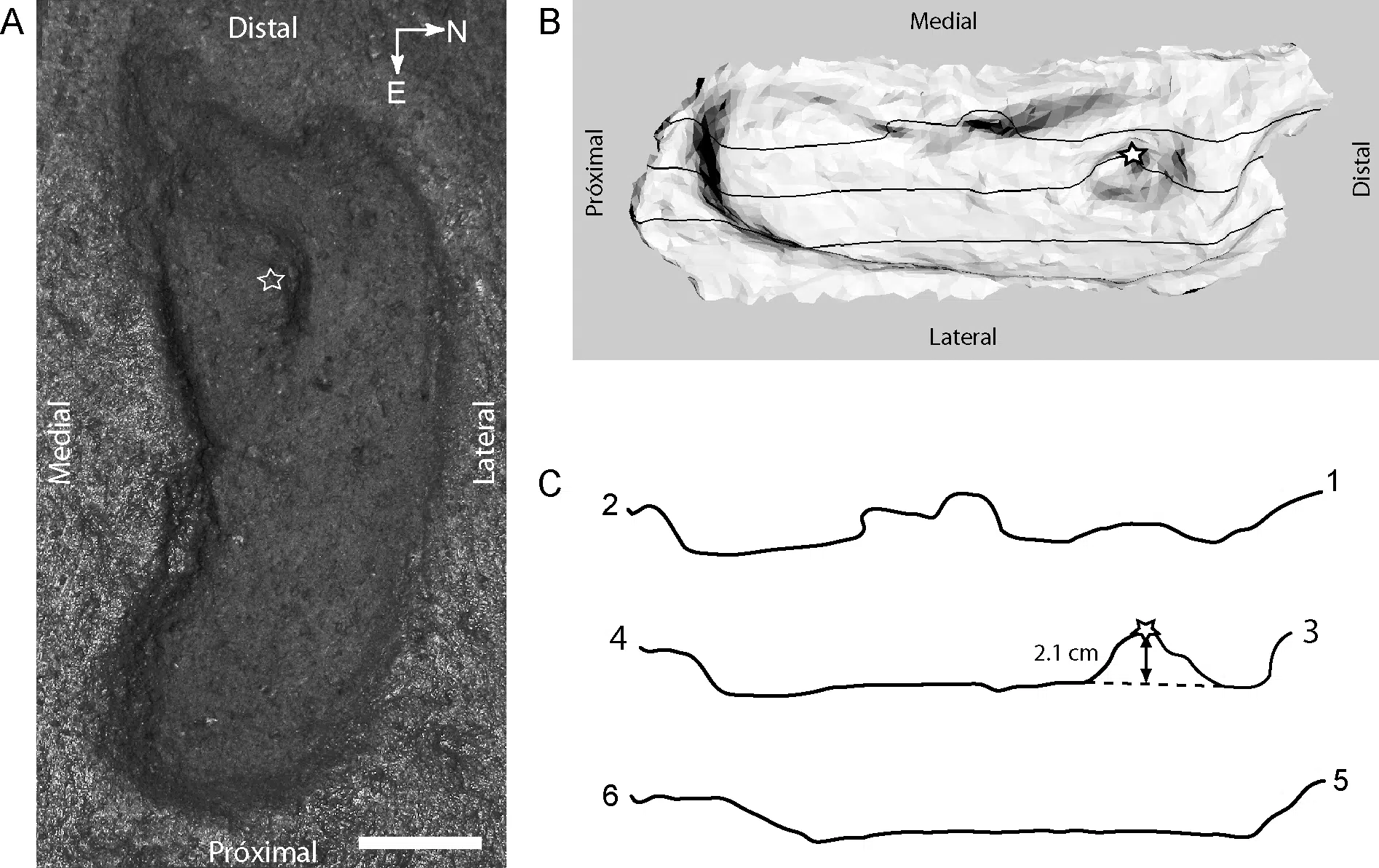 Photo of the footprint feature at Pilauco; sediment lump in the trackbed (star). Credit: PLOS ONE
A Fossil-Rich Layer That Locks In the Footprint’s Age
Since the print itself couldn’t be directly dated, researchers analyzed the sediment layer in which it was found. That layer contained seeds, wood fragments, and even part of a mastodon skull, which helped scientists determine the fossil’s age. As mentioned by Reuters, this multi-layered approach placed the footprint firmly at 15,600 years old.
The site was also littered with the bones of mastodons, horses, and other extinct animals. IFL Science reported that flakes of stone were found nearby as well, suggesting the area may have been a hunting ground. These contextual clues further supported the hypothesis that the footprint belonged to a human actively engaged with the environment, rather than being an accidental or natural formation.
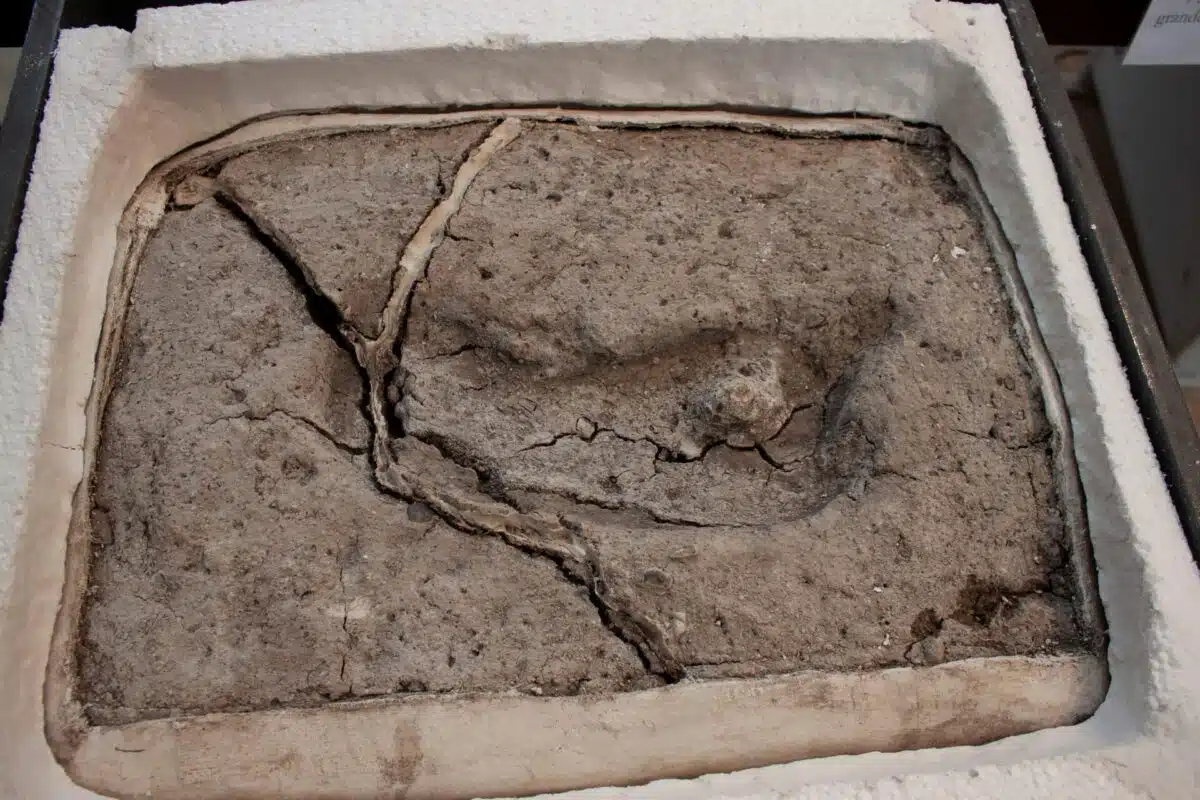 Ancient footprint shown with drying cracks after excavation in Osorno. Credit: Universidad Austral de Chile, Laboratorio de Sitio Pilauco/Karen Moreno, Juan Enrique Bostelma
Proving It Was Human, Not Animal
Determining whether the impression was truly human took years of detailed testing. Moreno and her team conducted nine experiments to evaluate the kind of pressure required to form the footprint in similar sediments. The results pointed to a barefoot adult male weighing around 155 pounds.
The footprint matched no known animal pattern. Its shape, proportions, and pressure distribution closely resembled that of a modern human, eliminating the likelihood of it being created by an animal or by natural erosion. Based on the analysis, the team classified it as Hominipes modernus, a scientific designation for prints attributed to humans or closely related species.