Sincerity is hard. But unrelenting irony threatens to sever the tethers of shared compassion that define our humanity. It’s worth the labor it takes to convey – and worth being perceived as cringe.


Gen Z is the most politically divided generation. Here’s what we know
Gen Z is the most politically divided generation. Here’s what we know now about how that is impacting relationships with their peers.
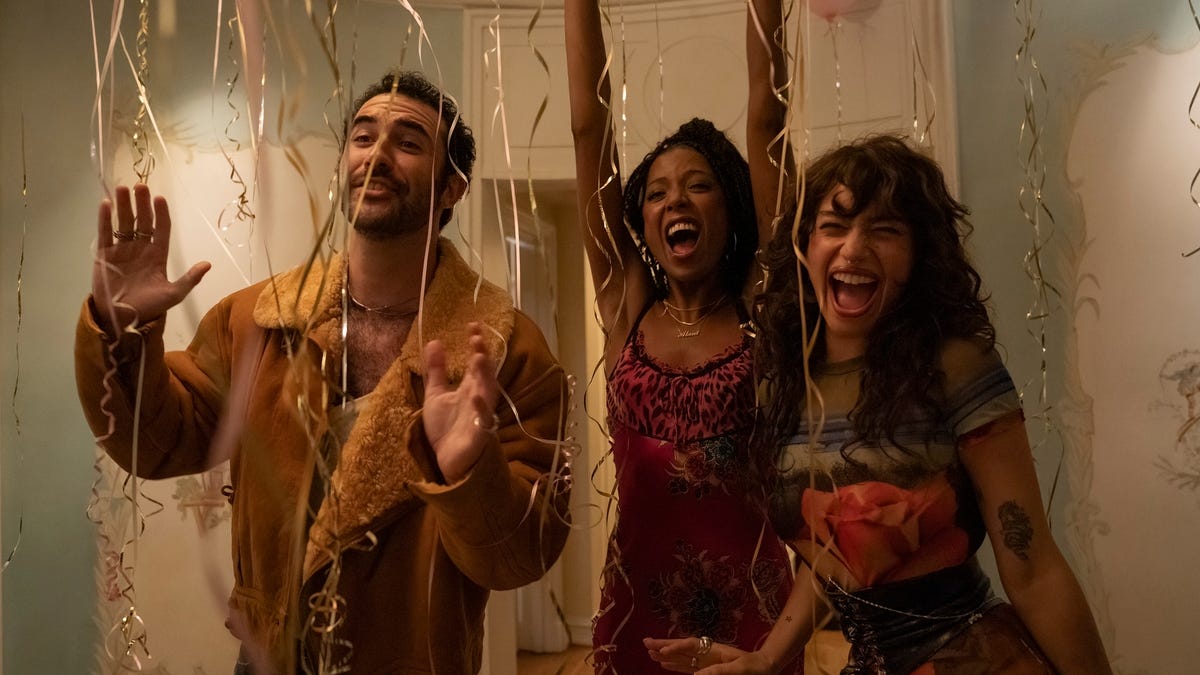
In one scene of the HBO comedy series “I Love LA,” Charlie (Jordan Firstman), Alani (True Whitaker) and Tallulah (Odessa A’zion) attend the funeral of Catholic social media sensation, Landry, whom Charlie styled. What should be a serious moment about the death of a young, rising star is instead filled with humorous quips reflecting Charlie’s apathy toward the situation. He gawks and asks the doorman to “check the list” when told he’d have to go to the overflow section, has a one-sided stand-off with his long-term ex-situationship and calls the funeral priest “boring.”
To the uninitiated, Charlie’s antics can be written off as mean and insensitive, but in watching the rest of the show, I realized his behavior exemplifies a certain phenomenon impacting modern youth.
The characters of “I Love LA” have a uniquely zillennial way of speaking. Everything is ironic, sardonic and weirdly hyperbolic. Everything they say is shellacked with a veneer of sarcasm, as if they exist in a long-running, inside joke we’re not privy to.
Their particular way of speech made me feel oddly represented. The more I thought about it, the more I realized: This is exactly how my friends and I talk. We, too, indulge in absurd, inside jokes that would leave outsiders confused and ironically adopt personas of people we dislike for a laugh.
Though we’re not as harsh and insufferable (complimentary) as the “I Love LA” gang – at least, I hope not – there’s something to be learned in my generation’s inclination toward irony and our fear of being caught trying.
Sincerity is hard, but worth it
Generation Z’s propensity for being unserious is a product of our digital rearing. Internet culture flattens and decontextualizes the world around us, causing us to create new meanings for words and events divorced from their original context. Internet humor reflects a user’s screentime and how many niche references they can identify. I laughed when I recognized the layered origin of Charlie’s “whats going on with mycareer” shirt.
Maybe I need to put the phone down.
The way this meta-irony operates in the jest parallels its effect in more serious situations. As the world around us crumbles, irony has become a coping mechanism for our shared nihilism and ennui. There seems to be nothing worth trying for, so why try at all?
As chronically online individuals, we are inundated with the horrific details of modern life. It’s much easier to exist in an infinite jest than to confront these realities. But, when we refuse to engage with anything critically, we make ourselves susceptible to harmful ideologies – especially online.
Extremist groups often wrap those ideologies in irony to evade warranted criticism and poison us into adopting their dogma through our cynicism. From hate memes like “Pepe the Frog” to incel, Reddit vernacular that’s been adopted by the masses, the crutch of sarcasm makes it easy for these ideas to Trojan Horse their way into our dialogue, on and off the internet.
Sincerity is hard. But unrelenting irony threatens to sever the tethers of shared compassion that define our humanity. It’s worth the labor it takes to convey – and worth being perceived as cringe or oversentimental.
Opinion alerts: Get columns from your favorite columnists + expert analysis on top issues, delivered straight to your device through the USA TODAY app. Don’t have the app? Download it for free from your app store.
Some of the best moments in “I Love LA” come when characters are being their authentic selves. When Alani, the daughter of a famous director, stumbles into a meeting in her father’s office, she holds no shame or pretense in sharing the questionable details of her early dating life (she “dated” a 28-year-old when she was in eighth grade). Her confidence, or lack of situational awareness, is funny, real and refreshing.
Another oddly refreshing moment comes when Charlie sheds his hard exterior and breaks down after trying to send a heartfelt text to the late Landry while watching the sex tape of him and his past situationship. Despite the moment’s absurdity, it’s an emotional release, a reminder that no matter how much we calcify ourselves in a casing of sarcasm, we can’t outrun how we truly feel.
Perhaps there’s something earned in earnestness.
Kofi Mframa is a columnist and digital producer for USA TODAY and the USA TODAY Network.