
Sunday’s La Liga match between Barcelona and Villarreal was going to be played in Miami.
It would have been the first European top-flight league fixture to take place in the United States, but protests in Spain against the idea contributed to the advanced plans suddenly collapsing in October, just two months from kick-off.
In the end, the fixture was hosted at Villarreal’s Estadio de la Ceramica as originally scheduled, and Barca ran out 2-0 winners after the home side were reduced to 10 players in the first half.
Meanwhile, an Italian league match between Milan and Como in Perth, Western Australia, is set to go ahead on February 8, according to the president of Serie A.
So, what’s the latest on plans to hold a Spanish league game in the U.S.? Could it still happen?
Do organisers in the U.S. still want a La Liga match?
In October, Relevent Sports was first out of the blocks in releasing a statement to confirm the game in Miami would not go ahead. In a statement, the promoter said there was “insufficient time to properly execute an event of this scale”, while also warning “it would also be irresponsible to begin selling tickets without a confirmed match in place”.
Relevent, the events promoter and media rights company co-founded and owned by billionaire Miami Dolphins owner Stephen M. Ross, has a joint venture with La Liga to grow the league’s business in North America, and the game was due to be played at the Dolphins’ Hard Rock Stadium in Miami Gardens, Florida.
While the event did not materialise, this has been the subject of major investment and several lawsuits for Relevent, and if La Liga sincerely wants to do this game in the U.S., then Relevent will almost certainly be the partner. All those who support the concept continue to believe that there is an interest and scarcity value to be found in one-off, top-level games, such as a competitive match involving Barcelona in Miami, in much the same way as the NFL has encountered great demand in its games outside of its host country.
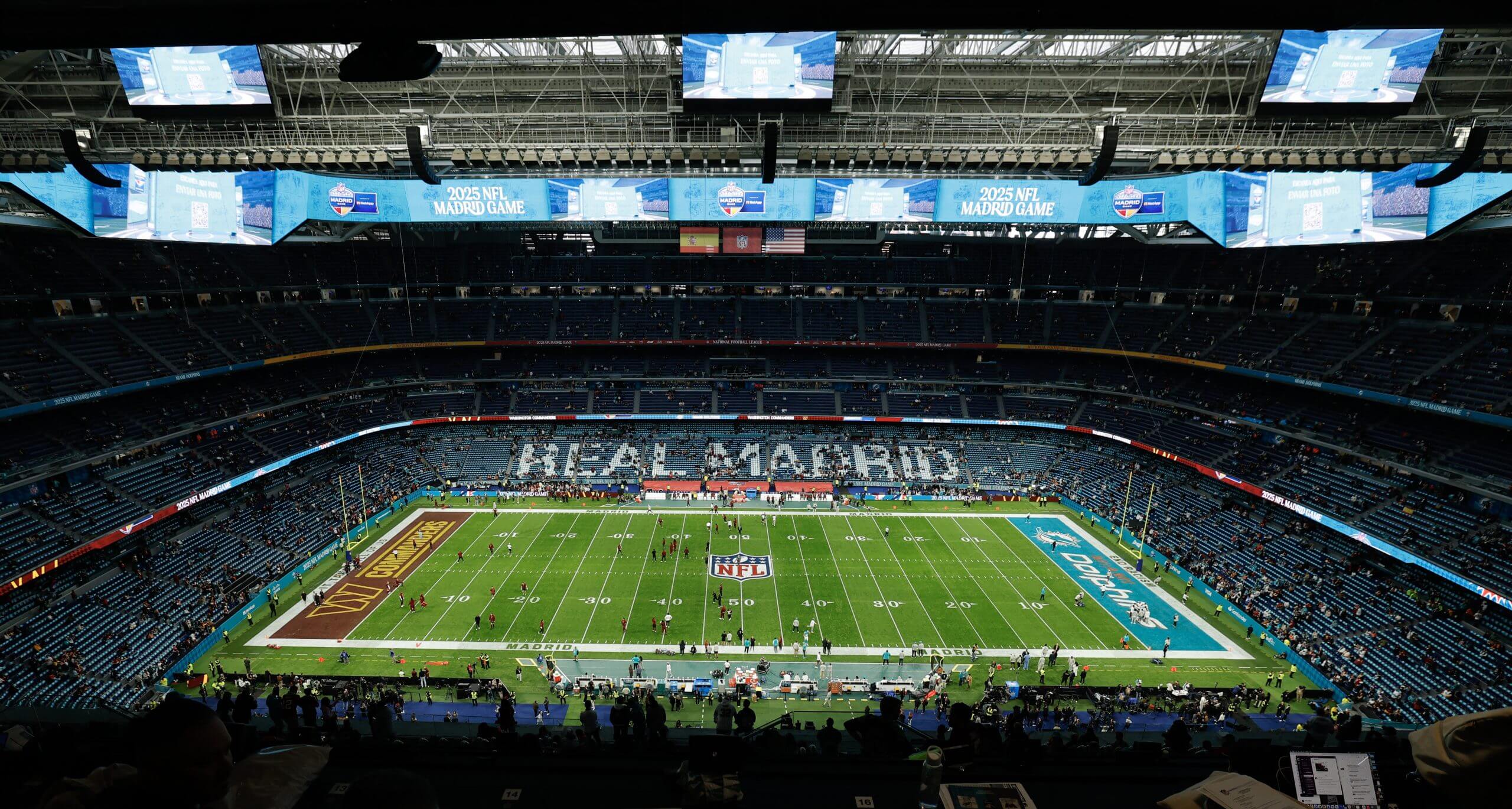
The Miami Dolphins and Washington Commanders played at Madrid’s Bernabeu on November 16 (Oscar del Pozo/AFP via Getty Images)
Following the settlements between Relevent and FIFA, as well as Relevent and U.S. Soccer, the challenge is no longer about getting these games into the United States, but rather getting them out of Spain. This was the source of pain earlier this year, when a dispute with the players’ union, as well as Real Madrid’s opposition (both on the grounds of competitive integrity but also their forever war with Tebas), created a groundswell of pressure that eventually caused the game to be cancelled.
Ultimately, the core belief of those involved remains the same: that there are positives to be found in the expansion and growth of soccer and, specifically, domestic leagues in outside markets, which present the opportunity for growth, as a way to build a global fanbase, increase access, and enhance opportunities for broadcast and commercial partners.
Adam Crafton
Is La Liga still on board?
La Liga views the failure to hold the game in Miami as a temporary setback rather than a fatal blow to their long-term objective of playing a domestic league game overseas.
Tebas never misses an opportunity to talk about an idea with which he is very personally connected. When Real Madrid’s Santiago Bernabeu stadium hosted an NFL game on November 16, he went on social media to point to what he saw as the contradiction behind many hailing this as a “historic day for Spanish sport”, while Madrid had “led the crusade” with the “flag of tradition” when lobbying against the Miami game.
Madrid president Florentino Perez hit back when speaking at Madrid’s annual members assembly the following weekend.
“It’s not normal for the La Liga president to promote a match outside Spain,” Perez said. “Yet we have to listen to Mr Tebas comparing this to the NFL game. The comparison is absurd because it has the support of all the clubs in the competition. And that’s not the case with the Miami match. It’s just another attempt by the president of La Liga to impose his will.”
Tebas replied with another message on X, saying that the Miami game had been approved by all the relevant La Liga committees, without Madrid ever raising any complaints.
When speaking on a podcast hosted by Spanish financial analyst Marc Vidal last week, Tebas gave more details on why he believes the idea is so important.
“The NFL and the NBA can invade Europe, with 10 games or more; they all come over here, just like Halloween and McDonald’s. And (when) we want to play one game a year, out of 380 games, everyone talks about tradition.
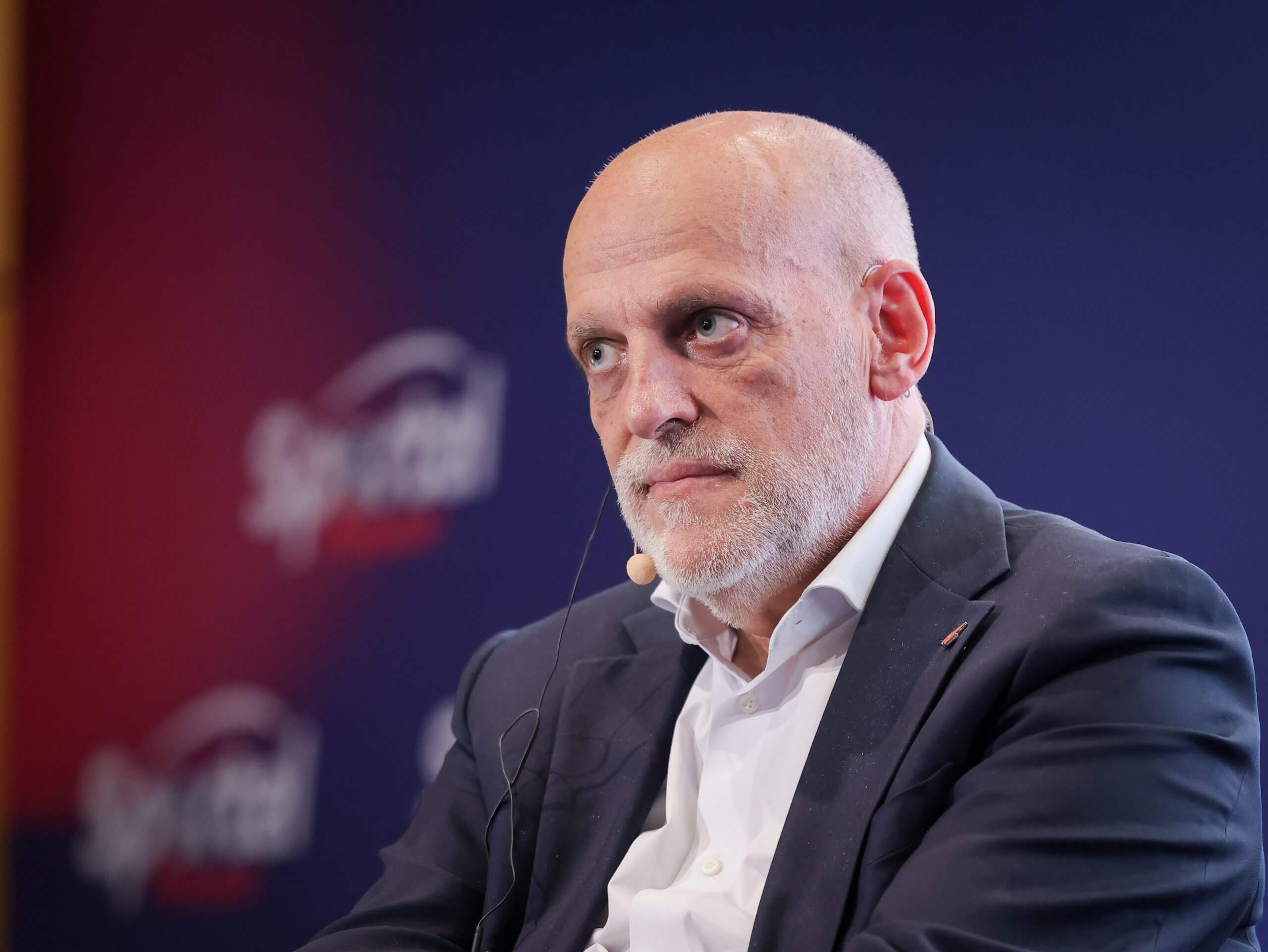
La Liga president Javier Tebas (Arnold Jerocki/Getty Images)
“The U.S. is our second biggest audiovisual market, after Spain. The game is about promoting the competition. Disney and ESPN were delighted, and they pay us a lot of money, €200million ($234m; £174m) a year. We have millions of fans in the USA, and they also deserve respect. Are fans around the world not proper fans of their teams? Do only those who go to the stadium every week count?”
Also last week, speaking at a World Football Summit event in Riyadh, Saudi Arabia, Tebas said: “We keep getting closer, and we hope the next time it will work out.
“There’s a debate in FIFA right now about the regulations for domestic matches to be played abroad. And we’ll see how that evolves, not just for the USA, we’d (also) like to play a game in Saudi Arabia.”
Dermot Corrigan
What’s the latest from FIFA?
Last year, FIFA was dropped by Relevent from an antitrust lawsuit, which challenged FIFA’s prior policy blocking domestic league games from taking place outside of their home country. At that time, FIFA said it would review its policy about domestic games abroad, with the FIFA Council approving the formation of a working group on the matter. Relevent, in a statement, said FIFA would consider “changes to its existing rules about whether games can be played outside of a league’s home territory”.
FIFA then had the unenviable task of finding a way forward that appeases stakeholders across global football who often have wildly competing agendas. This can be seen by the makeup of the working group, which includes representation from each FIFA confederation, two representatives from national federations, two representatives from the European Club Association, two representatives from the players’ union FIFPro, two representatives from the World Leagues Association, and one representative from a match organiser (which is Relevent).
The presence of the World Leagues Association — which represents the professional football leagues on a world level with political and sport bodies – underlines the challenge, because its representatives are Tebas (who appears to be on a personal mission to bring games to the U.S.) and Mark Abbott, former deputy commissioner of MLS, which has previously appeared opposed, at least in part, over concerns about leagues across the world potentially cannibalising its U.S. market share.
The general expectation has been that FIFA, which is yet to provide clear policy direction, will not stand in the way of games abroad, but there will need to be compromises in all directions to prevent a slippery slope, allowing competitions to take numerous games per season into outside territories.
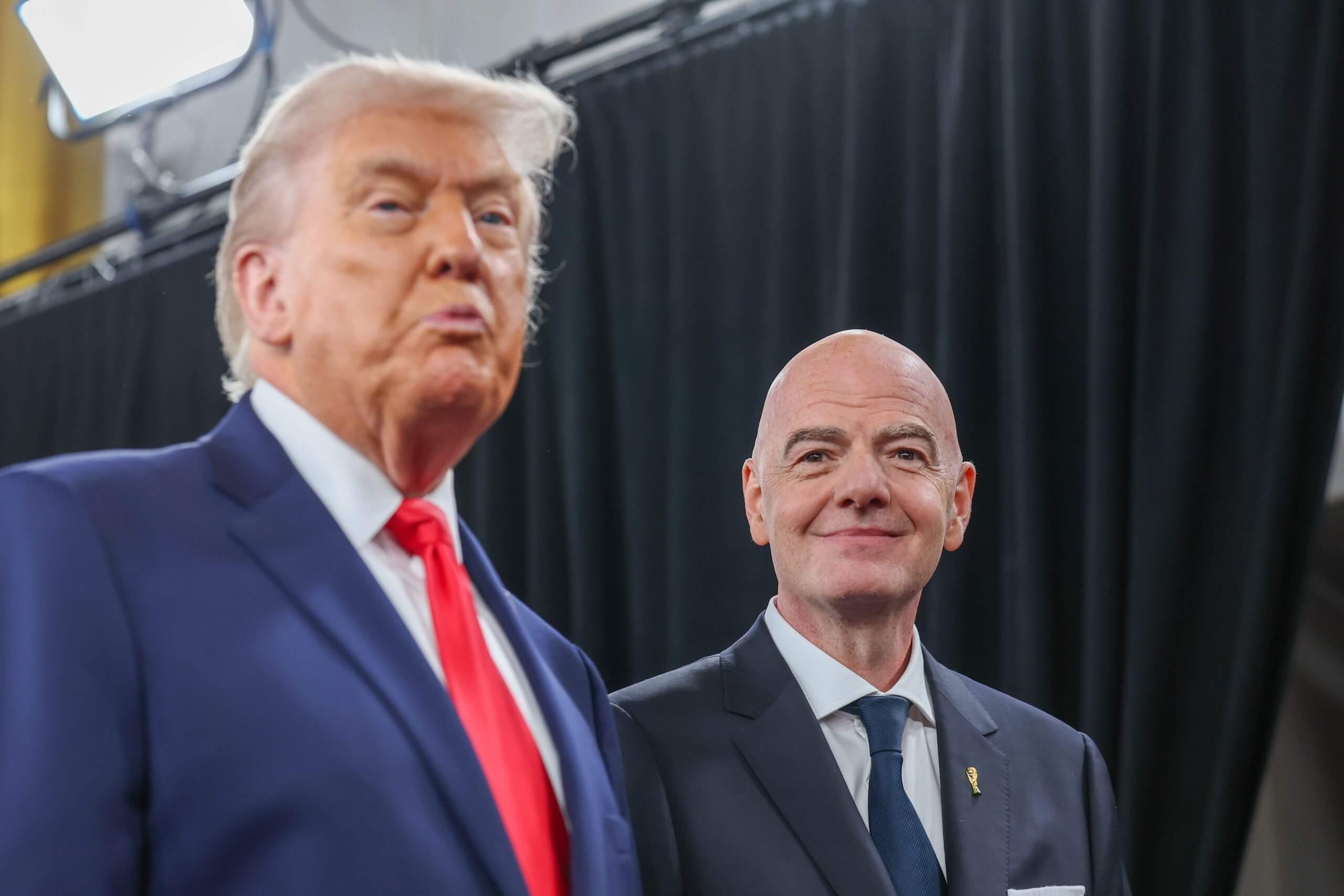
FIFA president Gianni Infantino with Donald Trump at the World Cup draw (Tasos Katopodis – FIFA/FIFA via Getty Images)
The Athletic has previously reported that some representatives on the FIFA working group are keen to agree to guidelines that restrict the number of games that could be played in a specific foreign territory per calendar year by a single competition, or even a single team. But this could risk further antitrust litigation.
Ideas such as these have the impact of limiting the potential effect of games from overseas leagues eating up the market share on a destination. For MLS, as an example, part of the league’s appeal for some owners may be its exclusivity over domestic soccer in the U.S. market.
Others take a different view, however, suggesting there is room for everyone to thrive together and that exposure to European action may inspire greater interest and participation within the U.S.
What about Barcelona and Villarreal?
Barcelona sources — speaking anonymously, like all those cited here, as they did not have permission to comment — still describe the Miami game cancellation as a “missed opportunity”. The club was very enthusiastic about the idea, and president Joan Laporta spoke positively about it several times.
Barca thought it made perfect sense for two reasons: it was a potential source of extra income, and it would help expand their brand in a strategic market.
The club wanted fans in North America to have the opportunity to see a match close to home, just as European fans of the NFL and NBA have been able to do on their own continent. The fact that it could not be finalised was a great disappointment.
But at Sunday’s match, there was no mention made of the Miami game. The topic was not discussed by either of the managers at their post-match press conferences. Fans did not refer to it in any noticeable way from the stands. There was a telling moment of how important the topic feels at the moment when a fellow reporter in the press area shared their sudden realisation that “we should be in Miami”, with the issue then quickly once again forgotten.
Before the game, Barca manager Hansi Flick was asked about it, however. He said he and his players would “play wherever they were told” — an answer that reflected the public messaging that came out from the club back in October, when protests against the idea were taking shape.
Sources at Villarreal, meanwhile, said they were likewise still open to the idea of playing a game abroad, but only with the approval of all parties involved.