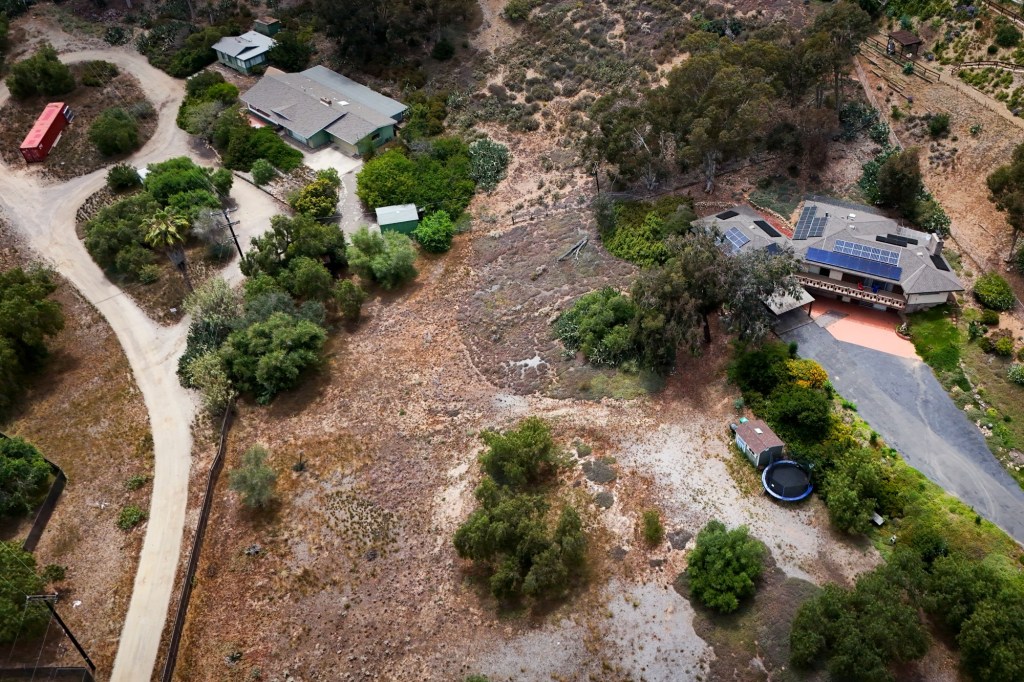
A new court injunction could jeopardize a controversial 136-unit ADU development proposed for eastern Pacific Beach by requiring the city to thoroughly analyze its potential impacts, including on Native American artifacts there.
The ruling by Superior Court Judge Katherine Bacal could also lead to more rigorous approvals for other projects with large numbers of accessory dwelling units, or ADUs, that were proposed before the city rolled back a generous incentive in late August.
The injunction, issued Friday, requires city officials to stop processing permits or other approvals for the Pacific Beach project, called Chalcifica, until the city determines how to analyze its impacts.
A lawsuit filed in August by a neighborhood group seeking to block Chalcifica contends the city has improperly treated approvals for the project as ministerial — based only on whether they meet certain standards — instead of discretionary.
City officials agree in court documents that Chalcifica requires some sort of discretionary review, which could include a rigorous environmental analysis of fire risk and impacts on traffic and the 3-acre site’s Native American artifacts.
But the city has continued to process permits and other documents for the project submitted by developer SDRE, which a lawyer for the neighborhood group, called Neighbors for a Better Pacific Beach, calls a major problem.
“The tribal, cultural and archaeological resources located on the site are of exceptional significance and face a direct risk of irreparable destruction if ground-disturbing or development activities are permitted without adequate review,” attorney Josh Chatten-Brown argued in asking for the injunction.
The lawsuit argues not only that the project and its dozens of ADUs are subject to discretionary review, but also that the city must comply with the California Environmental Quality Act.
Under CEQA, a government agency conducting a discretionary analysis must determine whether a project is exempt from environmental review, requires a minor review or requires a full-blown environmental impact report.
A full environmental impact report would require analysis of Chalcifica’s impact on the La Rinconada archaeological site, which the city calls “a well-known and well-documented Kumeyaay coastal village site.”
Single-family homes now surround the former Kumeyaay site, which has been left mostly undisturbed because of development challenges.
A spokesperson for City Attorney Heather Ferbert declined to comment Monday on the preliminary injunction.
But in court documents, city lawyers had argued aggressively against it.
“Injunction is an extraordinary power to be exercised with great caution and only in those cases where it fairly appears that the moving party will suffer irreparable injury,” Deputy City Attorney Matthew Zollman wrote.
Zollman also argued that an injunction should not be issued because Neighbors for a Better Pacific Beach hadn’t shown it’s likely to prevail in the overall case — a key requirement for an injunction.
“Petitioner has not shown any reasonable probability of success on the merits, nor any basis for extraordinary injunctive relief,” Zollman wrote.
Chatten-Brown expressed the opposite opinion and said Bacal’s ruling shows she agrees the group is likely to win.
“Neighbors for a Better Pacific Beach views the court’s order granting the preliminary injunction as a significant victory, reflecting the court’s conclusion that Neighbors has a strong likelihood of success on the merits as the case proceeds,” he said by email Monday.
Merv Thompson, leader of the neighborhood group, said Monday that the injunction will give major emotional relief to neighbors on Chalcedony, Pacifica and nearby streets.
“My neighborhood does not have to be concerned that developer SDRE’s bulldozers will suddenly appear to start a 136-ADU buildout without warning,” Thompson wrote.
But Thompson stopped well short of declaring victory.
“Our lawsuit is all about convincing the Court that CEQA should apply to this matter,” he said. “Although the preliminary injunction suggests we have an edge on this without specifically saying so, nothing has been decided and won’t be until the matter gets tried.”
The presence of the Kumeyaay site could force developer SDRE to reduce the number of ADUs on the site. One factor allowing so many is the proximity of the Blue Line trolley and its Balboa Avenue station.
SDRE is led by Christian Spicer, who has used the city’s controversial ADU incentive to get more projects and more ADUs approved than any other developer by far.
An attorney for SDRE and Spicer said Monday that the injunction was not a surprise and that the development team will continue to pursue new housing projects.
“Our client’s immediate and practical residential housing solutions provide residents with opportunities to live in our region that they otherwise would not be able to afford, and help to alleviate San Diego’s severe housing shortage,” said the attorney, Ian McKinkley of Hoffman & Forde.
The preliminary injunction also appears to signal that environmental review could more likely be required for other ADU projects not yet built but in the city’s approval pipeline.
For that to happen, Bacal’s ruling would have to require the city to conduct discretionary review for additional projects that have taken advantage of the city’s ADU incentive.
The City Council voted to roll back the incentive on June 15, but the rollback didn’t take effect until Aug. 22. Several projects, including two by SDRE, were submitted in between those dates.