The Austin/San Antonio corridor is transforming into one of the fastest-growing regions in the country. How can we prepare for a change of that scale?
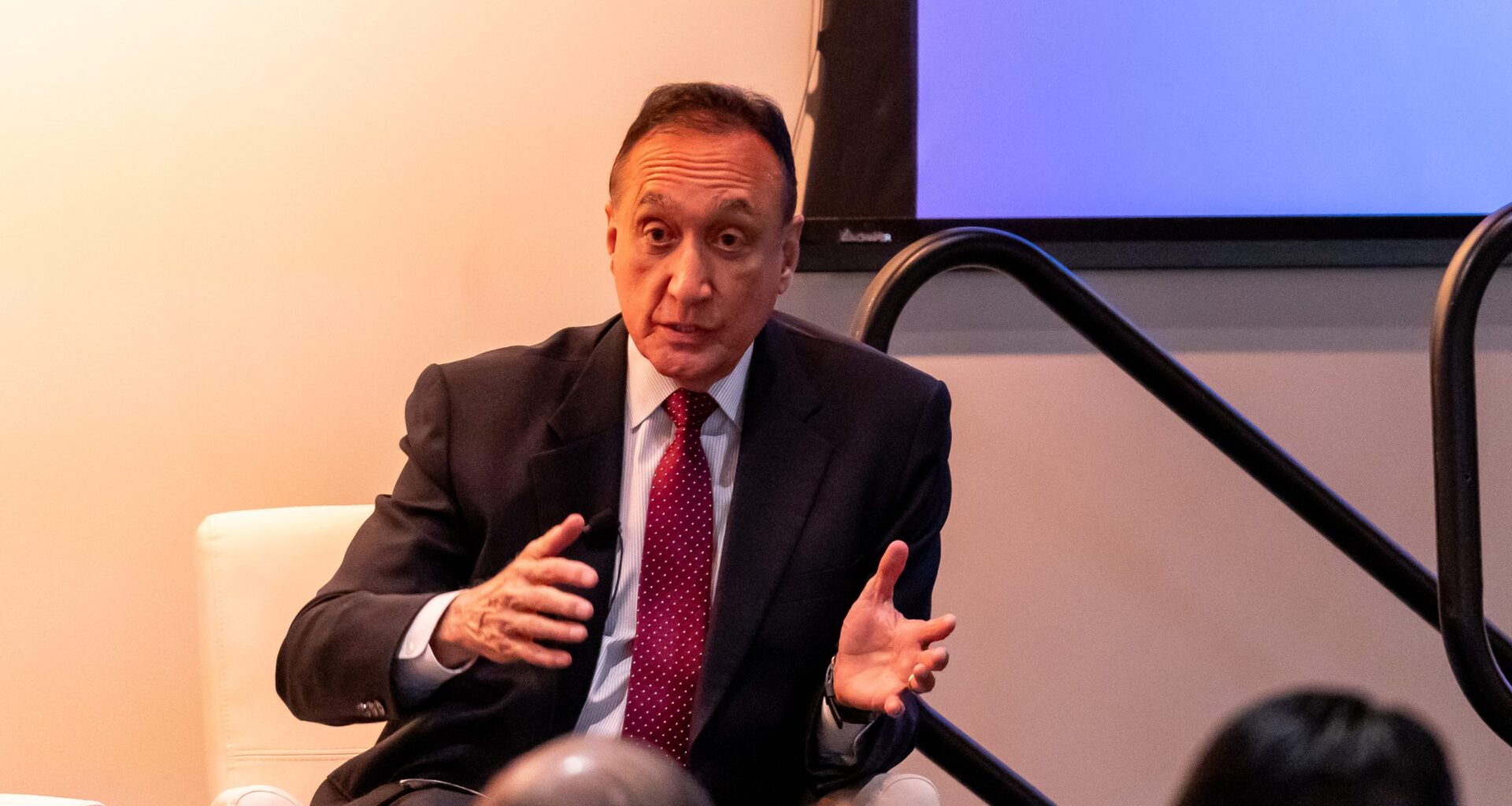
On the latest episode of the bigcitysmalltown podcast, former San Antonio Mayor and Housing and Urban Development Secretary Henry Cisneros and show host Bob Rivard talk with guest host Cory Ames about their book, “The Austin-San Antonio Megaregion: Opportunity and Challenge in the Lone Star State.” The book was published in September and is also co-authored by David Hendricks.
Right now 5.3 million people live in the corridor from “Pflugerville to Floresville,” Cisneros says — more than the population of Louisiana and 25 other states. But by 2050, the U.S. Census Bureau predicts that number to hit 8.3 million.
“That’s laying a city the size of Chicago, 3 million people,” he said. “That kind of is the context, the shocking context, if you will, of this book.”
That growth, Cisneros notes, isn’t optional.
“One of the key recognitions is this is going to happen,” he said. “ It’s really not a choice between saying, ‘Let’s not do it, and we will be fine.’”
The question now is whether cities across the corridor — from Georgetown to New Braunfels to Seguin — can work together to handle it. That means confronting the infrastructure pressure already showing up in gridlocked I-35 traffic, rising energy demands from data centers, and addressing the region’s vulnerability to drought.
Cisneros argues that the missing ingredient is regional coordination. While cities like Dallas–Fort Worth have formal structures that force cooperation, Austin and San Antonio still operate mostly in parallel. Without a shared venue where local governments, universities, business leaders and major institutions can plan together, he says, the region risks falling behind its own growth curve.
“There is really no entity where people are getting up every morning saying, ‘It’s my job to think about the implications of this unprecedented growth and the opportunities and challenges that it creates’,” Rivard added. “ What we’re going to have to do, I think, is step back and figure out first, how do we create the entity, like Henry talked about existing in North Texas, that can address these problems?”
The conversation turns to lessons each city can learn from one another — from water planning to cultural preservation to longterm economic opportunity.
Ultimately, Cisneros says, the region is facing a once-in-a-century moment. The growth is coming — the only question is whether Central Texas meets it with coordination and foresight or lets the challenges compound.
“We have to make the most of this opportunity. And that means getting local public officials to raise their horizons, their sights above the day-to-day things that are expected of them in their own communities and think how these things work together on a regional basis,” he said. “ We could live in an area that would truly be exemplary on a world stage.”
Click below to listen to the full conversation.