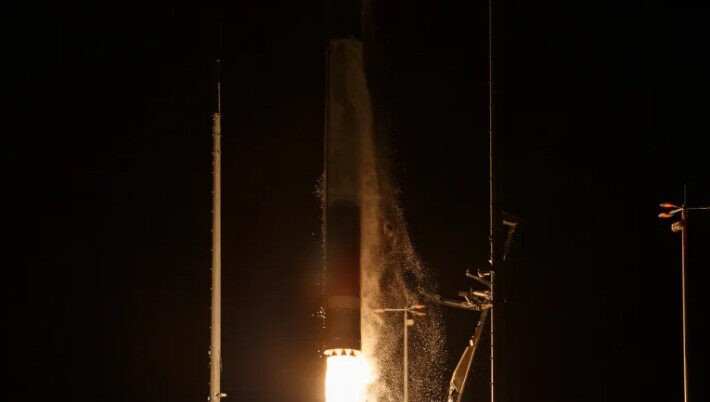
NASA successfully launched a new type of small satellite early Thursday from Wallops Island, Virginia, marking a step forward in efforts to make space missions more affordable and flexible.
The experimental spacecraft, known as DiskSat, departs from the traditional box-shaped design commonly used for CubeSats. Instead, the satellite is shaped like a flat disk, a configuration that allows it to more easily share space aboard rockets carrying multiple payloads.
The launch took place from Wallops Island and was carried aloft aboard a Rocket Lab Electron rocket. By adopting the disk-shaped form factor, NASA aims to demonstrate how future small spacecraft can “catch a ride” alongside other satellites without requiring dedicated launch space, reducing overall mission costs.
According to NASA, the DiskSat demonstration is intended to expand capabilities for future small satellite missions, opening new possibilities for scientific research, technology testing, and exploration. If successful, the design could lead to more frequent and economical access to space for a wide range of missions.

Officials say data gathered from the mission will help determine how disk-shaped spacecraft perform in orbit and whether the concept can be scaled for broader use in upcoming NASA programs.