The new moon marks the beginning of a lunar cycle and although it’s invisible to the naked eye, it plays a central role in both astronomical observation and cultural traditions. The dark skies during a new moon create ideal conditions for skywatchers, eclipses, and even subtle phenomena like Earthshine. But what exactly causes the moon to vanish, and what are the best dates to experience this elusive phase?
What Exactly Happens During A New Moon?
Every month, the moon positions itself directly between the Earth and the sun, casting its unlit side toward us. Unlike a full moon, where sunlight completely illuminates the lunar surface facing Earth, a new moon appears invisible because that side is in shadow. This alignment also means the moon rises and sets with the sun, making it virtually impossible to spot unless a solar eclipse is in progress.
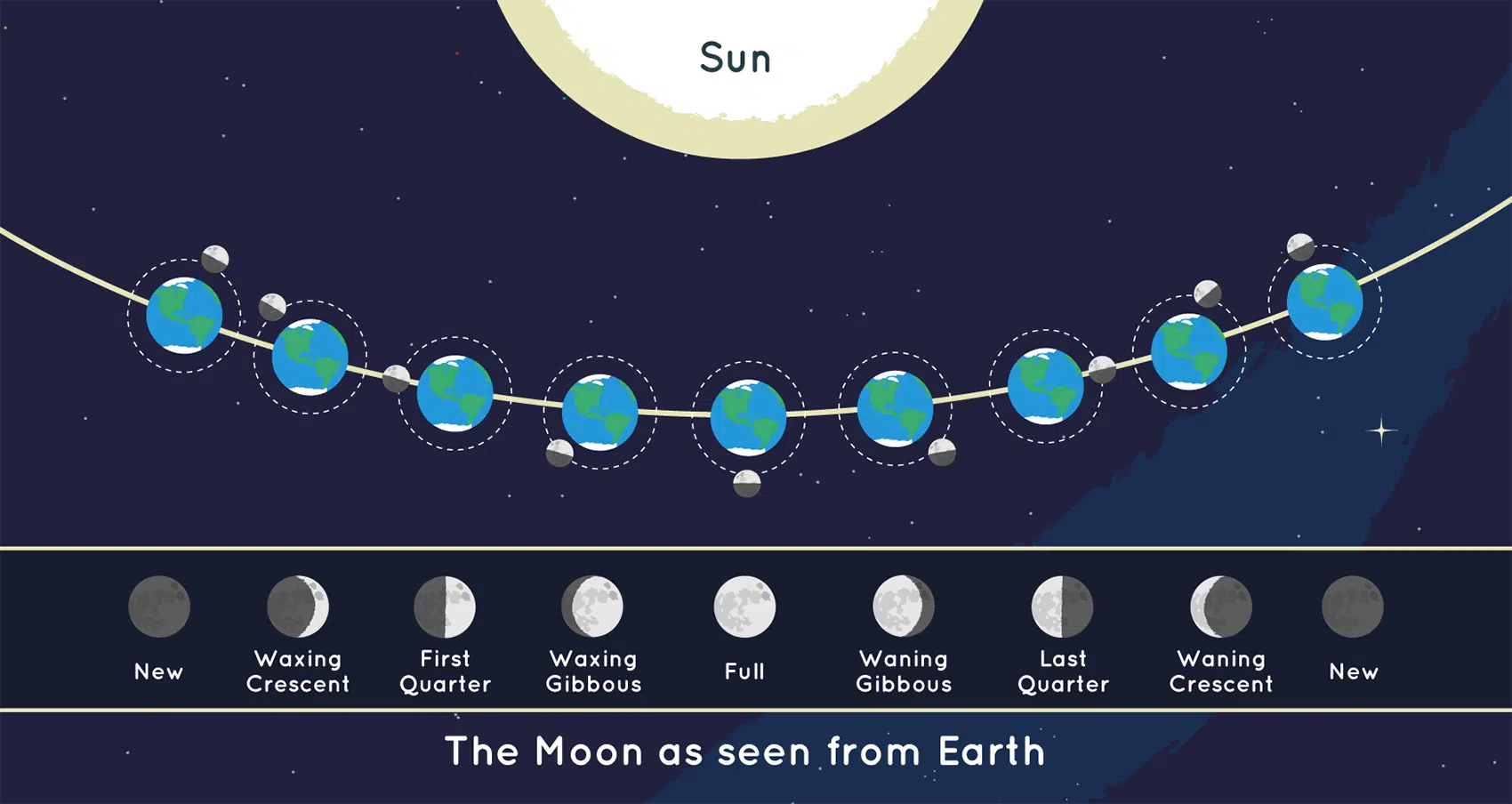 This graphic shows the position of the Moon and the Sun during each of the Moon’s phases and the Moon as it appears from Earth during each phase. Not to scale.
NASA/JPL-Caltech
The brief moment when the moon and the sun share the same celestial longitude is what astronomers call the new moon. This is the beginning of a synodic month, lasting about 29.5 days, the time it takes for the moon to “meet” the sun again. While the new moon only lasts a moment astronomically, it takes 18 to 24 hours for the crescent to become visible in the sky again, usually just after sunset.
Earthshine And “The Old Moon In The New Moon’s Arms”
In the nights surrounding the new moon, a beautiful optical effect can sometimes be observed, one that Space.com calls the “Da Vinci glow” or Earthshine. This occurs when sunlight reflected off Earth gently lights up the moon’s shadowed side, giving it a faint, bluish-grey appearance. The result? A ghostly vision of the entire lunar disk cradled by a sharp crescent.
Earthshine is most visible in the waxing or waning crescent phases, when the moon is close to the sun’s position in the sky but just starting to emerge from darkness. It’s a fleeting moment, but one that offers a poetic glimpse into the dance between Earth, the sun, and our nearest celestial neighbor.
Black Moons: When the New Moon Gets a Nickname
While “new moon” is a standard astronomical term, the “Black Moon” is a more informal; though increasingly popular label. According to Time and Date, there are two common interpretations:
- The second new moon within a single calendar month
- The third new moon in a season that includes four
Although not officially recognized by astronomers, the concept of the Black Moon stirs interest due to its rarity. According to current projections, the next Black Moon will occur on August 31, 2027. While it won’t look any different from a typical new moon, the infrequency of the event gives it a mysterious allure among skywatchers and amateur astronomers.
The 2026 New Moon Calendar: Key Dates To Watch
For those planning to photograph the moon, observe deep-sky objects, or simply enjoy darker nights, knowing when the new moon occurs is vital. NASA’s calendar lists the following dates for new moons in 2026:
- January 18 – 2:52 p.m. EST
- February 17 – 7:01 a.m. EST
- March 18 – 9:23 p.m. EDT
- April 17 – 7:52 a.m. EDT
- May 16 – 4:01 p.m. EDT
- June 14 – 10:54 p.m. EDT
- July 14 – 5:43 a.m. EDT
- August 12 – 1:37 p.m. EDT
- September 10 – 11:27 p.m. EDT
- October 10 – 11:50 a.m. EDT
- November 9 – 2:02 a.m. EST
- December 8 – 7:52 p.m. EST
Planning skywatching activities around these dates increases the likelihood of witnessing fainter stars, meteor showers, or even the Milky Way in full detail, especially if you’re located in a dark-sky reserve.