North Carolina officials in 2025 announced economic development projects promising to create 34,000 new jobs. It’s a single-year record for the state, officials say, and corporate recruiters are working to top it.
North Carolina Commerce Secretary Lee Lilley spoke with WRAL about his department’s priorities in 2026. He feels good about the state’s pipeline for economic development projects. In a wide-ranging interview with WRAL, he shared details about the state’s evolving economic development strategy, provided updates on high-profile projects that have hit the brakes, and discussed how the department is working to boost the state’s workforce.
Here’s a transcript of the conversation. It has been edited for continuity and clarity.
WRAL: When you’re looking back at 2025, what are you most proud of?
LEE LILLEY: We’ve had a great year in economic development in the state of North Carolina. Under Gov. Josh Stein’s leadership, we’ve broken records for jobs announced for the state, 34,000 new jobs, $23 billion in investment. We’ve won awards as the best state for business in America from CNBC, the third time in four years that we won that award. And I think we’ve delivered on the promise that we made to create great jobs in every corner of the state. When you look at where our economic development has been. Sure, we’ve had some very good projects in the Triangle, had some good projects in the Triad and Charlotte. But we’ve also had great projects in rural eastern North Carolina, western North Carolina, and all places in between. So we’re proud of that.
WRAL: Anything you feel like you could have done better?
LILLEY: Always. The most important thing we think about in economic development is this aspect of combining great workforce training and talent with great places that have good infrastructure, and then the partnerships that we have between local economic developers and the state and federal governments. And so when I think about what we need to do better, workforce comes to mind first. We’ve got a great workforce — one of the most talented in all of America, and yet we have to be better. We’ve got to align our workforce programs that we run through the state Department of Commerce with those at the community college level and the university level so that they are aligned with our economic development goals. We’ve got to have a workforce that’s ready on Day One for all of these jobs that we’ve announced. So that’s why the Governor’s Council on Workforce and Apprenticeships has set 11 strategic goals that we have to meet in the next four years. These are time limited. They’re quantifiable. If we don’t meet them, we’re going to be in trouble.
WRAL: One of the biggest successes would be the JetZero announcement. One of the interesting parts is that they’ve yet to make an aircraft that has gotten off the ground. So when the state is looking into a company like that — one that is so advanced and innovative — how do you weigh what you’ve seen from them with the incentives packages that you come up with?
LILLEY: What we’re trying to do is find credible projects that are going to create real value and impact in the areas where they go. JetZero is a new company. They’re designing a blended-wing body aircraft. That’s not a new design tactic or new design feature in aircraft, but it is new for the commercial aircraft space. Now it’s going to have dual use applications, both in commercial and defense. And so one of the things that we looked for with JetZero was the vote of confidence that had come from the federal government. You and I talked before, talked before at a previous jobs announcement about what it means to have the federal government be invested in one of these projects. Well, the federal government is invested in JetZero’s project to the tune of $250 million. It’s not the only thing that we look at, but it’s one of those things when you’re trying to evaluate a younger company that’s making a big bet. The federal government, other investors and the quality of the financing for that project convinced us this is the right thing to do, and it also convinced us that our partners at Piedmont Triad International Airport were on board with this project right away, because they felt like they had evaluated the company fairly and that it would be impactful in that region.
WRAL: Do you see federally backed companies — particularly in the defense sector — as an area of potential growth in the state going into 2026?
LILLEY: We absolutely do. One thing that’s hard to predict sometimes is what’s going to be the priority of the federal government. Over the past couple of years, it’s probably been a little more aligned towards federal support for clean energy. I think the current administration has less of a priority there, but I think it’s fair to assume that both our government and also allied governments around the world are invested in new defense technology. There’s probably not a place in the United States that’s better suited to help grow and scale defense technology companies than the state of North Carolina, between all of our defense assets, Special Forces Command down at Fort Bragg and the research capabilities that we have in the center of the state. You combine all of these things with the ability to scale — Vulcan Elements’ expansion plan in Johnston County is a great example. It’s not strictly thought of as a defense project, but it is a national security project to produce rare-earth magnets in the United States and build a supply chain here that is durable against the changes that might come in the world. That’s a project that started at the Department of Commerce when they were a very young company, and came to us seeking some very, very small grant funding to help them grow their technology. We helped support them with a small-business grant, and just a couple years later they’re ready to scale up in North Carolina. So that idea — of germinating the idea all the way through to scale — that’s really what we want to have here in North Carolina.
WRAL: Two companies that are pretty innovative — Apple and VinFast — have also announced plans to grow in and around the Triangle. What’s the status of their developments?
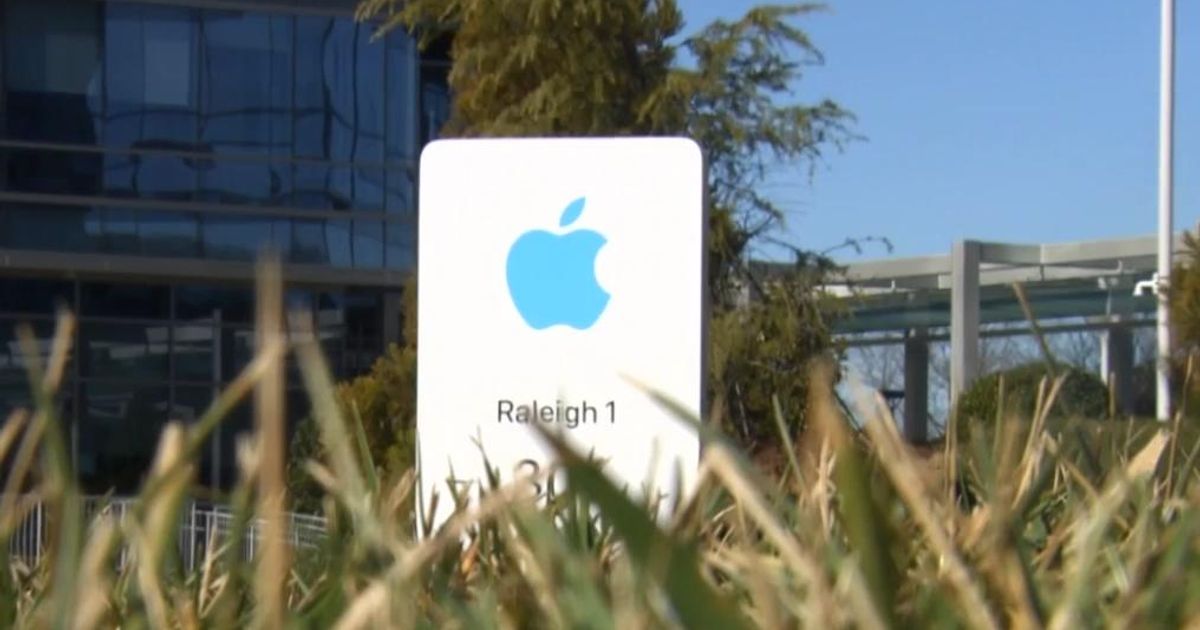
LILLEY: Apple continues to add people to their facility out in RTP. I think they’ve got upwards of 600-plus and more than 1,600 statewide employees. And so when we talk about a project that adds 600 high-paid employees to the region, it is a really good project. The scope and scale of their ambition is much larger, and that’s the project that we have helped them to support over time. The Commerce Department’s Economic Investment Committee approved a couple of weeks ago the ability for Apple to have a couple additional years on their performance tied to economic incentives. These are all performance-based incentives that we have for every company in North Carolina. And so given the fact that they’ve already created these jobs, the General Assembly granted us that authority, and then the EIC went and unanimously granted them a couple more years so that they can continue to grow and build more in the Triangle and in RTP, specifically.
VinFast is on a site out in Chatham County. We continue to work with them to understand their timeline. We want to make sure that that site, and the state’s investment in that site, yield the most impactful jobs for Chatham County and for this entire region. And so we want to make sure, whatever we do, that we’re working with them to understand their process timeline, and that ultimately we’re going to do the best thing.
WRAL: You mentioned clean energy and the push-pull with the current presidential administration. VinFast has said in the past that its success would be dependent on federal electric vehicle tax credits. Knowing that President Trump had ended those, is that a company that can grow here if those tax credits aren’t available?
LILLEY: They’re hoping to continue to grow here and sell more cars. I think electric vehicles tend to continue to be very popular, not just in the United States, but around the world. Not every model is popular, and certainly that tax credit is a difference maker for consumers. But if you look at the rest of the world, they’re transitioning to EVs. I think engineering around EVs is getting better, and those that continue to be growth in the market.
WRAL: Other than VinFast, are there any other planned North Carolina expansions that were upended by the loss of those clean energy tax credits or similar federal incentives?
LILLEY: Natron Energy was a company that we had helped support with a project that they intended to bring to Edgecombe County. This was going to be a project creating batteries — not for vehicles, but for industrial applications. Natron folded, basically because of the failure of federal support for a program that was expected under the previous administration but did not materialize in this current administration.
WRAL: Federal government backing has historically been one of the best kinds of financial security a company could have. But we’ve seen the withdrawal of or hesitation to pay out CHIPS Act funds and how that impacted Durham semiconductor manufacturer Wolfspeed. The government also terminated $285 million in funds for the Smart USA Institute. How does that change the calculus of corporate recruitment in the state, knowing that federal funding may or may not be there.
LILLEY: The most important thing we need to have in the economy and in economic development is stability and predictability to the degree we can have it. And that includes stability and predictability at the federal level. So the challenge for us is when we find that the administration is creating somewhat of an unstable environment, and we can’t quite predict where they’re going to go. The first thing the state needs to do is make sure that we are a pretty stable place for investment to come, and that’s been part of the reason we’ve been successful. Companies look at North Carolina and say, “I don’t know if I can predict what the feds are going to do, or what the global market is going to do, but I know what North Carolina is going to do. When North Carolina says they’re going to help us with this investment, help us create great jobs, they mean what they say, and they follow through.” From the federal side, I think it means for us that we need to be diversified in the type of projects we’re pursuing — different sectors, different sizes of projects with different sources of financing. As much as we can do it, we want to find projects that have all of those elements, and we feel comfortable and confident that they can move forward with the job creation commitments that they’ve made.
WRAL: You mentioned the General Assembly making changes to extend some performance deadlines tied to incentives for Apple. Is that a practice that you agree with? And do you see the state exercising that type of arrangement in the future for other companies?
LILLEY: For all of the political rancor that one might hear in North Carolina, there is really no daylight between the administration and General Assembly on economic development. We really work hand-in-glove with them, because economic development to us is not a red issue or a blue issue. It’s a green issue. It’s about creating jobs and prosperity all across the state. And so whether it’s on this issue or anything else, we tend to work very closely with them to understand what their priorities are, the priorities of the members of the General Assembly, to understand how the Department of Commerce can help fulfill the missions that they see, and Governor Stein’s ambitions around economic development.
WRAL: When it comes to economic incentives, we often hear from people that they may not entirely agree with the idea of handing out money to large corporations. What would happen if the state decided to just stop offering incentives? What would that do for North Carolina?
LILLEY: It’s important to understand what the incentives are. The state’s largest incentive program, the Job Development Investment Grant Program, provides, usually, a cash-based grant to a company that’s creating jobs over a period of about 12 years. These are all performance-based grants. So nobody gets a dime from taxpayers until they prove they’ve done the things they said they were going to do: create the number of jobs they said they were going to create, pay wages at or above the rate that they said they were going to pay, and invest capital at or above the rate they said they were going to invest. And if they don’t do those things, we don’t pay out any money to them. So the taxpayers are protected from a company that perhaps isn’t able to fulfill that ambition just because of market forces over time.
What happens if they go away? I think we’re a lot less competitive. Competitor states are offering incentives of their own, and some are much, much larger than the ones we offer in the state of North Carolina. What North Carolina is able to offer is that great workforce, talent, great locations, communities for them to locate. And the incentives are an added benefit.
WRAL: Is that why many consider North Carolina to be one of the top states to do business?
LILLEY: It’s part of the recipe. It’s an ingredient in what we do. When you look at that measurement, why we’re the best state for business three of the last four years — and mind you, if you win that award once, it might be a flash in the pan. If you win twice, you’re doing pretty well. Three of the last four? I think we’re really on to a formula that works, and the formula that works is really about community development, infrastructure, workforce and, yes, sometimes the providing incentives that help companies to grow and expand their operations in North Carolina.
WRAL: The Commerce Department traveled across the state in 2025 trying to get input on the department’s new strategic plan. What were some common themes that you heard from businesses and people?
LILLEY: We’ll produce our statewide economic development strategic plan early next year. And we went to all eight prosperity zones as regions within the state of North Carolina to do listening sessions with the community about what they thought was important for economic growth and economic development in the state. People were less interested in the common themes of economic development we talk about a lot. They were less interested in site development. They were less interested in workforce programs. What they really cared about was community development. They cared about housing. They cared about affordability. They cared about child-care access. They cared about infrastructure and transportation. They want to have communities that are livable and affordable, and that are going to foster growth amongst their population that’s already there and from outside. And so to the degree that our department, with our partners, can go out and support that type of community development we do, and a great place we do this is through our Rural Economic Development Division, which is focused on just that type of community development.
WRAL: What does that reflect about the state?
LILLEY: It’s a fast growing state, but I think we are a microcosm of everything you see in the U.S. You go around the U.S. and ask, “Is there a housing shortage?” The answer is “yes.” And that’s true in urban, suburban and rural communities. So addressing things like housing, addressing things like access to child care — which the governor’s doing through his task force on child care — these are our priorities, because great communities are going to foster great economic development.
WRAL: This was the best year for jobs in North Carolina, with 34,000 jobs announced. What does the pipeline look for 2026 after such a prosperous year?
LILLEY: We’re excited about what’s in our pipeline. We work with the Economic Development Partnership of North Carolina. They’re our front door, our marketing recruiting arm here at the Department of Commerce. And our projects continue to look very strong, a mix of things like life sciences, advanced manufacturing, even some office projects. We went for about five years after Covid when we didn’t do any office projects. This year, we brought back office projects in a big way. That diversity of options really is healthy for our state. It says to us that the economy and actors in the economy are looking to invest in a range of different sectors and in different geographies across the state.
WRAL: Will we have more than 34,000 jobs added next year?
LILLEY: I’m not ready to make that prediction, but I think we’ll have a strong year next year.
WRAL: What keeps you up at night when you’re thinking about 2026, or what you’ve dealt with in 2025?
LILLEY: Always our talent, always our workforce. I think we have the most talented, hard working people in all of the United States. And I also think for North Carolina to remain competitive, we have to invest in that talent from cradle to career. You’ve got to have access to early childhood education. It’s great for kids, it’s great for parents, it’s great for employers. But then we’ve got to have people that are job-ready. One of the things I’m most excited about is a federal government change that I want to champion here, which is the creation of the workforce Pell Grant program, which has traditionally been for university college education or community college associate degree education. Now you can use Pell for short-term training operations — things that you might go to a community college for, to get a certification so you can go work in a great advanced-manufacturing job. Making that more accessible to more people is removing burdens from people getting great training and great careers, and ultimately building prosperity for themselves and their community. We’re a fast-growing state with a lot of opportunity. We’ve got to have a workforce that’s ready. We’ve got to align our resources to be responsive to that and ensure we have those resources as resources decline from the federal government. That’s what keeps me up at night.
WRAL: Is there any part of the state where that need is more apparent?
LILLEY: The northeastern part of the state, where I’m from, is one of the more distressed regions of the state. We’ve got to make more investment in those communities and workforce programs and in infrastructure so that they can grow organically. Similarly, it has been a priority of ours since Day One to help western North Carolina recover from Hurricane Helene, the worst natural disaster in our state’s history. Part of that recovery for the Department of Commerce is investing in those things like housing, investing in things like infrastructure and an economic recovery. So I think about the northeast and the West. Those are the regions that I think need the most help from the state right now.
On the Helene recovery — it is something that we’re both proud of, but recognize we have a great deal more to do. The governor created a new division at the Department of Commerce at the beginning of the year, the Division of Community Revitalization, which is responsible for the large U.S. Housing and Urban Development grant for recovery. It’s a $1.5 billion grant, mostly focused on housing, but also on infrastructure and economic recovery. We were the fastest state in the country in 10 years to get our program up and running. We have already begun construction on homes. Seeing people get home again is really one of the most satisfying parts of this job, but also as a reminder of how many people we still need to help get back in their homes. Because when they’re back in their homes, they can start their recovery. Their neighborhoods start recovering. Their communities start recovering. It’s really the key to what we’re doing.
WRAL: The Lumbee Tribe recently received full federal recognition. How do you see that impacting economic development in that part of the state?
LILLEY: We’ll work with them if they’ve got ambitions to grow, just like every other location. We want to support them in being able to do that, and we already have good relationships with the other two federally recognized tribes in the state to help with their economic development.
WRAL: Do you have any bold predictions for 2026 from the Department of Commerce?
LILLEY: I think you’ll continue to see great jobs going to every corner of the state. Our priority and mission on spreading those opportunities outside of the core urban bubbles of the state is important. We think Raleigh and Durham are going to get a lot of opportunities, but so are places like Wilson, Edgecombe and Nash County. I think you’ll see more life sciences projects coming. I was just overseas with the governor. We were in Japan with other southeastern U.S. states, making their pitch to those investors. What they say is kind of the same thing all the time: “We’ve got nice weather, we’ve got good land, we’ve got low cost.” What they don’t say is the thing that we say: “We have five top-tier research universities, we have 58 community colleges, and we can do things that are harder — like make life-saving therapies. So I think you’ll see more of that in our pipeline.