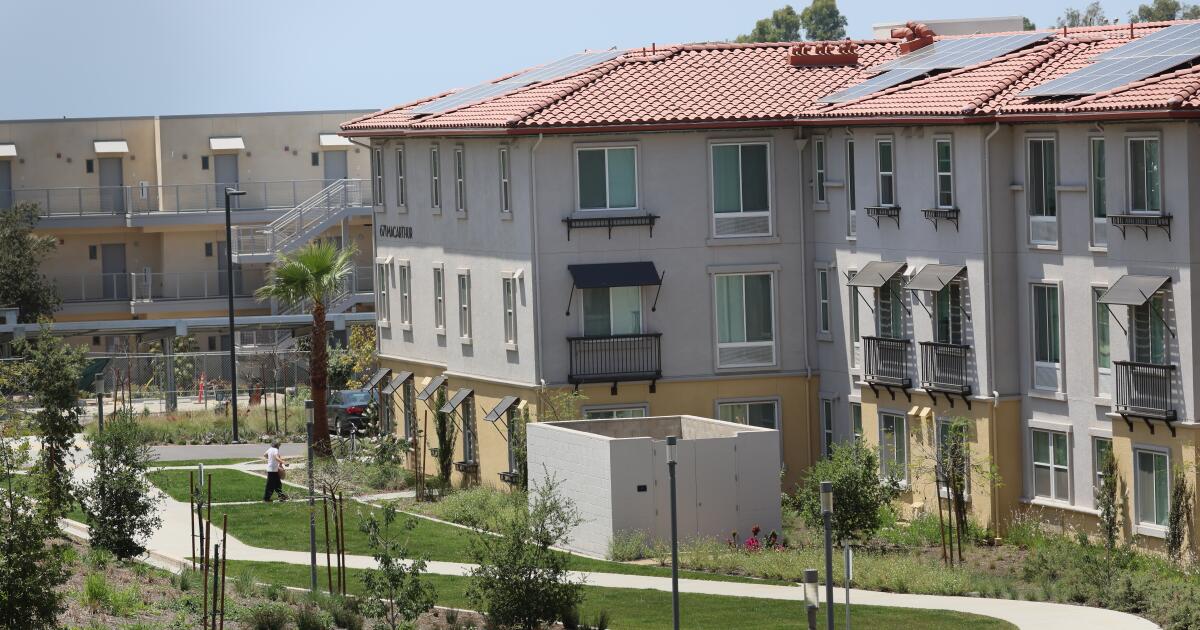
The U.S. 9th Court of Appeals has upheld a lower court order requiring the U.S. Department of Veterans Affairs to build more than 2,500 units of housing on its West Los Angeles campus and invalidating a prestigious private school’s lease there.
In a complex decision issued Tuesday, a three-judge panel affirmed most of U.S. District Judge David O. Carter’s orders, finding in favor of veterans’ claims of discrimination by not having access to housing on the 388-acre campus. It overruled the judge’s order invalidating UCLA’s lease of a portion of the VA grounds for its baseball stadium.
Citing president Lincoln’s “promise to care for those who have served in our nation’s military and for their families, caregivers, and survivors,”
Circuit Judge Ana de Alba opened the panel’s opinion with a rebuke of the VA’s posture in the case.
”This class action lawsuit, and its numerous appeals, demonstrates just how far the VA has strayed from its mission,” de Alba wrote. “There are now scores of unhoused veterans trying to survive in and around the greater Los Angeles area despite the acres of land deeded to the VA for their care. Rather than use the West Los Angeles VA Grounds as President Lincoln intended, the VA has leased the land to third party commercial interests that do little to benefit the veterans.”
The panel held that “the district court did not abuse its discretion by ordering the VA to construct 1,800 permanent housing units and 750 temporary housing units to remedy its discrimination.”
The long-awaited ruling, following an April hearing, dismissed the VA’s contention that the Veterans Judicial Review Act, setting up a separate court system for veterans benefits claims, precluded the seven veterans who initially brought the case from suing. In their broad claim of discrimination the plaintiffs were “not attacking the VA’s individual benefits determinations,” it found.
The decision will allow veterans across the country to sue for housing, said Mark Rosenbaum, attorney with the pro bono law firm Public Counsel, the lead attorney in the case.
“It’s the most consequential case for veterans in the history of the country,” Rosenbaum said. “I would think this should be the end of veterans homelessness. It’s a century and then some long overdue.”
Rob Reynolds, an Iraq war veteran who has advocated for veterans seeking housing and services at the West LA campus also hailed the ruling as an overdue affirmation of veterans’ needs.
“There should never have had been a need to have a lawsuit in the first place,” Reynolds said. “The VA should have utilized the West LA property as it was intended to house veterans. There shouldn’t have been a situation where veterans returning from war didn’t have access to the housing and services that they need.”
In their case, the veterans argued that the lack of housing on campus prevented disabled veterans from gaining access to the physical and mental health services provided on the campus.
In reinstating the UCLA lease, the panel rejected the veterans’ contention that the 1888 deed of the property for an old soldiers’ home created a charitable trust and that the West Los Angeles Leasing Act of 2016, on which the UCLA lease is based, constituted a fiduciary duty to uphold the trust, essentially requiring that the department fund housing.
UCLA issued a statement saying it “is pleased with the Court of Appeals’ ruling that upholds our lease with the VA. We look forward to continuing the longstanding UCLA-VA partnership that keeps Jackie Robinson Stadium the homefield for Bruins baseball and provides critical services and benefits to our Veterans in the Los Angeles region.”
Rosenbaum, however, said UCLA’s reprieve is only “momentary.”
“There is nothing there that UCLA is in compliance with the law,” Rosembaum said. He said he had erred in applying only that the charitable trust theory to UCLA, and that he plans to refile the case on the same grounds that the panel found valid in the nullification of the other leases.
While upholding Carter’s nullification of the other leases, including the Brentwood School’s use of 22 acres for athletic facilities, the panel said the judge went too far in prohibiting the VA from renegotiating those leases.
The Brentwood school had reached a separate agreement with the veteran plaintiffs on terms of a new lease, but the VA refused to sign on, appealing the case instead.
Rosembaum said he now assumes that the VA will have to show more deference to veterans.
“This case wasn’t won by lawyers; It was won by veterans like Rob and others who have struggled for decades,” he said. “It’s clear that everybody who states that they care about veterans are going to want to know what will make a meaningful impact in their lives.”
The case reprised litigation going back to 2011 that challenged the leases and asserted an unmet need for veteran housing. In the earlier case, a federal judge ruled that several leases did not comply with the leasing act’s requirement to “principally benefit veterans and their families.”
In a 2015 settlement, the VA agreed to develop a master plan for the campus. A draft plan, completed in 2016, called for 1,200 units of housing in new and rehabilitated buildings, with a commitment to complete more than 770 units by the end of 2022. Only 54 of those units were completed by the deadline, leading to the new lawsuit alleging that the VA had reneged on its promise.
After a four-week non-jury trial last year, Carter ordered the VA in September to build 1,800 units of permanent housing and 750 units of temporary housing and convened a continuous hearing over the following weeks to determine what to do with the leased property, which includes UCLA’s Jackie Robinson Stadium and the Brentwood School’s sports complex.
In his opening move to implement his ruling, Carter ordered the VA to install 106 modular units on three locations on the campus including the parking lot for UCLA’s baseball stadium. That order was stayed on appeal.
The panel remanded the case back to Carter to implement his order.