
Chicago’s Cedille Records has completed another year of releasing enjoyable and, in some cases, astonishing compact discs in 2025. In recent years, vocal music has been the highlight. While vocal music was present in 2025, most of the releases were instrumental, and all were chamber.
This year Cedille introduced a young virtuoso performer to the recording world. They also reintroduced hidden gems to the listening public that, for some reason, have languished in obscurity. There has been a huge amount of great music written over the centuries, but most of it has been passed over by posterity. One of Cedille’s ongoing objectives is to illuminate great music that is little remembered and rarely performed. Thank-you Cedille Records for restoring to the repertoire this enjoyable music.
As the world of music entertainment has shifted to online streaming and downloads, Cedille Records has followed that trend. One trend they have not followed is the movement back to vinyl records from compact discs. As Cedille Records founder and President Jim Ginsburg explained several years ago, CDs allow much better sound quality. Excellent recording quality is a big feature of Cedille releases, and they have received numerous awards for recording and engineering. Also, as any fan of classical music can attest, nothing is more irritating than a scratch on a record.
One advantage of the larger record format is the artwork and inserts that can accompany long-playing records. Cedille’s packaging with the smaller format of CDs is very impressive. Especially for new music and for rediscovered old music, the extensive liner notes are very welcome.
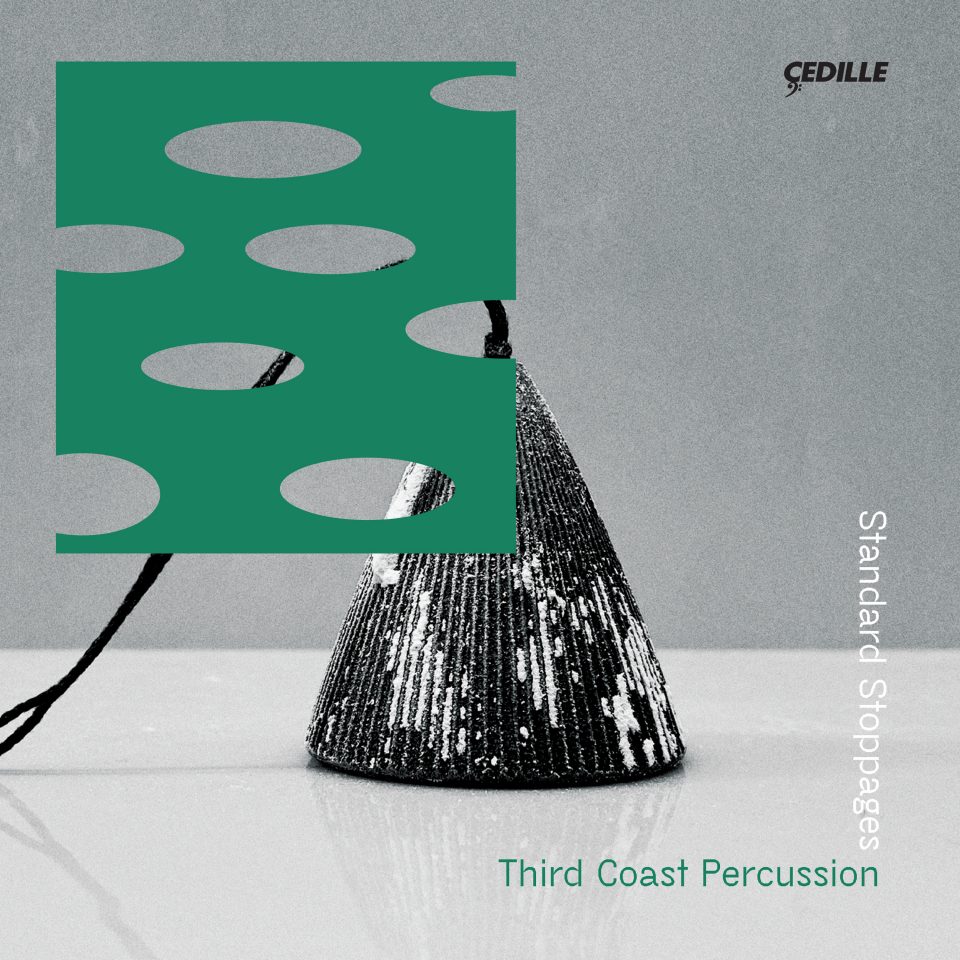
Third Coast Percussion, Standard Stoppages
To celebrate their 20 years of playing together, Grammy Award-winner Third Coast Percussion turned to composers with whom they have worked in the past and several new voices for their most recent release, Standard Stoppages. It has been nominated for two Grammy Awards: Best Chamber Music/Small Ensemble Performance; Best Engineered Album, Classical.
Overhanging this release is sadness over the death of Tabla master Zakir Hussain, whose passing TCP learned about as they were playing back their recording of his Murmers in Time. This was their only collaboration with him.
Tigran Hamasyan’s music appears for the first time on a TCP release in Standard Stoppages. His Sonata for Percussion explores very unusual rhythms, with the last movement being in 23/8 time.
A Chicago-based composer whose work TCP had never previously recorded is Jessie Montgomery. Standard Stoppages has two Montgomery compositions. She wrote the first, Study No. 1, for percussion quartet. The second, In Color Suite, was arranged for percussion quartet by TCP member Sean Connors.
Two composers on Standard Stoppages they had previously worked with are Jlin and Musekiwa Chingodza. Jlin’s Please be Still was inspired by “Kyrie Eleison” from Bach’s Mass in b-minor. It opens with sounds of clocks ticking and chiming. Chingodza sings his Shona song Dzoka Kumbas backed up by percussion to end this release.
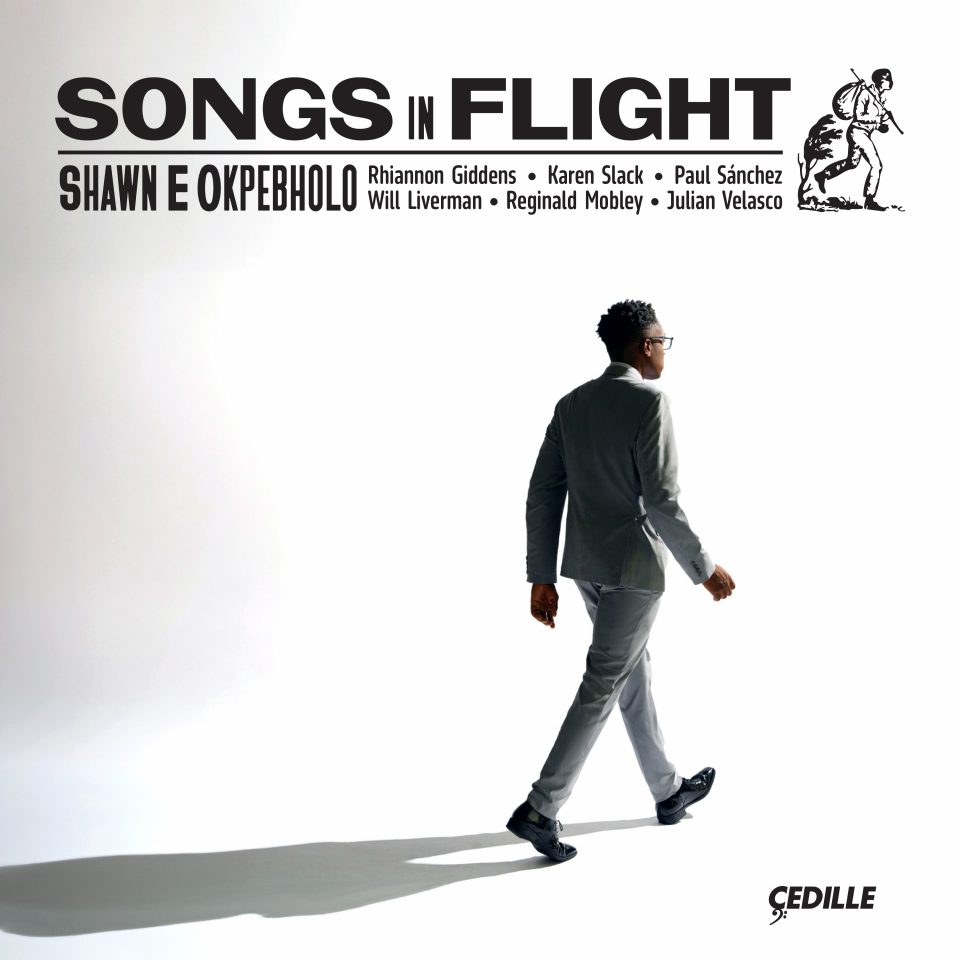
Shawn E Okpebholo, Songs in Flight
In the song cycle Songs In Flight, Shawn E Okpebholo sets to music poetry based on the words and concepts found in several newspaper classified advertisements for the return of runaway enslaved individuals. These ads have been preserved in the Freedom on the Move database, and they give a grim picture of the way human beings were treated and described by slave masters.
Vocalists Rhiannon Giddens, Karen Slack, Will Liverman, and Reginald Mobley, backed by pianist Paul Sánchez, provide sad and mournful voices to these advertisements. Texts and poetry were written by Tsitsi Ella Jaji, Tyehimba Jess, and Crystal Simone Smith. While from the 18th and 19th Centuries, these advertisements offer chilling reminders of how racism is still a reality today. It is impossible to listen to this music without experiencing some level of contrition.
In addition to Songs in Flight, the disc has excerpts from four other song cycles performed by each of the four vocalists with Sanchez on piano and Julian Velasco on Saxophone. These are spiritual songs with texts by Marcus Amaker, Langston Hughes, and Beatrice Holz using biblical sources. Very nice.
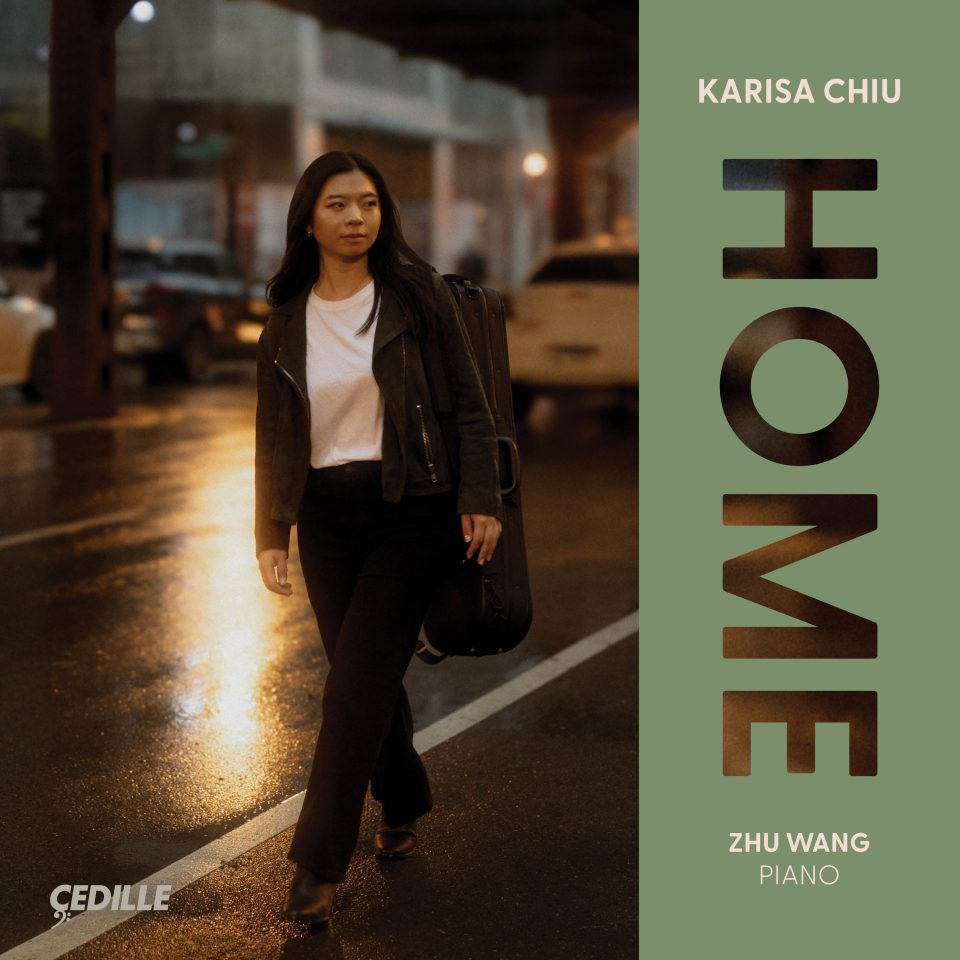
Karisa Chiu, Violin, Home, with Zhu Wang, piano
What a way to introduce yourself! Karisa Chiu’s debut album, Home, presents a sophisticated young violinist capable of performing a large variety of material both accompanied by pianist Zhu Wang and as a soloist.
The nuance she displays in the Five Pieces by Jean Sibelius comes out immediately as she plays a charming melody and then slides to notes at the top of the finger board in “Mazurka.” “Rondino” shows off clear fingering and fun.
This CD has two of my personal favorites from France at the turn of the 20th Century: Claude Debussy’s only violin sonata and Gabriel Fauré’s first one. Debussy wrote a series of sonatas for piano and another solo instrument toward the end of his life. Chiu and Wang reproduce the impressionistic airs Debussy’s music often creates. Using the word “impressionist” in describing Debussy is very cliché, but there’s no better word to describe this work.
Fauré’s first violin sonata is a bit more traditional. In the opening movement Allegro molto Chiu gives a passionate sound, while Wang offers marvelously flowing background. It’s the second movement Andante where Chiu and Wang exhibit passionate longing. Wonderful.
Turning to the world of the contemporary, Chiu offers a very wistful and contemplative rendition of Incantation by Augusta Read Thomas, who wrote this in 1995 for violinist Catherine Tait, who was in the last stages of terminal cancer. Chiu brings out the warmth, sadness, and life embodied in this music.

Cavatina Duo, with the Pacifica Quartet, River of Fire
Whenever I hear a tune in my head while walking downtown, I know the CD it’s from is memorable. The tune was Stacy Garrrop’s “Song of the Boundless” from the River of Fire CD by Chicago’s Cavatina Duo, joined by members of the Pacifica Quartet.
Comprising the Cavatina Duo is the married couple of Spanish flutist Eugenia Moliner Bosnian guitarist Denis Azabagić. They asked several composers to create Gypsy-inspired music. In the extensive notes accompanying this CD, Kai Christensen recognized that the word “Gypsy” has derogatory connotations, but he defends its use in the context of music, calling it “a culturally positive and effective term…”
In addition to Stacy Garrop, Moliner and Azabagić commissioned Sergio Assad, Atanas Ourkouzounov, Matthew Dunne, and Clarice Assad. In titling her suite Romani Songs, Garrop illustrates how labels can be so misleading. The opening work, “Song from the twisting word,” is very reminiscent of sounds from Latin America. Joining the duo for Romani Songs is Pacifica cellist Brandon Vamos. Moliner’s flute just soars in the breeze, Azabagić’s guitar work is very crisp, and Vamos’s cello is flowing.
In Cantos Ciganos, Brazilian guitarist extraordinaire Sergio Assad added a violin to the duo, and Simon Ganatra played wonderfully. This piece is almost 20 minutes long, and Assad gave extensive solos opportunities to each of the instruments. It is striking how Molinar’s flute playing is so fluid, even when she’s playing rapid runs.
Sergio Assad’s daughter Clarice Assad brought the Cavatina Duo together with the full Pacifica Quartet for Four Scenes, a work in four movements that she wrote “in homage to the Romani people.” It’s some of the most exciting and moving music on the CD, starting with “Migration,” and speeding up with “Tres Mininos (Three Boys).” The sextet very precisely brings it all out with exquisite playing.
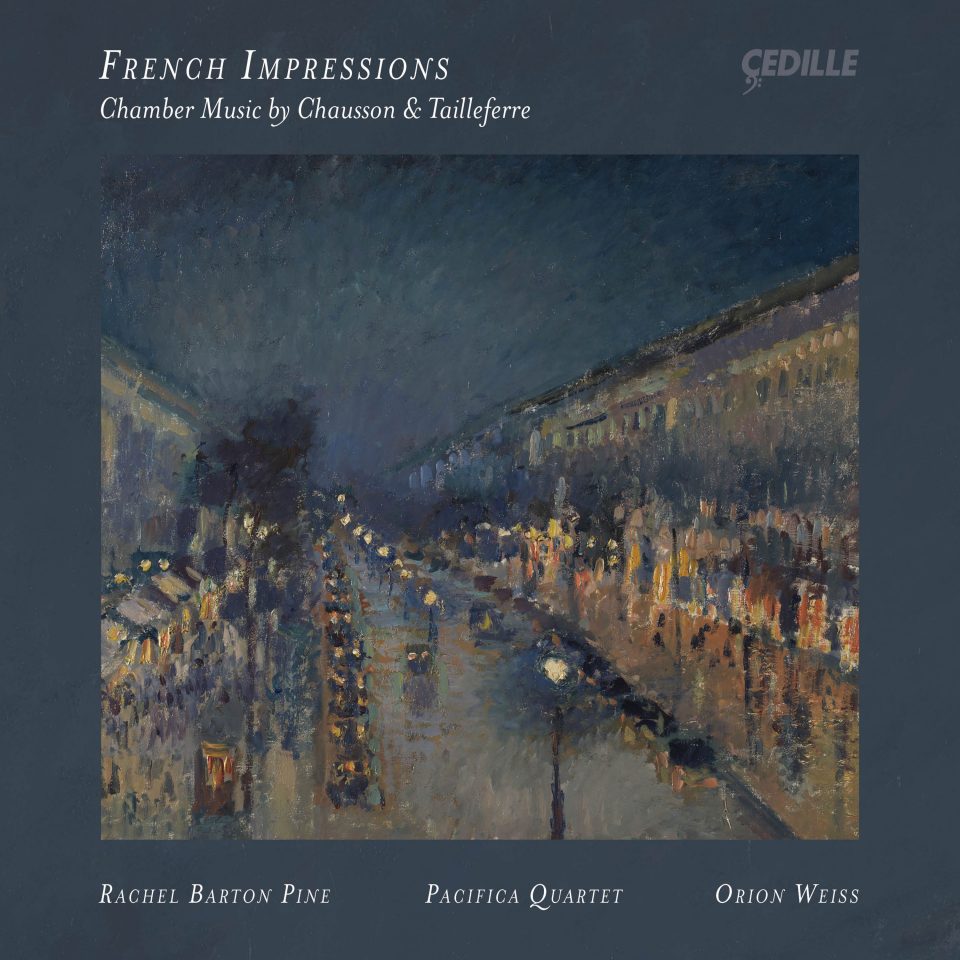
Rachel Barton Pine, the Pacifica Quartet, Orion Weiss, French Impressions
This CD is a great example of Cedille Records’ practice of calling attention to excellent music that is little remembered and seldom performed. In French Impressions, violinist Rachel Barton Pine, pianist Orion Weiss, and the Pacifica Quartet come together to perform music by French composers Ernest Chausson and Germaine Tailleferre. While Chausson’s music is better known, Tailleferre’s music, as the notes suggest, is completely forgotten. Yet, the wonderful music presented here shows how sad this is.
Regarding Chausson’s Concert for violin, piano, and string quartet starts, Pine writes how unusual it is to find solo violins paired with a string quartet, and that, as a teenager, she imagined performing this Concert with fellow students at the Music Institute of Chicago and founding members of the Pacifica Quartet, violinist Simin Ganatra and cellist Brandon Vamos.
This expressive work from 1892 brings out all of the romantic urges that characterize Chaussan’s music. The second movement and finale feature hummable tunes that stayed with me throughout the day.
The remainder of the disc is devoted to Tailleferre, three works for violin and piano, and one string quartet. Violin Sonata No. 2 is a very charming and Pine and Weiss give a playful performance. The opening movement Allegro non troppo has song-like melody interspersed with moments of tension. and Pine and Weiss take full advantage of the lyrical parasol.
The brief string in three movements is very moving. It builds to a rapid finale.
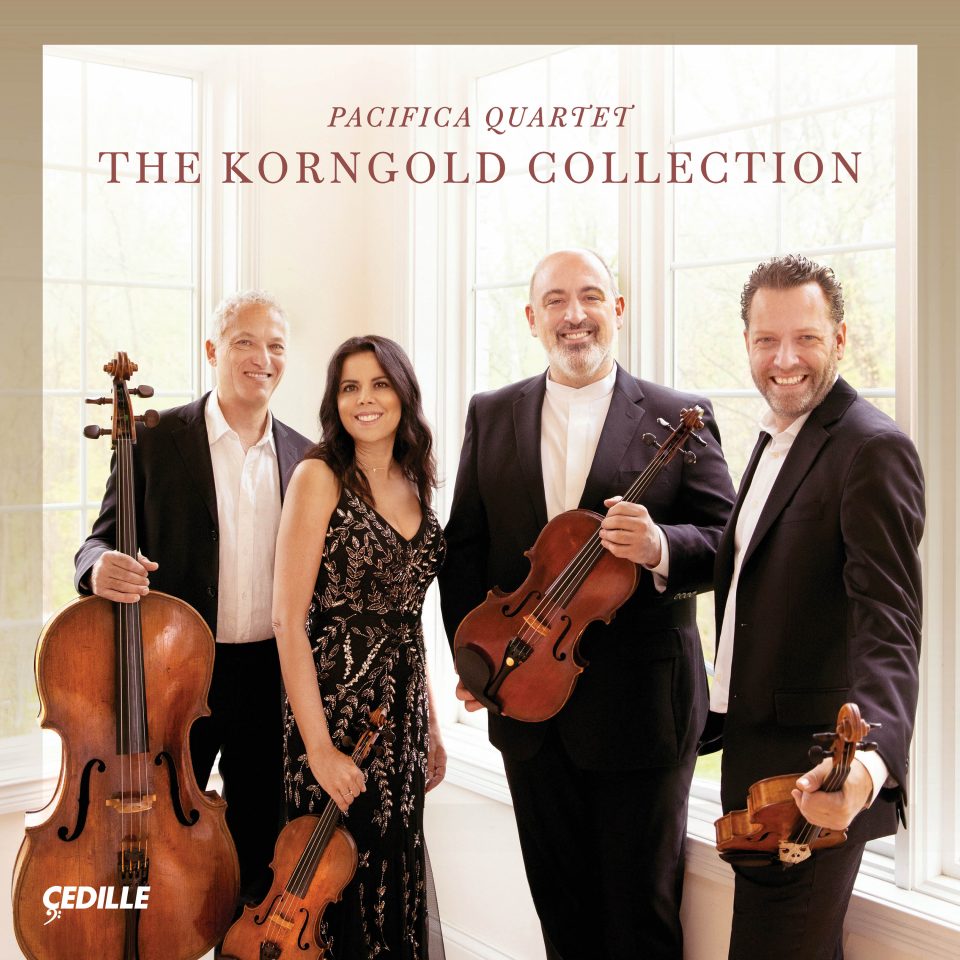
Pacifica Quartet, The Korngold Collection
The chamber music of Erich Wolfgang Korngold is another example of rarely heard music that does not deserve the obscurity in which it has languished. On this double CD the Pacifica Quartet performs Korngold’s three string quartets, a piano quintet with Orion Weiss on piano, and a string sextet with Milena Pajaro-van de Stadt on viola and Eric Kim on Cello.
As the notes explain, Korngold achieved success in Viennese and European opera and concert halls in the interwar years. Shifting to writing scores for theater and film led to him and his family moving to Hollywood, thereby escaping Nazi persecution. While focusing on movie scores, Korngold did not write music for performance, but he eventually returned to it as World War II was coming to an end. All but one of the works on this disc date from his time in Vienna. His first foray back to concert music started with his final String Quartet from 1945, which incorporates themes from his movie scores.
Why this fun and lively music has been so obscure is a mystery. Korngold uses traditional tonalities with nice atonal contrasts and unexpected harmonic shifts. While there are occasions when this music not very accessible, there many others where this music is very tuneful, with charming and playful moments interspersed with great intensity.
Of the string quartets, I like the second one in E-flat Major best. It’s very melodic, as shown in the opening movement, Allegro. The second movement Interemezzo: Alegretto con motto is where things really get fun. The Largo that follows is very pastoral in sentiment, and the Waltz that concludes it works very well. I also really like the Piano Quintet.
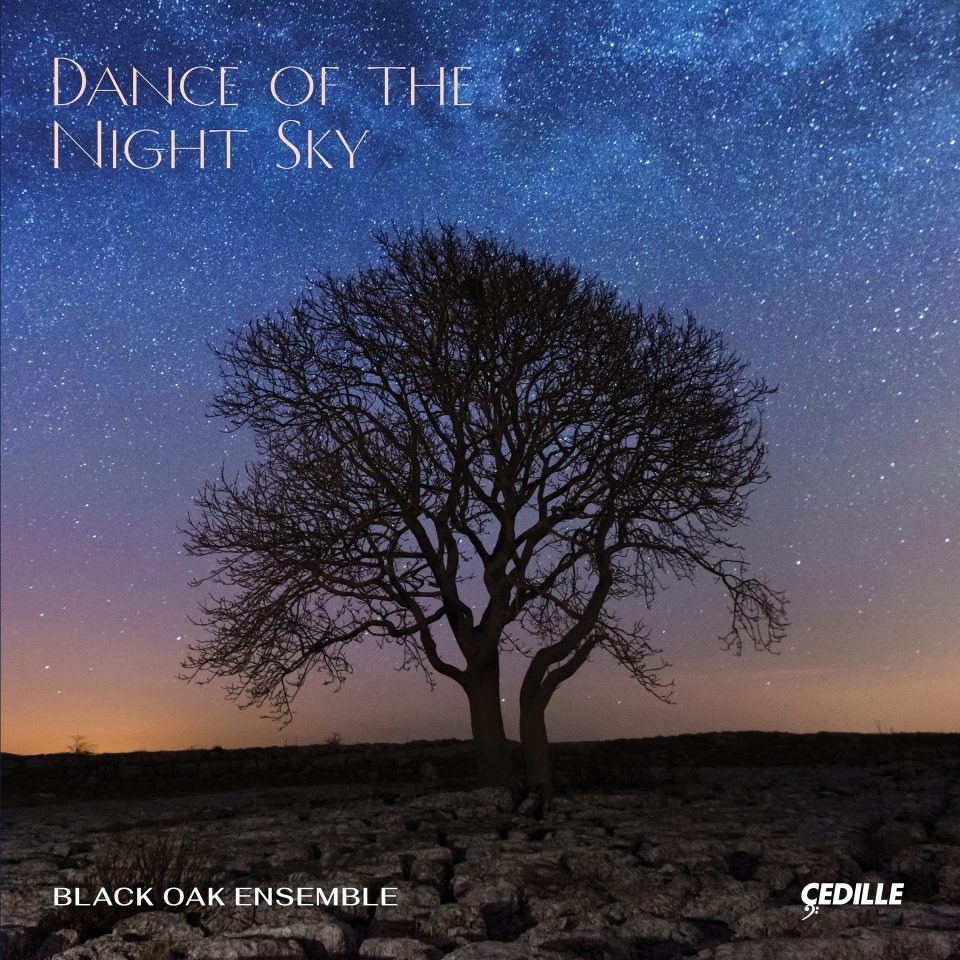
Black Oak Ensemble, Dance of the Night Sky
On Dance of the Night Sky, Black Oak Ensemble performs a remarkable variety of sounds from new music composed by eight British women. Comprised of violinist Desirée Ruhstrat, violist Aurélien Fort Pederzoli, and cellist David Cunliffe, this Chicago-based string trio has made a mission of rediscovering and expanding the rather thin repertoire of the string trio.
Black Oak Ensemble commissioned several of the works on this, their third CD. This includes the title track, Dance of the Night Sky by Shirley. J Thompson, which starts with chords and rhythmic kilter.
Dobrinka Tabakova’s Insight explores the various tonal landscapes made possible by the string trio with a nice mixture of tonal and atonal sounds. Brief melodies are followed by lengthy chords that create aural palettes.
Carol J Jones’ Bulawayo Railway starts slowly, as the train leaves the station. It picks up speed, and the strings sound the horn as the train passes by.
Most of the music on this release is very modern in orientation, but the final work, Making Hay by Errollyn Wallen, opens with a transcription to string trio of Bach’s sunny “Prelude in E-Major” from Book I of The Well Tempered Clavier. This is soon interrupted by stormy passages of dissonant chords and stormy sounds, before returning back to a slightly skewed Bach.
If you enjoyed this post, please consider supporting Third Coast Review’s arts and culture coverage by making a donation. Choose the amount that works best for you, and know it goes directly to support our writers and contributors.