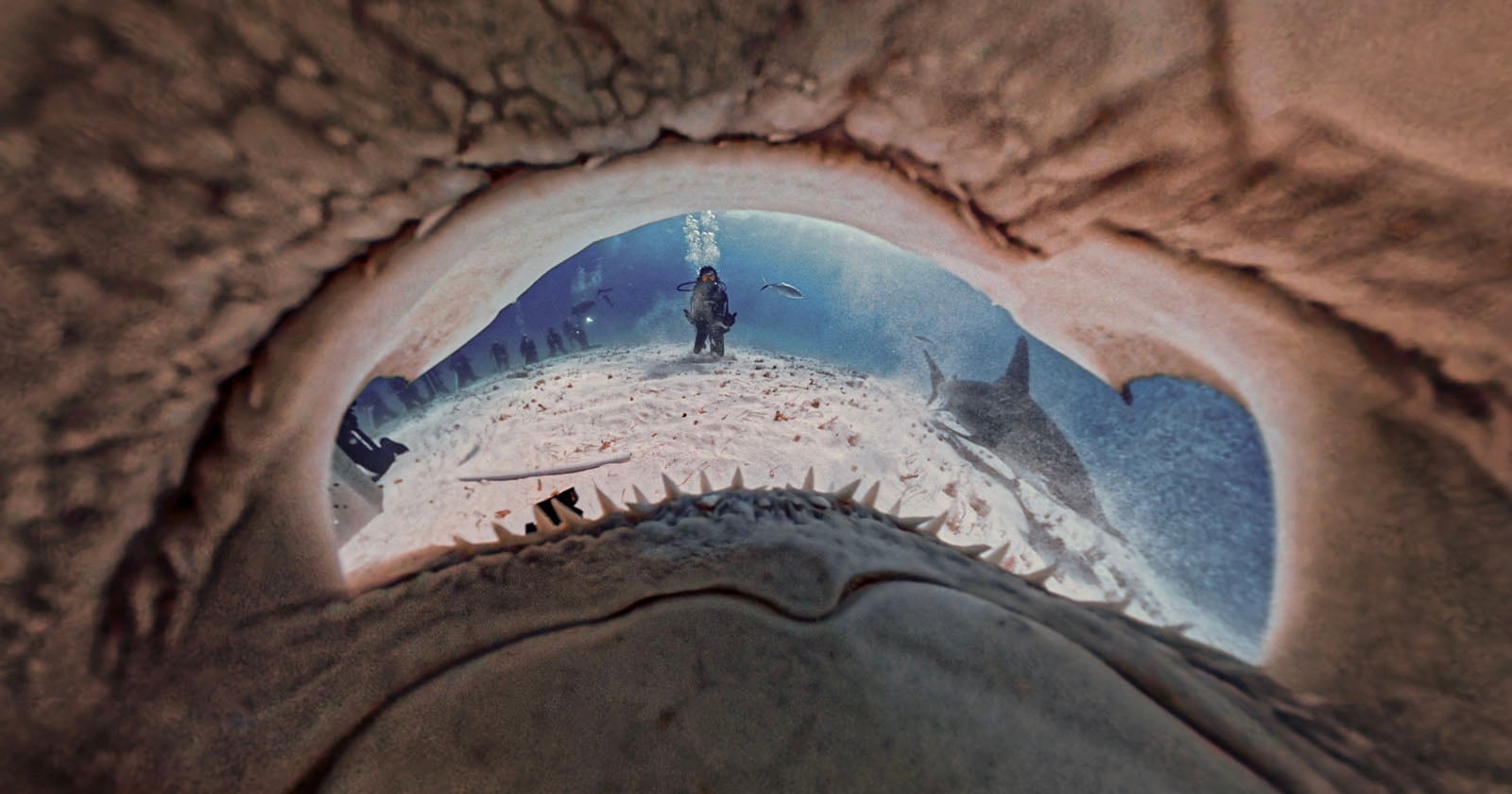
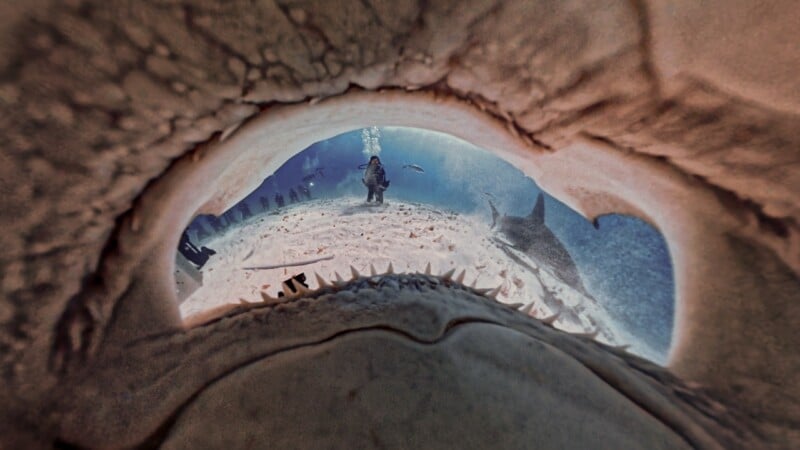
Photographer Ari Rabin-Havt has always wanted to get a picture from inside a shark’s mouth, looking out.
Rabin-Havt regularly dives with great hammerhead sharks off the small Bahamian island of Bimini. “I have always been fascinated by their perspective on the world which sharks often experience with their mouths,” he tells PetaPixel.
He typically shoots with a Canon R5 in Nauticam housing. But that won’t do for a shot from inside a shark’s mouth. So instead, he turned to an Insta360 X5.
“Watching the sharks for a long time in the water over years I got to understand behavior,” Rabin-Havt explains.
“I mounted the Insta360 on a spike which was planted in the ocean floor within the pattern of their movements. This was discussed prior to the dive with the feeders and the safety divers.
“After repeated flyovers, one decided to go for the grab. I’ve gotten similar shots before but this allowed me to get the capture I wanted, which was seeing the shadow of the cephalofoil as the jaws closed around it.”
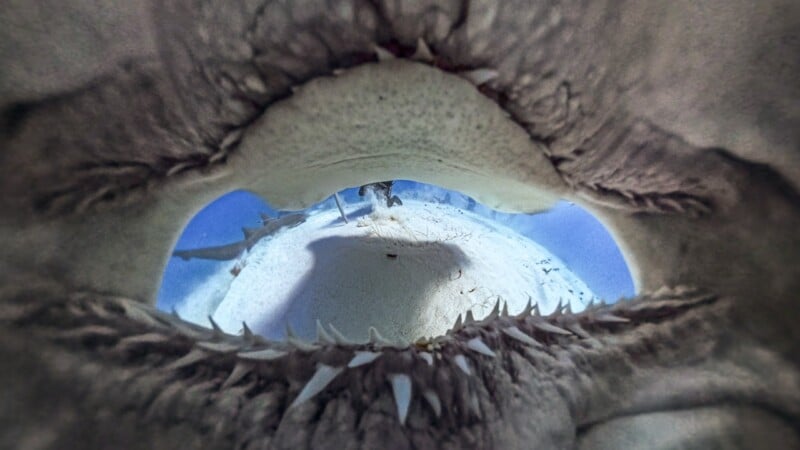 The shadow of the hammerhead’s cephalofoil is visible on the seabed.
The cephalofoil is the hammerhead’s distinctive flattened head, and you can see its iconic shape on the seabed. In another frame that was captured the day after, numerous divers and another hammerhead can be spotted.
“Part of the trick of the shot was not jamming it at the shark or forcing it,” adds the photographer. “They are skittish by nature and that would just cause them to run. The shark makes the decision to pick up the camera.”
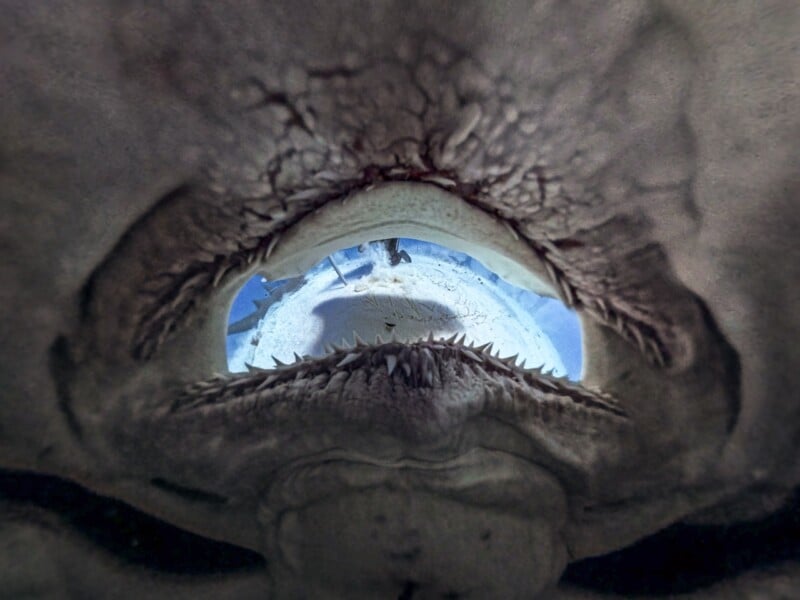
Rabin-Havt says he had tried to get the shot before by baiting the camera but says the bait blocks the view. “The trick was placing the camera in a spot, where I knew it would get the shark’s attention and to let the shark decide when to pick it up,” he says.
“Sharks use their mouths to investigate the strange object in the water. The camera and housing were just that.”
More of Rabin-Havt’s work can be found on his website and Instagram.
Image credits: Photographs by Ari Rabin-Havt