Mayor-elect Zohran Mamdani has said he plans to end New York City’s sweeps of homeless encampments, signaling a shift toward connecting people experiencing homelessness with rental housing — including supportive housing — once he takes office.
Supportive housing, which pairs affordable apartments with on-site social services, began in New York City roughly 50 years ago and has expanded to tens of thousands of units citywide.
Housing advocates say it is now increasingly being folded into broader “wraparound” housing models that combine health care, food access, education and other services under one roof — an approach that could grow under the next mayoral administration.
What You Need To Know
- Mayor-elect Zohran Mamdani says he plans to end homeless encampment sweeps and focus on housing placements
- Supportive housing combines affordable apartments with on-site social services for at-risk residents
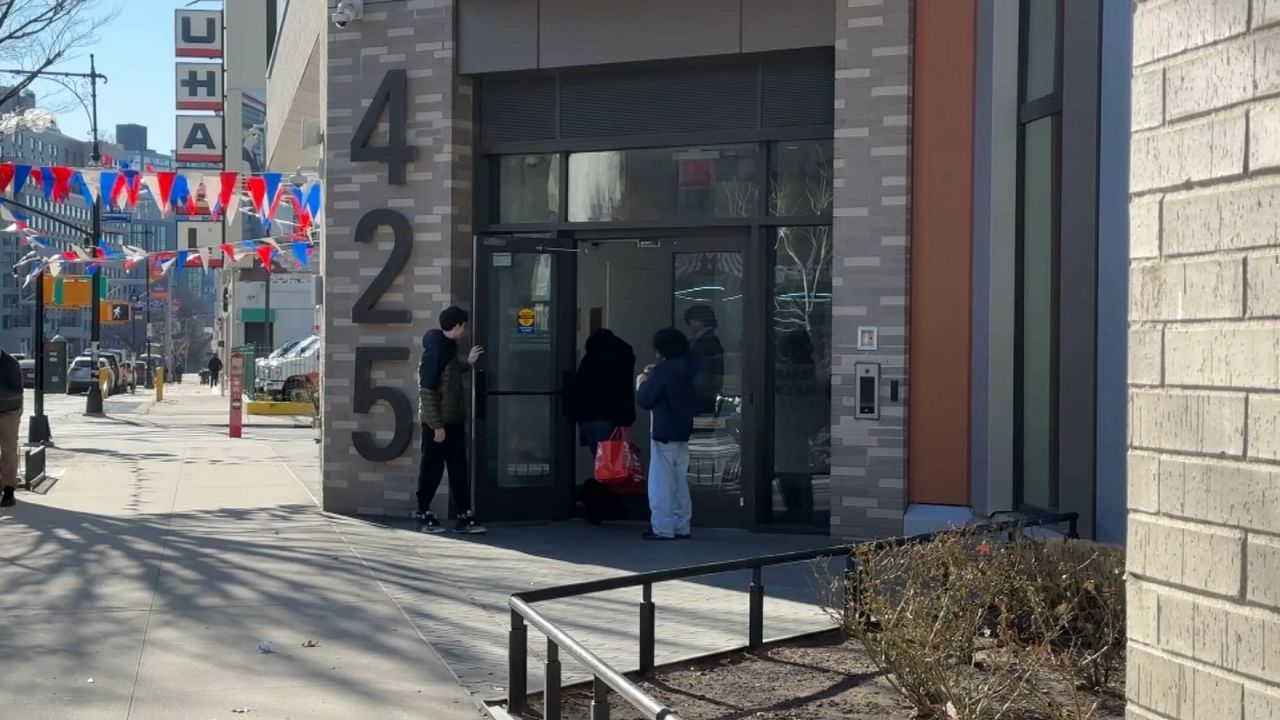
- Developments like 425 Grand Concourse integrate housing with food access, health care and education
- City officials say nearly 13,000 units for formerly homeless New Yorkers have been financed since 2022
At 425 Grand Concourse in the Bronx, Chastity Salas said she is grateful for the stability the building has provided her family.
“We were so, so ecstatic to finally have a home,” she said. “Somewhere that is absolutely beautiful, affordable.”
Salas, a 30-year-old single mother, moved into the 100% affordable housing development three years ago with her daughter, Isabella, who recently turned five. Before that, they were living in a homeless shelter.
All 277 apartments in the building are permanently affordable. About 10% of residents are formerly homeless New Yorkers, according to the developer, Trinity Financial. The building offers supportive services, including case management, aimed at helping families remain housed and stable.
The development also includes other wraparound amenities, such as a recently opened supermarket. For longtime resident Rosalind Poyer, the store has transformed what was once considered a food desert.
“I’m glad the C-Town is next door because that makes it more convenient than taking a bus to go do shopping,” Poyer said.
Thomas Brown, vice president of development at Trinity Financial, said the model integrates housing with essential services in a way that has proven effective.
“This is one of the models that is proven, that can work,” Brown said.
Supportive housing and wraparound services have existed for decades, but experts say more comprehensive developments like 425 Grand Concourse remain relatively new and limited in number. Affordable housing advocate Amit Singh Bagga estimates about a dozen similar projects are currently in development across the city.
“We’re never going to be able to really reduce that shelter population unless we are able to provide actual homes that are deeply affordable for many people who are living in shelter,” said Bagga, principal at Public Progress NYC. “Many New Yorkers who are experiencing homelessness are people who work, people who have jobs, people who have kids, but the cost of housing is just so incredibly high.”
Bagga advised Mamdani on housing policy during the June primary and managed the “Yes on Affordable Housing” campaign, which backed four ballot measures approved by voters in November aimed at easing the construction of affordable housing.
“The first task that the incoming administration is going to have,” Bagga said, “is to work with communities and affordable housing developers to identify those neighborhoods where we have not seen any type of affordable housing — and start to think about how land can be used to house New Yorkers that desperately need to be housed and to have wraparound services.”
For residents like Poyer, the stability offered by developments such as this allows families to focus on something simpler during the holidays.
“The meaning of Christmas is love, sharing and just being together,” she said.
The Adams administration says that since Eric Adams became mayor, the city has helped finance nearly 13,000 housing units for formerly homeless New Yorkers, about half of which are supportive housing units.