
The native NVMe driver should be released for the regular Windows operating systems since it reportedly delivers a practical performance boost.
Users Enable Native NVMe Driver From Windows Server 2025 In Windows 11; Achieve Noticeably Higher Random Read/Write Speeds
It’s incredible how the regular Windows OS, such as Windows 10 and 11, throttle the performance of NVMe SSDs despite the products being dominant in the market for years. If you aren’t aware, consumer Windows operating systems use a SCSI emulation layer that lets the OS communicate with the NVMe SSDs. This compatibility layer adds CPU overhead and higher latency, which in result, brings somewhat slower performance than one would expect.
After a long time, Microsoft did release a “native” NVMe driver, but it’s for Windows Server 2025 instead. So, for consumers, the driver is still unavailable. However, some users managed to enable it in Windows 11, and the results definitely showed a striking difference. By some registry tweaks on Windows 11, the NVMe driver could be enabled, and one user on X reported gains of around 9%/19% in average Read/Write speeds in AS SSD benchmark.
 Image Credit: @PurePlayerPC
The impact is clearly visible in random read/write speeds vs sequential read/write speeds, which makes the new gains actually useful to users. While the sequential read/write speeds saw minimal gains, the 4K and 4K-64Thrd benchmarks showed a staggering difference vs SCSI. Similarly, a Reddit user u/Cheetah2kkk benchmarked his NVMe SSD on the MSI Claw 8 AI+ handheld and saw drastic gains. He tested the SSD in CrystalDiskMark 8.0.4, which showed that the native driver improves the random read/write speeds by around 4%-11%/7%-85%.


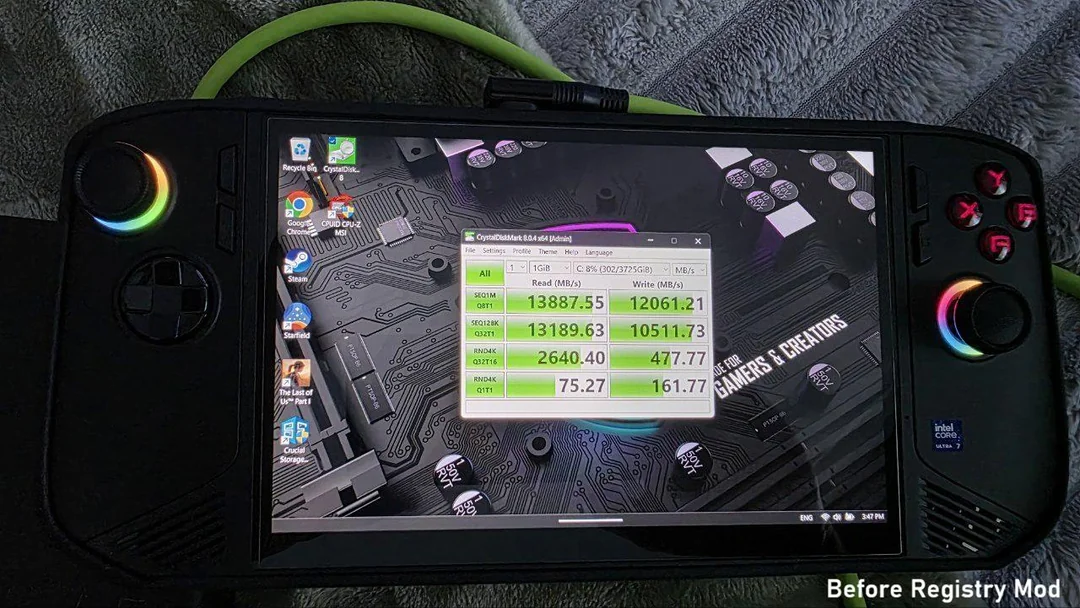
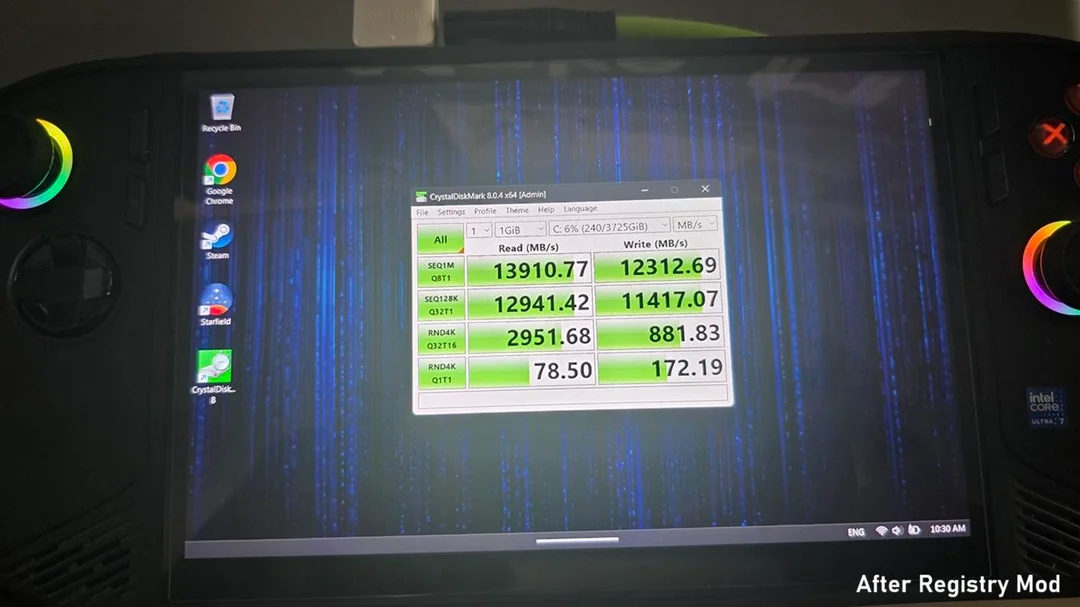
A performance difference of nearly 85% is incredible, but enabling the driver is a hassle in itself. Users have reported various bugs, such as inaccessibility to drives. This is why it might not be worth the risk for most. That said, it’s disappointing that NVMe SSDs, being in the market for several years, cannot run at their full potential yet. Microsoft should now accelerate the rollout of the native NVMe driver to mainstream Windows versions.
Follow Wccftech on Google to get more of our news coverage in your feeds.