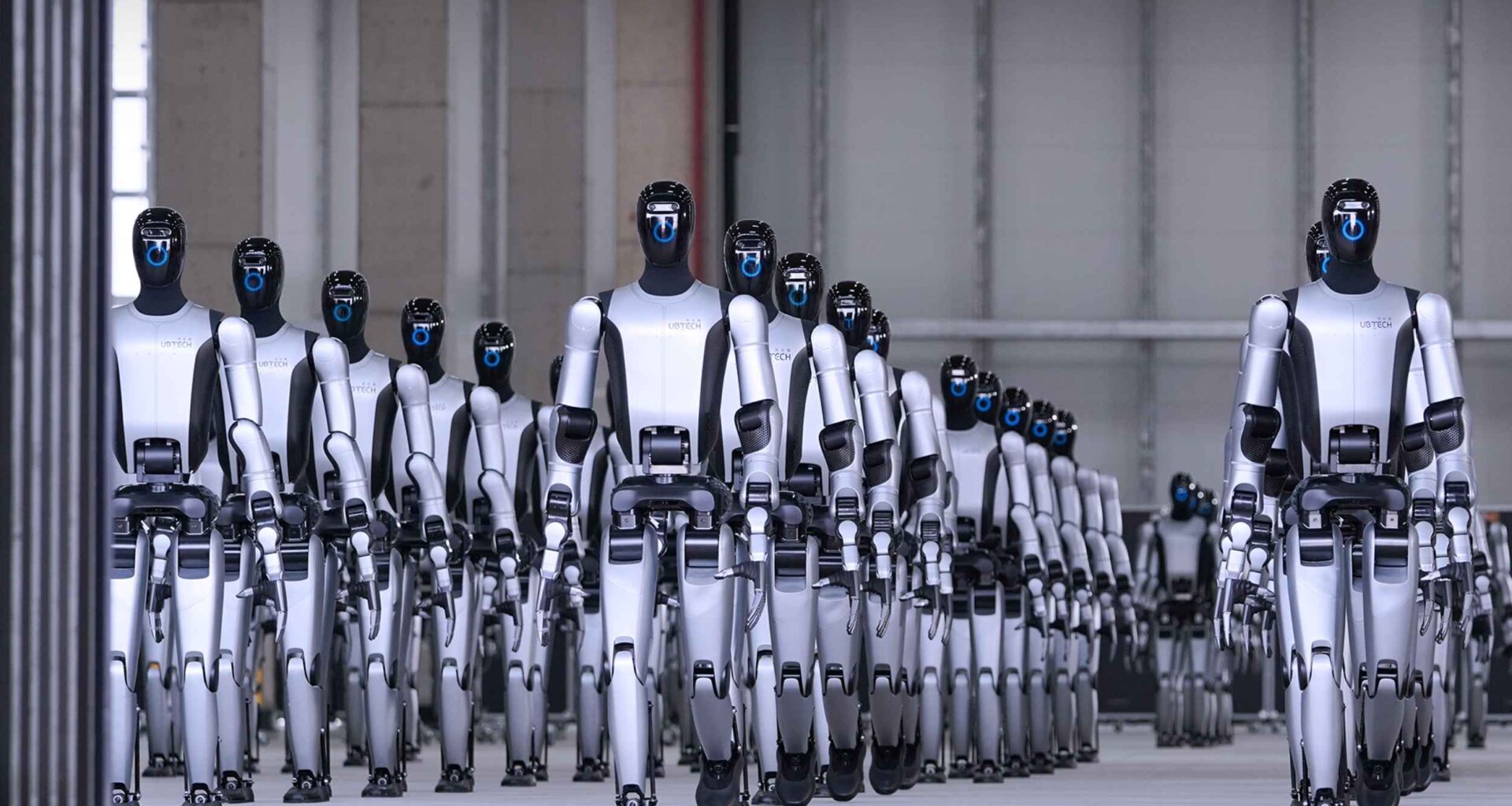
China is about to send humanoid robots to work at a busy border with Vietnam. UBTECH Robotics has won a $37 million contract, to deploy its Walker S2 machines there starting this month.
The assignment is led by UBTECH Robotics Corp., a Shenzhen-based company that builds full-size humanoid robots for industry and public services.

Its engineers focus on embodied intelligence, which is artificial intelligence that controls a physical robot body, so these machines can handle messy, real-world environments.
Fangchenggang is a coastal city in Guangxi near the border with Vietnam, where cargo trucks, coaches, and day travelers constantly cycle through.
Chinese planners see a border crossing as a tough, real-world test, because schedules are tight and inspections cannot easily stop.
If these robots perform reliably there, it will be easier to argue for similar deployments at airports, seaports, and crowded train stations.
Inside the Walker S2 robots
Walker S2 is an adult-sized humanoid machine with jointed legs, a torso, and arms, designed to move wherever people already walk.
It uses autonomous battery swapping, which involves robots changing battery packs without human help, so that it can work with very little downtime.
To stay balanced and avoid collisions, the robot combines cameras, depth sensors, and force feedback in its joints to monitor nearby movement.
That mix of hardware and software makes Walker S2 closer to a general purpose worker than many single-task factory machines.
What Walker S2 units can do
At the Fangchenggang project, Walker S2 units will help border staff guide passenger queues, direct vehicles, and answer simple questions from travelers.
Some robots will patrol corridors and waiting areas, watching for blocked exits or crowd patterns that might require human officers to intervene.
Others will move between cargo lanes to support logistics teams, checking container IDs, confirming seals, and relaying status updates to dispatch centers.
Away from the border itself, the fleet is expected to inspect steel, copper, and aluminum facilities, walking structured routes through hot industrial yards.
Walker S2 units are popular
The Fangchenggang order is not UBTECH’s first big humanoid contract; earlier deals in 2025 covered factories and data centers in other provinces.
“This isn’t just a number; it’s proof of real-world value and the accelerating commercialization of humanoid robots globally!” wrote scientists at UBTECH in a post.
Including the September procurement deal and domestic projects, UBTECH says 2025 orders for the Walker S2 series now total around $157 billion.
Yet the company remains loss-making, even as revenue grows, and must convince investors that these orders will turn into sustainable profit.
Policy moves behind border trial
In 2023, China’s Ministry of Industry and Information Technology issued guidance calling for a national innovation system around humanoid robots by 2025.
The ministry opened consultation in 2024 on a standardization technical committee, an expert group that writes industry rules for humanoid robots.
Chinese officials treat humanoid robots as a strategic industry, inviting company leaders onto national standard writing bodies that will review deployments like Fangchenggang.
This border trial fits that agenda, putting humanoids into a regulated space where safety, reliability, and accountability will be watched closely by regulators.
Training the humanoid robots
Beijing has opened a humanoid robot data training center, where robots practice tasks to collect training data in Shijingshan District.
The site covers about 3,000 square meters, roughly 32,000 square feet, and already deploys more than 100 humanoid machines in staged workplaces.
For training, robots there assemble parts in mock workshops, clean bathrooms, make beds, and even tend plants and small indoor gardens.
A center like this gives developers data, so future humanoids arrive at places like Fangchenggang with tested skills instead of guesswork.
A recent survey of industrial robotics research found that perception systems are critical when machines and human workers share the same space.
In that work, researchers highlight how cameras, depth sensors, and other detectors let robots recognize people, avoid collisions, and adjust speed near crowds.
Those capabilities line up with the Fangchenggang plans, where humanoids will follow patrol routes yet respond to unexpected human movements in real time.
Researchers also warn that safety is never automatic, so systems must be tested carefully and monitored continuously when robots operate close to people.
What this means for real humans
For travelers, the most visible change will be sharing lines and inspection halls with machines that can talk, point, and give basic directions.
Border officers may spend less time managing queues or repeating simple instructions, and more time on identity checks, risk assessments, and complex investigations.
Some people will welcome shorter waits and clearer information, while others may feel uneasy seeing humanoid robots watching movements and recording every interaction.
For border staff, the rollout raises practical questions about training, authority, and responsibility whenever a robot makes a mistake or misses signals.
Questions remain about Walker S2
The Fangchenggang deployment will test whether humanoids can keep their balance, avoid glitches, and handle messy weather at an outdoor, high-traffic crossing.
It will also show whether continuous robot patrols and inspections save money once equipment costs, software development, maintenance, and supervision are fully counted.
China’s economic planners have already warned humanoid robot firms against overpromising and overbuilding. This reflects their concerns about hype and potential overcapacity in the sector.
If the trial succeeds, future deployments might extend to other borders and critical infrastructure, but if it fails, companies could face tougher scrutiny.
Details obtained from an online post by Interesting Engineering.
—–
Like what you read? Subscribe to our newsletter for engaging articles, exclusive content, and the latest updates.
Check us out on EarthSnap, a free app brought to you by Eric Ralls and Earth.com.
—–