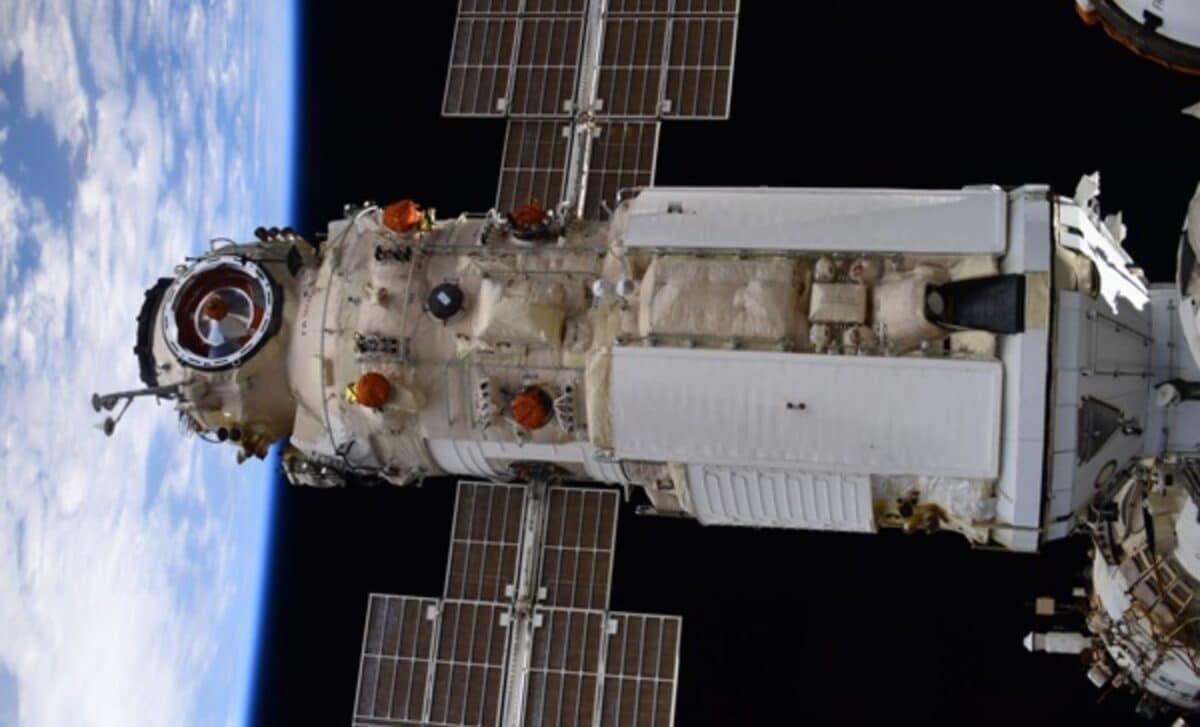
Russia’s Roscosmos is taking an unconventional route to its new space station, by recycling old modules from the International Space Station (ISS). With the ISS slated for retirement, Roscosmos has announced plans to repurpose several modules from the Russian segment of the station, marking a significant shift in the country’s space station strategy.
The new Russian Orbital Station (ROS) will incorporate modules like Zarya, Zvezda, Poisk, Rassvet, Nauka, and Pricha. These aging structures, which have been orbiting Earth for nearly 30 years, will be separated from the ISS once the program concludes, forming the heart of the new station. It’s a move that raises questions about the long-term durability of these modules and the scientific viability of the station as a whole.
A Shifting Vision for Russia’s Space Future
For years, Roscosmos has been toying with the idea of an independent space station. Initially, the Russian Orbital Service Station (ROSS), a successor to the Orbital Piloted Assembly and Experiment Complex (OPSEK) project, was supposed to be entirely new, free of the ISS’s aging modules. But by 2021, the plan shifted to an even bolder vision: creating a new space station using some of the hardware that has already been in orbit for decades.
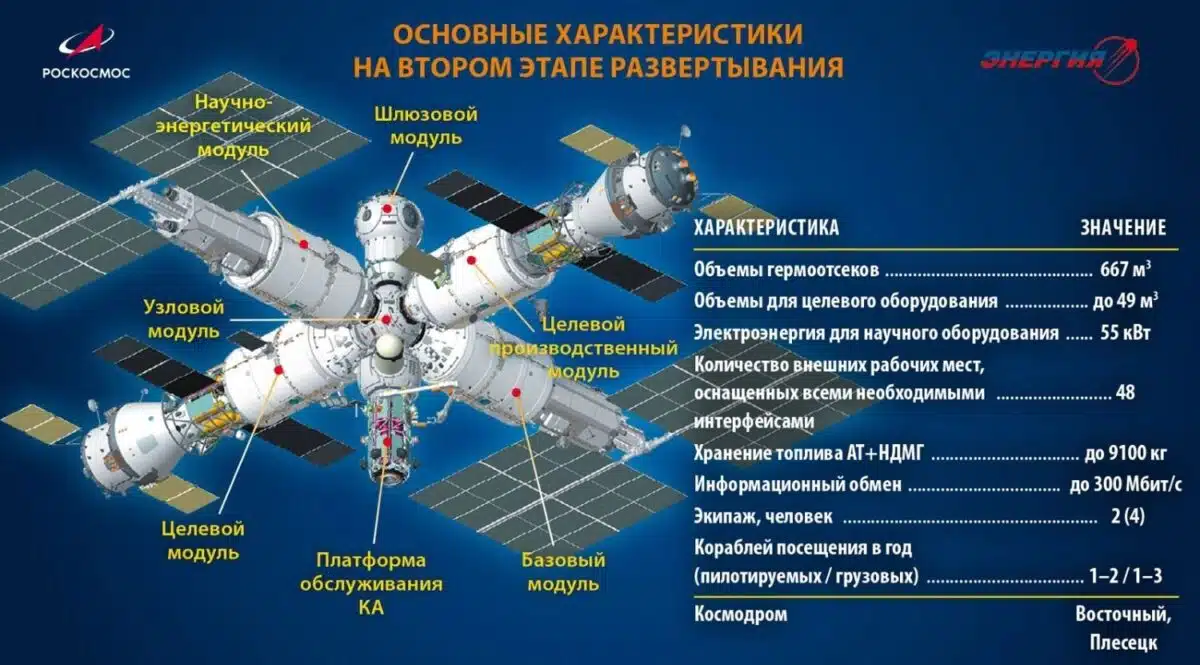 Here’s what the Russian Orbital Station was envisioned to look like. Credit: Roscosmos
According to the report published in Universe Today, the re-use of ISS modules marks a significant departure from Roscosmos’ previous plans, and according to a recent statement from Oleg Orlov, director of the Institute of Biomedical Problems at the Russian Academy of Sciences (RAS), the decision reflects the growing financial constraints and geopolitical shifts the country has faced in recent years.
With many of the ISS modules showing their age, particularly the Russian ones, it may seem like a cost-effective move, but some experts are skeptical of just how feasible it is to recycle these old, often problematic pieces of hardware.
Aging Modules and Serious Concerns
While the idea of recycling ISS modules may seem like a quick fix, there are significant concerns about the condition of the modules Roscosmos plans to repurpose. As Maria Sokolova of New Izvestia pointed out, some of the Russian modules are well over 25 years old and have suffered considerable wear and tear. The Zarya module, for instance, is 27 years old, and Zvezda, which is another key module for the new station, is not far behind.
These modules were designed for a much shorter operational lifespan, and the harsh conditions of space, including extreme temperature fluctuations and radiation, have taken their toll. Still, with Roscosmos under financial strain and facing limited options, recycling the modules could be seen as the only realistic path forward.