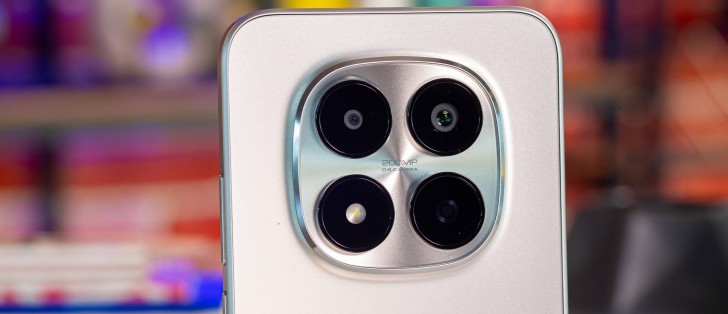
Xiaomi doesn’t really skimp on displays even in its more budget Redmi series. The Redmi Note 15 Pro 5G is an excellent illustration, with its large 6.83-inch, 12-bit AMOLED display. It has a sharp 2772 x 1280 pixel resolution, a 120Hz refresh rate and 2560Hz touch polling, as well as an advertised 3,200 nits of peak brightness and 3840Hz PWM dimming.
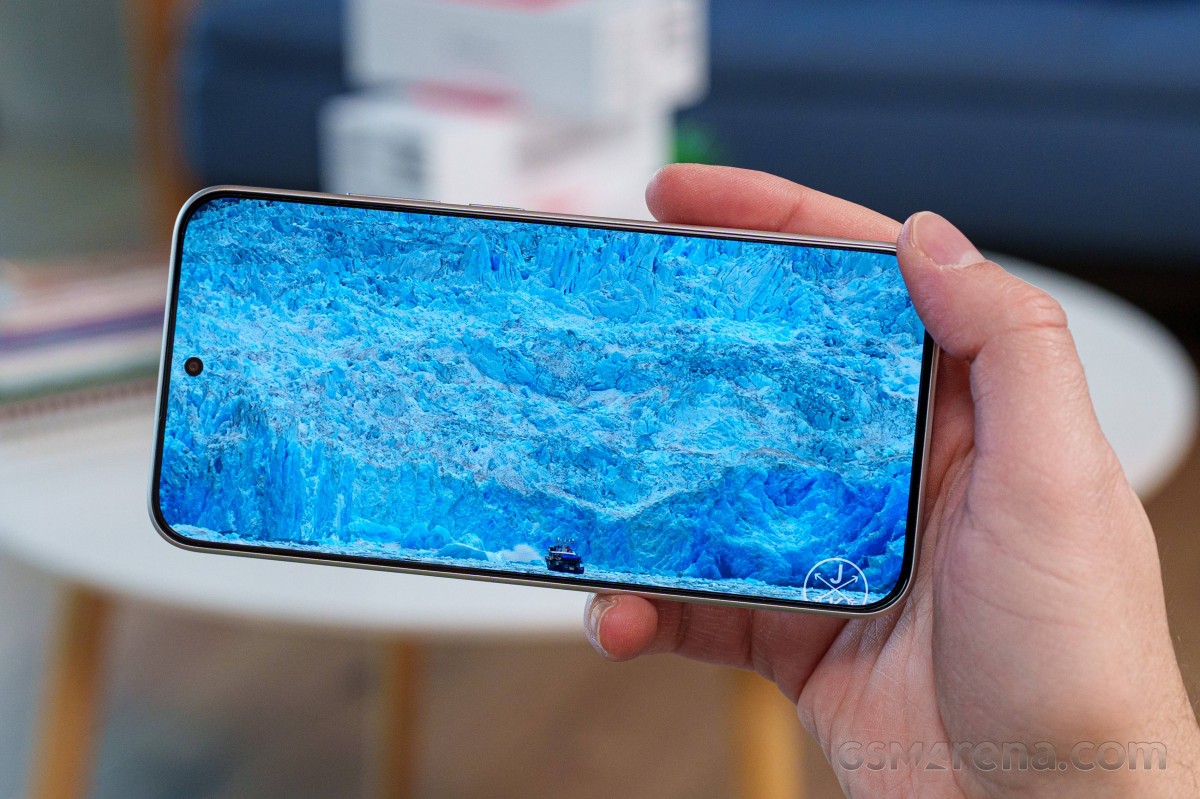
We did our standardized testing, and indeed the display on the Redmi Note 15 Pro 5G gets very bright – over 830 nits by maxing out the slider and 1900 nits in max auto mode and in bright ambient light.
The panel Xiaomi has chosen looks truly great in person. Thanks to its 12-bit color depth, it has practically no color banding, and it also has great DCI-P3 color support.
As mentioned, the phone has a 120Hz refresh rate. There are two refresh rate modes to choose from. The standard one automatically adapts the refresh rate based on what is happening on screen and what the current application supports. The phone can switch between 30Hz, 60Hz, 90Hz and 120Hz operation. Since this is an LTPS panel, it can’t really do any advanced adaptive switching, just fixed steps.
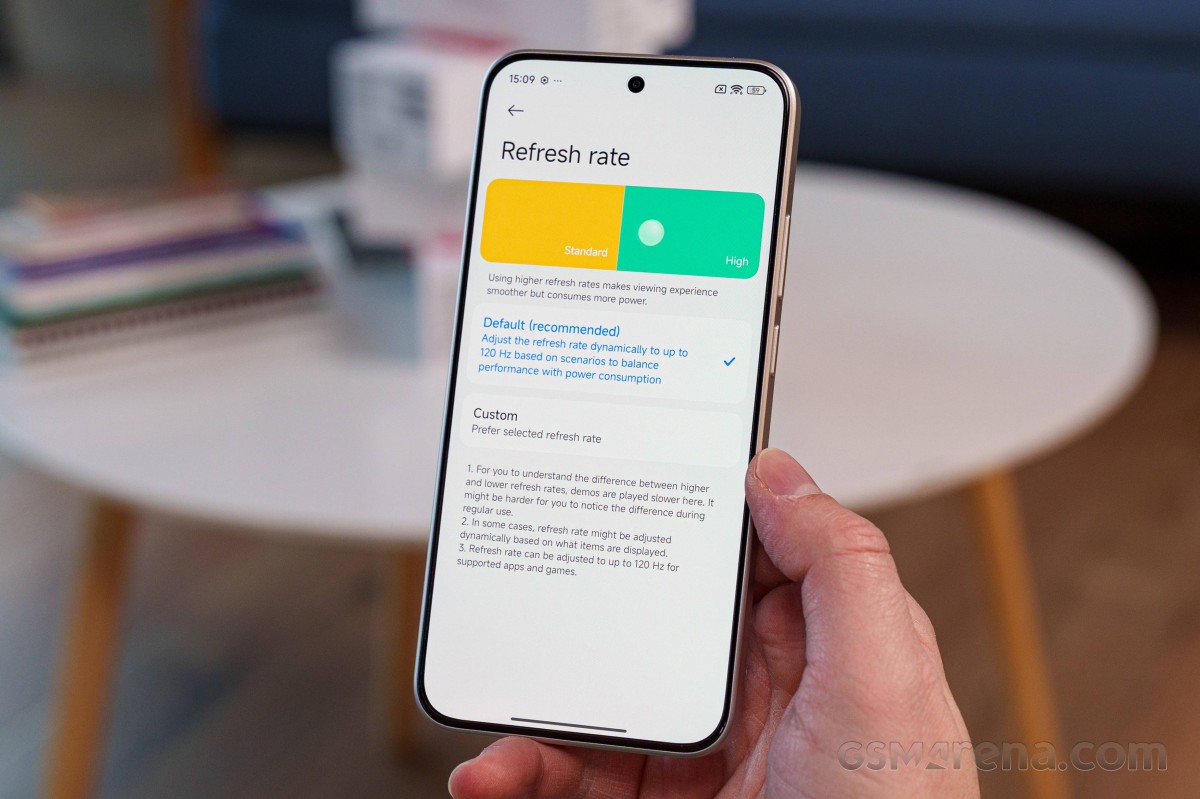
Alternatively, you can use the “Custom” refresh rate toggle and either lock the phone to 60Hz or select which apps you would like to run at up to 120Hz on a per-app basis. It’s a very flexible setup.
In terms of HDR support, the phone boasts both Dolby Vision and HDR10+ certification on the panel. In software, it can handle and decode every popular HDR format (HDR10, HDR10+, HLG and Dolby Vision).
Naturally, the Redmi Note 15 Pro 5G is certified for the highest possible Widevine L1 DRM protection, allowing streaming services like Netflix to offer up high-resolution content and saturate its display resolution.
The Redmi Note 15 Pro 5G has a large 6580 mAh battery. It has modern Si/C chemistry, which, among other things, makes it more energy dense.
We did our standardized battery testing and got almost fifteen and a half hours of Active User Score, which is quite respectable. The Redmi Note 15 Pro has plenty of juice to last you through a full day and then some.
The Redmi Note 15 Pro 5G supports 45W wired fast charging. While that is far from the fastest charging available out there, it is still quite serviceable in our book. Fifteen minutes on the charger got us from empty to 27%, and thirty minutes resulted in 47%. A full charge took an hour and thirteen minutes.
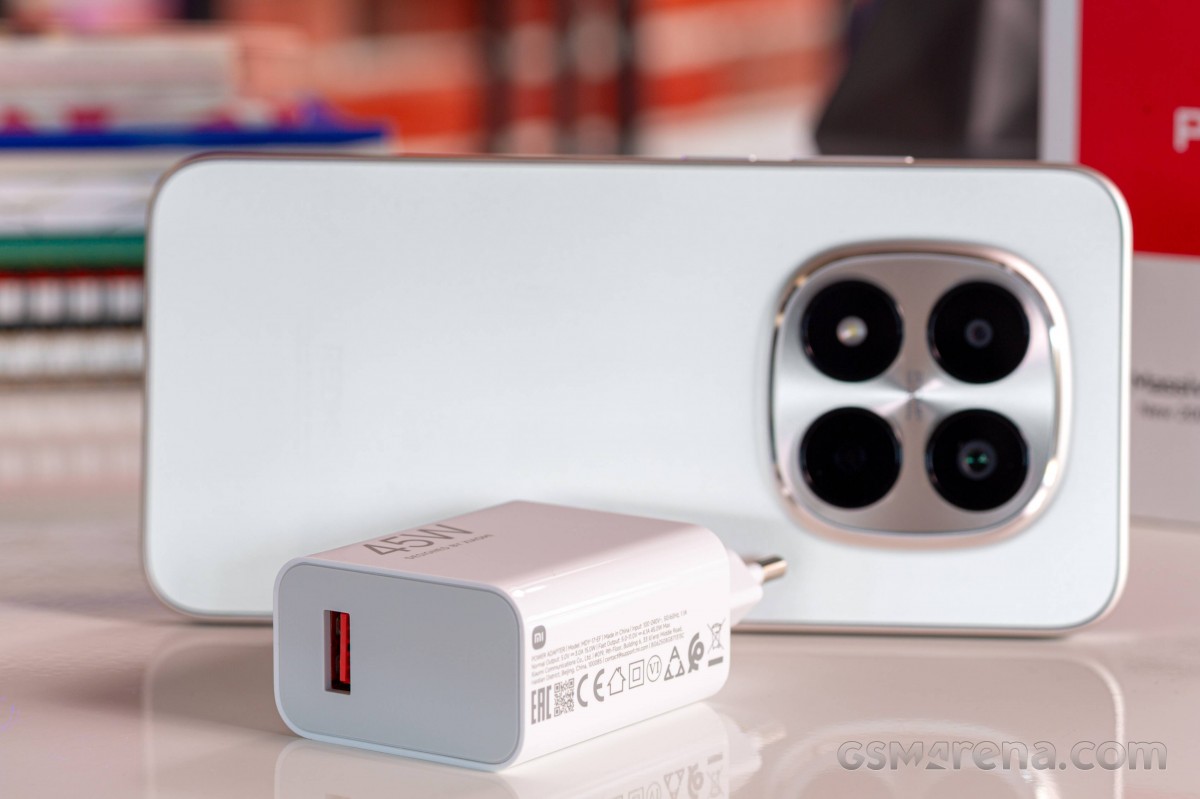
The Redmi Note 15 Pro 5G can also be used as a power bank in a pinch thanks to its 22.5W reverse wired charging support.
The Redmi Note 15 Pro 5G has a few battery protection options when it comes to charging. Mainly, you can set a charge limit, either a fixed one at 80% or a “Smart Charging” mode that promises to learn your usage patterns and charge to 80% when appropriate.
Speakers – loudness and quality
The Redmi Note 15 Pro 5G has a stereo speaker setup. There is one bottom-firing unit and a top-firing one. We don’t really think they are symmetrical in size, and they certainly don’t sound so in person.
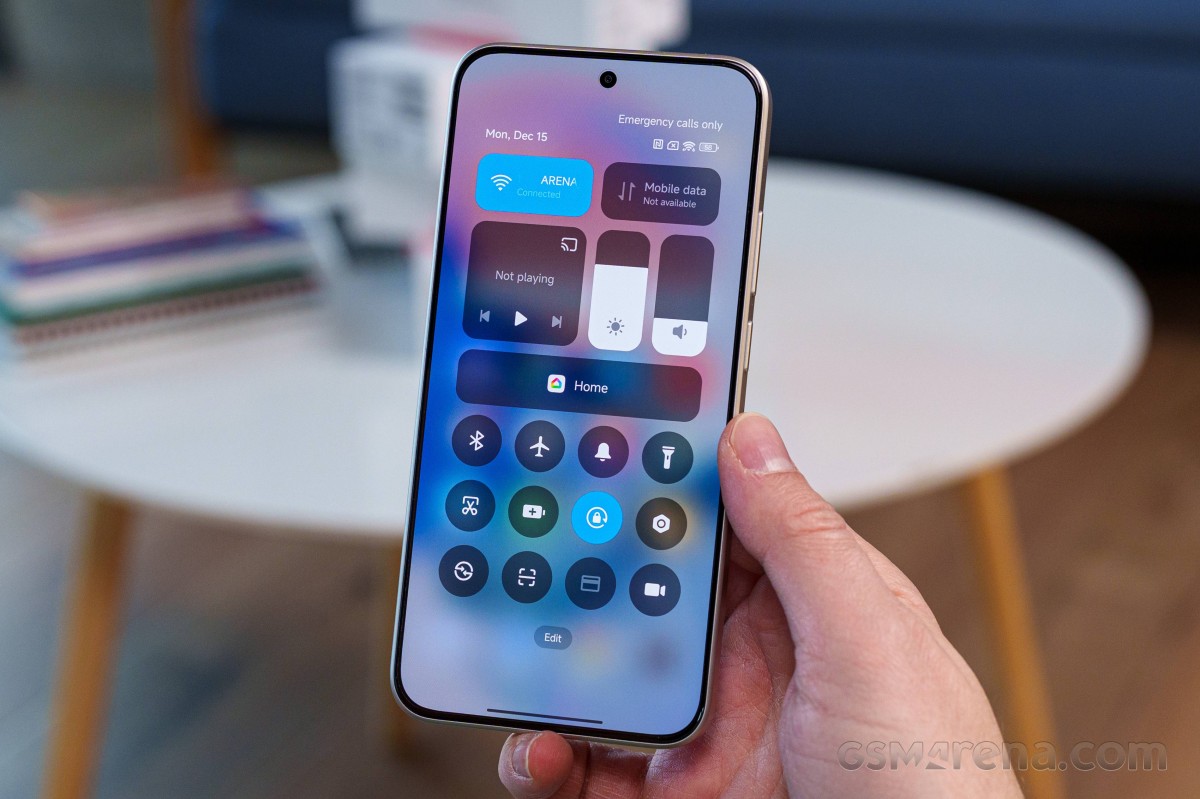
Still, the balance is admirable, and the quality is good with a nice and wide sound stage and pretty rich mids. Bass is practically non-existent, which is to be expected, and at high volumes, highs do get distorted, making the phone sound screechy.
We suspect that Xiaomi might have prioritized boosting the volume at the expense of optimizing for sound quality. The software allows the volume slider to go up to 400%. For the cleanest possible audio, stick to 100% as a max. That said, at 400%, the phone does get undoubtedly loud. It is just not particularly pleasant to listen to.
In terms of additional goodies, the Redmi Note 15 Pro 5G does have Dolby Atmos support with a full graphic equalizer and custom presets. Alternatively, you can also use Xiaomi’s own audio tuning engine if you prefer that.
Use the Playback controls to listen to the phone sample recordings (best use headphones). We measure the average loudness of the speakers in LUFS. A lower absolute value means a louder sound. A look at the frequency response chart will tell you how far off the ideal “0db” flat line is the reproduction of the bass, treble, and mid frequencies. You can add more phones to compare how they differ. The scores and ratings are not comparable with our older loudspeaker test. Learn more about how we test here.
Connectivity
The Redmi Note 15 Pro 5G is a dual Nano-SIM device, with SA/NSA 5G support on both of its SIM slots simultaneously. Our unit also comes with eSIM support. However, in order to use an eSIM, you have to disable one of the physical SIM slots.
Positioning includes GPS, GALILEO, GLONASS, QZSS and BDS support. For local connectivity, the phone has dual-band Wi-Fi 6 (unfortunately, no 6GHz support) and Bluetooth 5.4 with LE. Some markets get NFC as well, but you have to check with your retailer of choice for that. There is no 3.5 mm audio jack and no FM radio receiver. You do, however, get an IR blaster located on the top frame, rather than in the camera island, which is the latest trend.
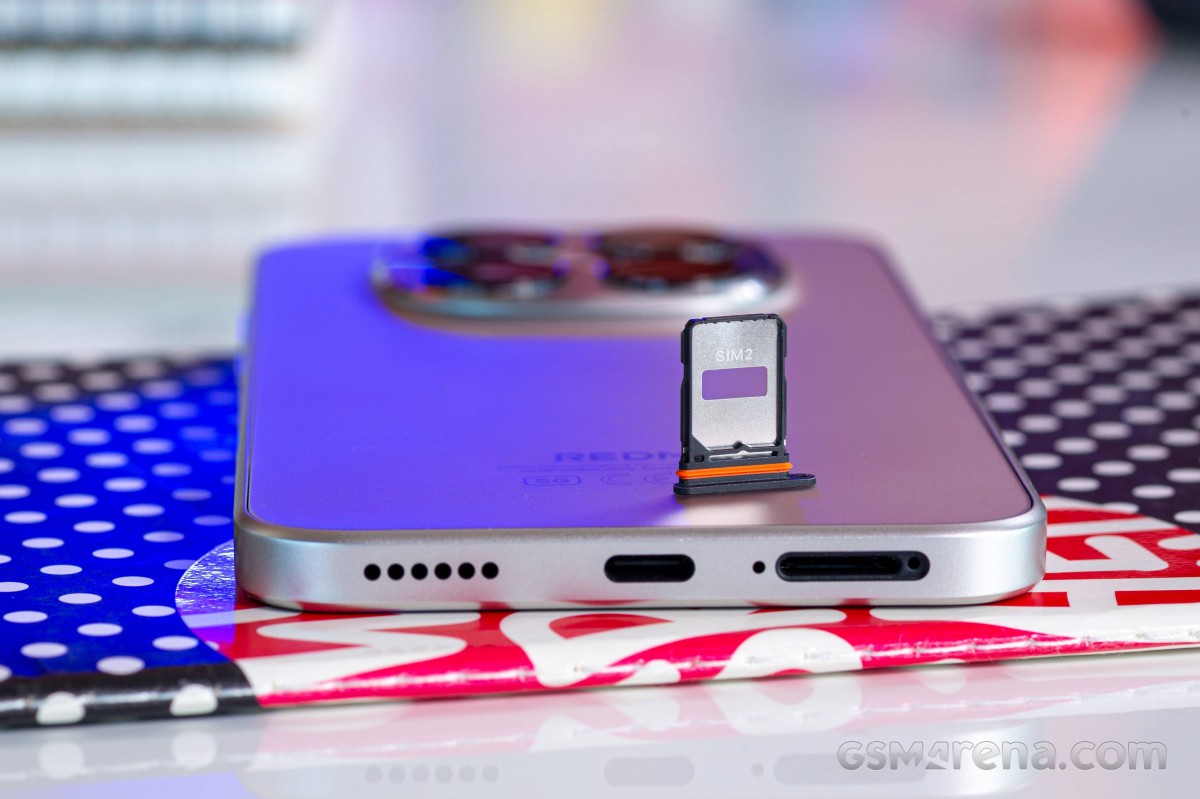
The Type-C port is backed up by a basic USB 2.0 data connection, which means a maximum theoretical data throughput of 480 Mbps. USB OTG/Host Mode is supported, but there are no really fancy features like video output over USB Alt mode.
In terms of sensors, you have a BOSCH bmi260 accelerometer and gyroscope combo, a QST qmc6308 magnetometer and compass combo, a SI sip1328 light sensor and what is unfortunately a virtual Elliptic Labs proximity sensor. No barometer either.