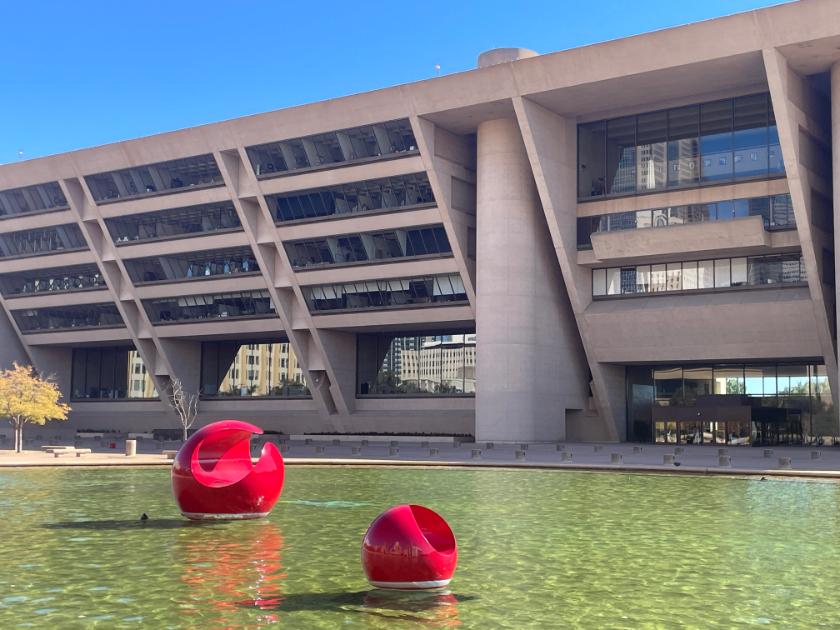
There were a lot of big local real estate stories this year, but few seem to have touched a nerve like the potential sale of Dallas City Hall.
Whether it’s the historic architecture, significance of civic space, potential for downtown revitalization, high stakes of sports franchise retention, alleged backroom dealmaking, or just the principle of preservation, people are invested in how this saga will end up playing out.
If you haven’t been paying attention, you can take this holiday opportunity to catch up on how and why officials are considering ditching 1500 Marilla St. for new digs in the central business district. And, of course, read about how community members are responding.
Maintenance Deferred Is Maintenance Denied
Anyone who works at City Hall or visits it regularly (or catches the right headlines), knows there have been growing problems with the building maintenance. From the leaky roof to the outdated electrical to the malfunctioning plumbing, it seemed like one thing after another over the past several years.
Earlier this year, officials started facing the fact that some major work needed to be done to keep 1500 Marilla St. in working order. It wasn’t like it was news, though. Some had been sounding the alarm for quite some time. On multiple occasions and across multiple administrations, elected officials opted against dedicating enough funds to catch up on maintenance.
Johnson Got the Ball Rolling
To my knowledge, CandysDirt.com was the first outlet to cover the potential offloading of 1500 Marilla St. While those in the know probably saw it coming a mile away, it wasn’t until late August, when Mayor Eric Johnson created the Finance Committee, that the prospect of selling the decades-old Brutalist structure became real.
Johnson could hardly have been more explicit in his committee charge: “Determine whether Dallas City Hall and other municipal facilities effectively support City operations and best serve the citizens of Dallas; Consider all potential options and identify the most fiscally responsible course to address the mounting deferred maintenance and carrying costs of Dallas City Hall.”
That’s Some Mighty Nice Land You Got There
The timing couldn’t be more perfect. City Hall’s precarious fate became intertwined with speculation over where the Stars and Mavericks might want new arenas built after their leases expire at American Airlines Center.
Obviously, 1500 Marilla St. entered the conversation, despite the lack of any official pronouncements by stakeholders.
Should We Pay or Should We Go?
In October, discussions at the committee level began, with staff claiming it could cost as much as $345 million (or more) to rehabilitate City Hall. Not everyone was buying that figure, though.
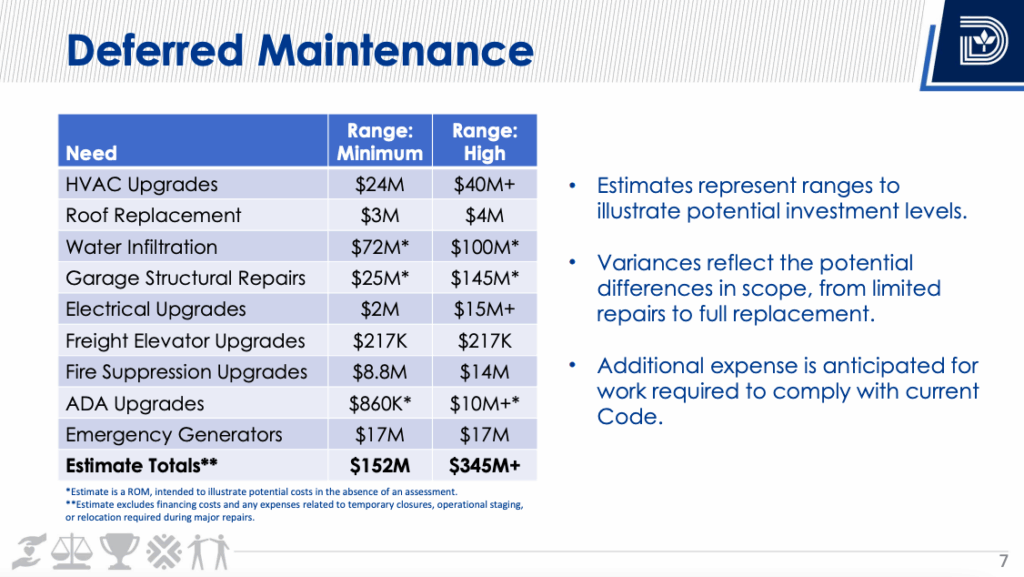
The lack of a comprehensive facility assessment left Council Members Cara Mendelsohn (District 12) and Paul Ridley (District 14) openly wondering if officials were inflating the numbers and pushing for a sale of the building before any real due diligence could be completed. Their colleagues, however, weren’t as skeptical.
Everyone Has an Opinion
If people weren’t paying attention before, they certainly started to by November. Editorials and op-eds had started flooding local media, weighing the pros and cons from different perspectives.
Reagan Rothenberger, a member of the Dallas Landmark Commission, wrote a great one that really got into the history of how the building came into being and what it meant for the city of Dallas.
And, of course, we asked local architects what they thought about the I.M. Pei classic possibly going on the market.
Is There a Fix? If So, Is It In?
Preservationists and other proponents of keeping City Hall at 1500 Marilla St. assembled for a speak-out session, with some pushing the narrative that the whole thing was an inside rush-job being orchestrated by staff and greedy developers. They got a petition going too.
Officials continued to meet and debate the issue, and an official game plan started getting hashed out. There would be some due diligence, in fact, and the costs of repairing the building would be measured against selling it and leasing office space downtown.
As for Mayor Johnson, the man who finally got the ball rolling on the issue (no one can deny this was a problem many years in the making with plenty of blame to go around), he made it pretty clear where he stood in this year’s State of the City address.
“City Hall, as it stands today, is not a user-friendly building for people, and it risks becoming an albatross for our city,” Johnson said. “Whatever the intentions of a famous architect, it has become a massive symbol of a Byzantine bureaucracy that’s stuck in the past and falling apart, its shortcomings masked by a Brutalist facade. As a workplace for city employees and as a gathering place for the public, it’s clearly failing.”
I Guess We’ll Just Wait and See
The Dallas Economic Development Corporation has been tasked with assessing the structural condition of City Hall. Infrastructure consulting firm AECOM is going to help them out. Findings will be presented to the Finance Committee in February.
As noted above, some feel that the whole thing is a done deal. There’s, of course, the sports arena dimension and unconfirmed (possibly baseless) rumors about the Adelsons planning to put a casino there, even though casino gaming is currently illegal in Texas. But there’s also the fact that a majority of the city council seems very open, if not outright excited about the economic impact that could result from selling 1500 Marilla St. to some enterprising developer.
Downtown has been through the ringer the last several years, especially since the pandemic: office flight, high visibility when it comes to homelessness, crime headlines, etc.
More recently, big ticket projects are being floated in the central business district, and Dallas is poised to become a new financial center on the national stage. The neighborhood is also growing in terms of residential, with more people calling downtown home than ever before.
It’s not so much that officials think unlocking one piece of valuable real estate is going to revitalize downtown, though it might seem that way sometimes. There’s some palpable buy-in to the belief that a city’s rise or fall depends on its urban center. Whether that’s really true anymore is anyone’s guess, but we’ll just have to wait and see whichever way it goes.