
Photo by Joshua Hoehne
Late last year, the city of Los Angeles brought in an outside firm, at a cost of nearly $3 million, to conduct a full audit of homelessness spending, including money tied to the Inside Safe program. That move alone raised eyebrows. Now, in a surprising follow-up, City Controller Kenneth Mejia has announced that he will carry out his own audit as well, a parallel effort meant to dig into how billions of homelessness dollars have been spent or left unused. For Mejia, who has built his public identity around transparency, this is perhaps the biggest test yet of his vision for the controller’s office.
Why the controller
is stepping in
Mejia’s decision comes at a moment of widespread frustration about how the city tracks and manages homelessness spending. A federal judge’s audit last year exposed what many suspected but couldn’t prove. Despite $2.4 billion moving through the Los Angeles Homeless Services Authority and related programs, auditors found that recordkeeping was so inconsistent they were often unable to follow the money. Some invoices lacked verification that services were ever delivered. Contracts didn’t include receipts. And in the case of more than 2,300 “housing sites,” auditors couldn’t independently confirm their existence. In roughly 70% of those cases, there were no disclosed expenses at all in the previous year.
These problems didn’t stay inside City Hall. Civil rights attorneys and community groups pressed the city to explain how so much money could move with so little clarity. Then, in March 2024, U.S. District Judge David Carter ordered a full accounting of homelessness funds, including Inside Safe. He questioned which service providers were producing results and whether the programs were truly helping people. Suddenly, the need for a deeper, independent look became difficult for any official to ignore.
That is the environment in which Mejia stepped forward. His office had not historically tracked homelessness spending in a systematic way, but he argued that the magnitude of the crisis demanded it. Instead of waiting for the outside review to finish, he directed the controller’s internal staff of roughly 160 accountants and analysts to conduct a parallel investigation.
In a recent release, Mejia’s team reported that at least $513 million earmarked for homelessness went unspent in fiscal year 2024. The city had budgeted about $1.3 billion for homelessness, meaning nearly 40% of it never made it into services. His office called that gap “incompatible with the urgency of the crisis.” No previous controller had created this level of program specific tracking, so the findings landed with force.
What this effort reveals
and why it matters
If the internal audit is thorough and independent, it could give the public a clearer picture of whether the city is putting its money to work effectively.
One major issue is the unspent dollars. With tens of thousands of people living outdoors, the discovery that half a billion dollars sat unused strikes many as alarming. That money could have supported shelter beds, outreach workers, or faster pathways into housing. The reasons for the bottleneck are not yet clear. It may be bureaucracy, delays in contracting, limited staff capacity, or simply outdated systems. Regardless, it raises fair questions about basic competence within agencies meant to respond to a crisis.
Beyond the financial story, the city is also grappling with criticism about the scale and ambition of its homelessness strategies. The city and county have been questioned not only about transparency but also about a lack of innovation. Officials hold ribbon-cuttings for new housing developments that serve a few dozen or maybe a few hundred people. Meanwhile, the number of people living on the streets measures in the tens of thousands. It has become increasingly clear that modest additions to the shelter or housing inventory cannot match the size of the crisis. Whether or not that is the fault of any one department, it is a structural issue that deserves acknowledgment.
Mejia’s move signals a push toward stronger long-term accountability. By using the controller’s office not only as an accountant but as a watchdog, he is testing a model that could influence oversight in other city departments. In theory, this could lead to more consistent scrutiny of programs far beyond homelessness.
But impulse isn’t enough. Look carefully at what
comes out
Still, none of this means the public should take his findings at face value. Oversight is important, but so is skepticism.
Mejia is a political figure, and his views place him on the farther-left side of Los Angeles politics. He campaigned on the promise of challenging long-standing assumptions about spending priorities, especially around policing and homelessness. That alone is enough to make some residents question whether audits conducted by his office will be interpreted through a political lens.
Then there are the personal controversies. Former staff members from both his campaign and the early months of his office have accused Mejia of poor workplace management, describing a tense or even hostile environment. Others raised concerns that he removed experienced auditors and replaced them with newcomers whose qualifications were questioned. Some saw this as weakening, not strengthening, the office’s independence.
More recently, he has faced criticism over the alleged misuse of public resources for political branding. The most visible example involved corgi-themed imagery associated with both his campaign and some of his official communications. The dispute resulted in an ethics complaint that, regardless of its outcome, is now part of the political backdrop. Mejia denies wrongdoing, but the very fact that such criticism exists is a reminder that any audit he conducts must be evaluated with care. Residents should scrutinize his findings not only for accuracy but also for political intent. The risk is that an audit becomes a way to shift attention from his own challenges.
Transparency is important, but it must be paired with trustworthiness. The measure of this audit will be whether it stands up to public and professional scrutiny.
What’s next and why it
deserves attention
Once Mejia’s report is released, expected this month, the public will be looking for specifics. Will he identify wasted or mismatched spending? Will the recommendations lead to real changes in budgeting or contracting? Or will the findings simply restate what Angelenos already know: that the system is strained, slow, and often unclear?
If the audit provides a detailed picture of where the money is going and how to redirect it more effectively, it could change how Los Angeles approaches homelessness spending in the years ahead. If not, it risks becoming another report that generates headlines but little action.
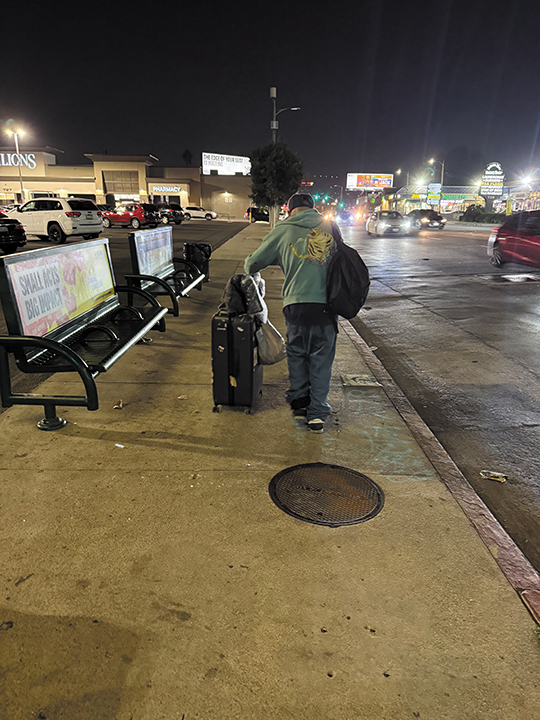
THE STORIES behind each of the city’s unhoused residents are unique and varied.
What is certain is that the stakes are enormous. Hundreds of millions of dollars, and the well-being of thousands of residents without shelter, depend on the city’s ability to manage this crisis thoughtfully and efficiently. Whatever Mejia presents should be welcomed, but also examined closely. In a city where political ambition often shapes public messaging, readers should keep a careful, even skeptical, eye on the story as it unfolds.
By Jon Vein
Category: News