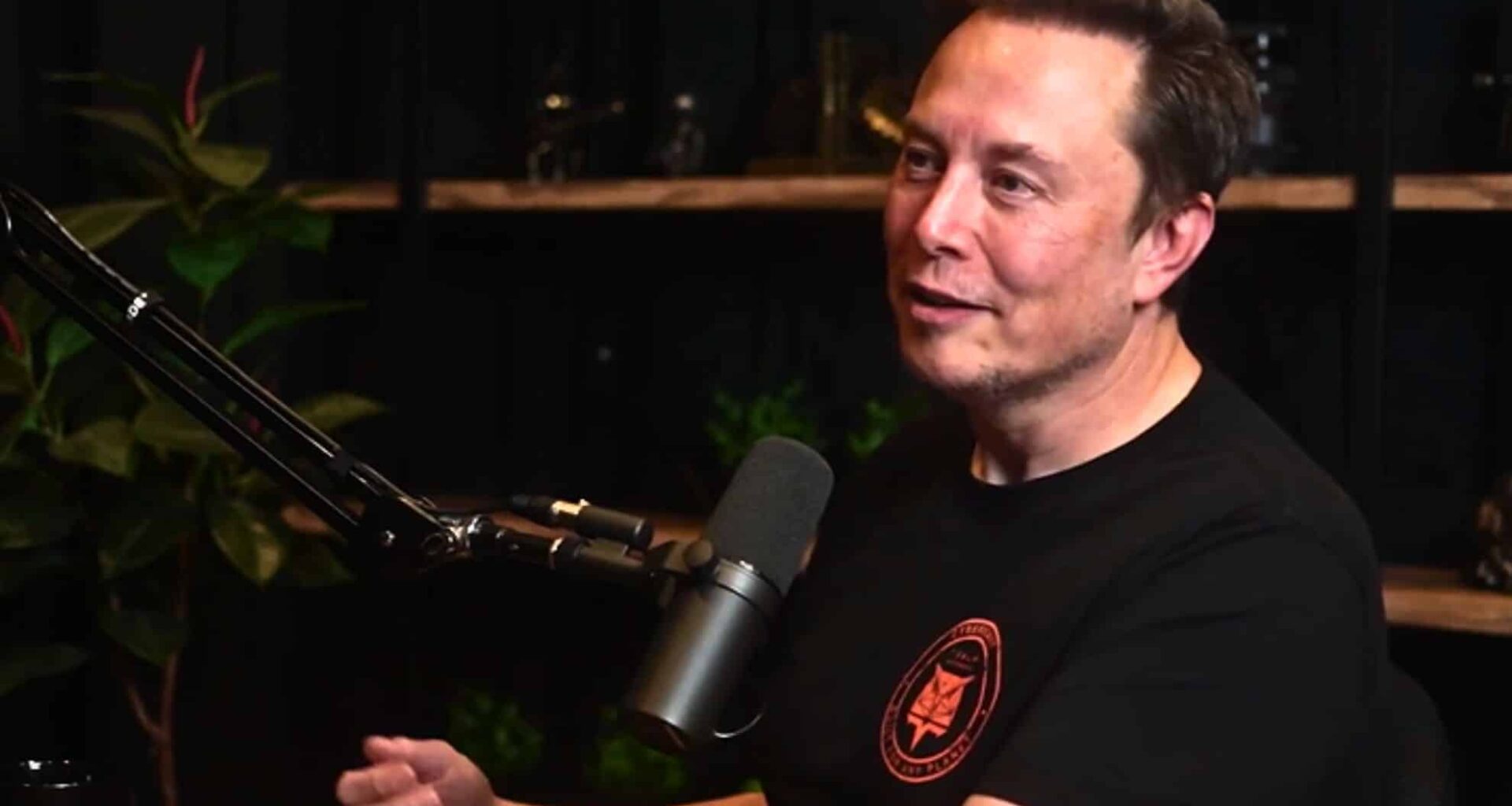
elon musk has outlined one of his most sweeping forecasts yet: a future where money becomes obsolete and poverty disappears as artificial intelligence drives near-total automation. His prediction, shared across several platforms in December 2025, including X (formerly Twitter), Spotify, and YouTube, has reignited global debate about the long-term social and economic effects of advanced AI systems.
Musk described a world in which automation and artificial general intelligence could produce “everything anyone wants” at negligible cost, removing the need for traditional income and savings. He said this transformation could lead to what he called a “universal high income”, an evolution of the long-discussed universal basic income (UBI) model.
The comments appeared in a Nasdaq report and were later summarised by Fortune, where Musk reiterated that “there will be no poverty” and “you will have whatever you want.” The idea implies a society where machine labour generates continuous wealth and scarcity loses relevance, potentially redefining global economic systems.
Musk’s prediction arrives amid growing concern and optimism about the effects of automation. Economists and analysts suggest his framing of “abundance replacing scarcity” touches on one of the century’s central challenges: how to sustain purpose, equality, and stability in economies increasingly powered by artificial intelligence.
From Universal Basic Income to “Universal High Income”
In coverage by Nasdaq, Musk outlined the concept of universal high income, suggesting that artificial intelligence could one day provide for every individual’s basic and advanced needs. This vision extends beyond traditional UBI models, which focus primarily on poverty reduction, proposing instead a society where machine productivity funds human prosperity.
Musk shared his optimism directly on X, writing that future AI systems would eliminate financial hardship and make conventional employment optional. These remarks aligned loosely with a post by ray dalio, the billionaire founder of Bridgewater Associates, who stated on X that exponential advances in AI could “redefine wealth and opportunity.”
It is certainly a nice gesture of the Dells, but there will be no poverty in the future and so no need to save money.
There will be universal high income.
— Elon Musk (@elonmusk) December 17, 2025
Economic researchers cited by Fortune and Nasdaq have pointed out that transitioning to such a system would require large-scale redistribution of AI-generated value. Analysts from institutions such as the World Economic Forum and the Brookings Institution have raised similar points, noting that automation often concentrates profits among those who control capital and computing infrastructure.
They caution that without deliberate policy changes, AI-driven growth could deepen inequality rather than eliminate it. The shift from UBI to Musk’s broader “high income” model would demand rethinking ownership and taxation to ensure fair access to machine-created wealth.
The Changing Nature of Work and Value
In his Spotify interview, “The Elon Musk Conversation”, Musk suggested that employment in a highly automated economy would be driven by “personal satisfaction,” not necessity. “People will still work for satisfaction,” he said, reflecting a vision in which meaning and creativity replace economic survival as the primary reasons to work.
This prediction echoes early studies in post-scarcity economics, which examine scenarios where goods and services can be produced at near-zero cost. Researchers have noted, however, that such a stage has not yet been achieved in most sectors. Physical industries like construction, agriculture, and energy remain dependent on material resources, supply chains, and human oversight.
A Fortune review observed that economists remain divided on whether AI could fully eliminate scarcity. Reports by the Atlantic Council and the OECD indicate that resource constraints, unequal access to digital infrastructure, and regulatory bottlenecks continue to define economic inequality even as automation expands.
Studies from the University of Cambridge and the OECD have also found that work provides psychological and social benefits beyond income, including purpose and community. For many observers, this suggests that any transition toward post-labour economies will depend as much on cultural adaptation as on technology.
Technology Optimism Meets Economic Limits
Musk’s remarks have drawn both intrigue and caution from policymakers and economists. His projections highlight the potential of AI to expand productivity, but most experts describe the disappearance of money or poverty as highly uncertain.
An analysis by the International Monetary Fund estimates that AI could raise global productivity by around 7 percent over the next decade, though the benefits are expected to accrue unevenly. The World Bank has expressed similar reservations, warning that limited access to computing power and data could reinforce existing divisions between high- and low-income economies.
Historical comparisons provide context. Past waves of technological optimism, from the early internet to the rise of blockchain, promised radical transformation but often led to mixed results. A 2024 MIT study on automation and inequality found that “technology amplifies existing structures of advantage unless complemented by adaptive institutions.”
These findings suggest that even if Musk’s prediction proves directionally correct, its realisation depends less on engineering progress than on how societies manage ownership, governance, and ethical distribution.
A World Redefined by Artificial Intelligence
The global conversation surrounding Musk’s statements reflects a shift in tone around artificial intelligence. Discussion has moved from short-term productivity gains toward broader questions about economic identity and human purpose. The possibility of a “moneyless” or “post-scarcity” world may still be speculative, but it highlights growing awareness of how profoundly AI could reshape labour, value, and social order.
AI continues to expand in manufacturing, logistics, finance, and creative industries, influencing everything from design processes to investment strategy. Governments and global institutions are beginning to explore frameworks for taxation, intellectual property, and welfare reform that account for machine-generated output.
The notion of universal high income remains theoretical for now, contingent on breakthroughs not only in AI capability but also in political cooperation. Musk’s comments have amplified an essential debate: whether artificial intelligence will produce a more equitable distribution of wealth or reinforce the systems it promises to replace.