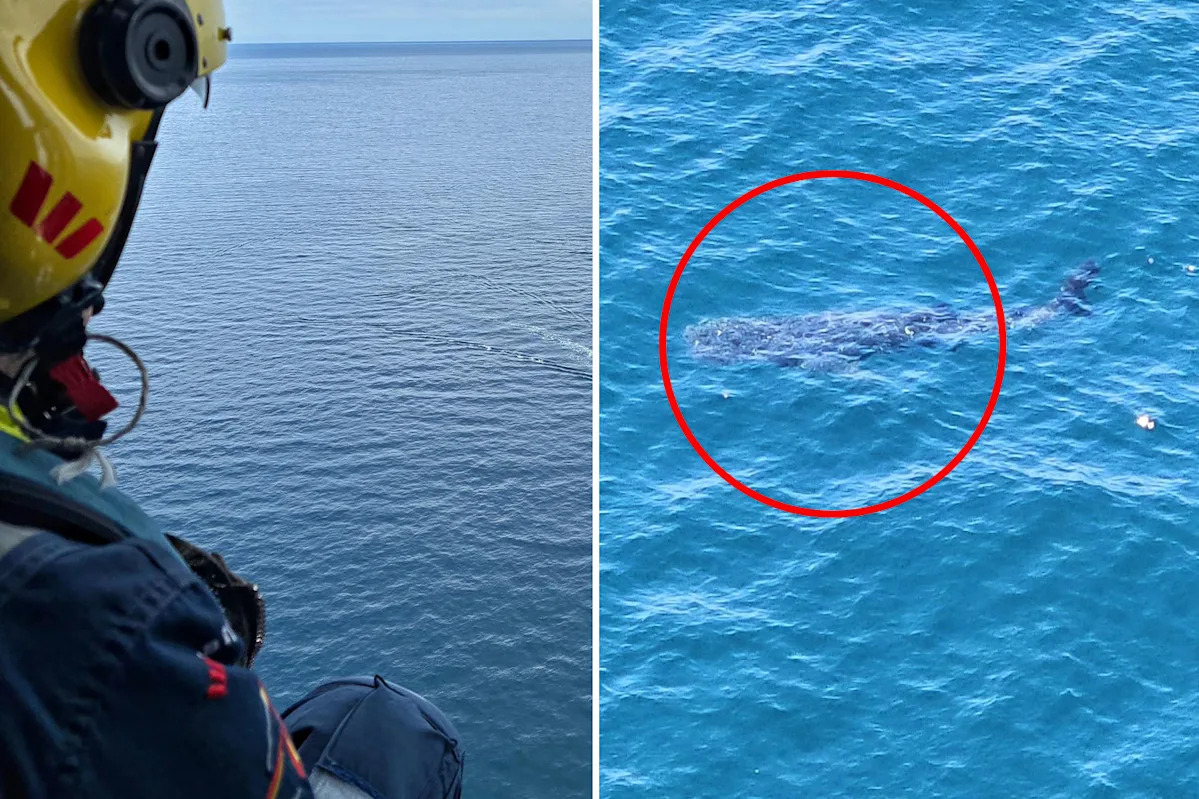
A helicopter crew patrolling the east coast of Australia were recently treated to an incredibly rare sighting out the window, leaving them in complete awe.
The crew from Westpac Life Saver Rescue Helicopters were on their way back to base when the “majestic” animal was spotted making its way along the coastline close to Figure 8 Pools, a popular tourist spot in Sydney’s Royal National Park.
Staff couldn’t resist “getting a couple of snaps” of the whale shark — the world’s largest fish — while keeping a safe distance so as not to spook the elusive creature on December 23.
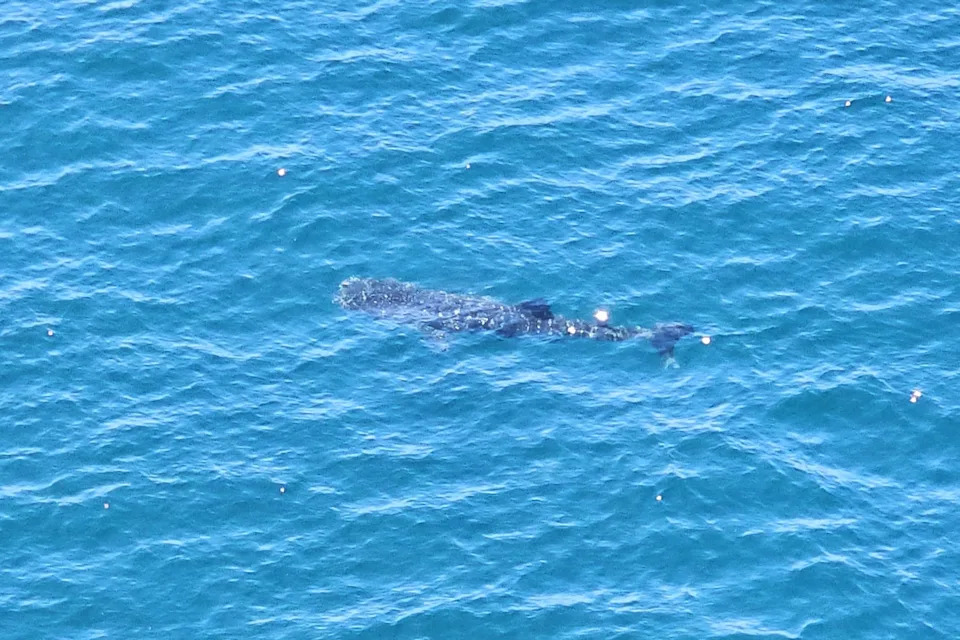
The lone whale shark was spotted cruising past Sydney’s Figure 8 pools. Source: Westpac Life Saver Rescue Helicopters
Whale sharks are commonly spotted in tropical waters and are most often seen on the west coast along the Ningaloo Reef. They are rarely seen on the east coast, particularly as far south as Sydney.
In WA, the peak whale shark season typically starts in March and runs through to the end of July, where they are spotted almost on a daily basis. By now, they’re seen in far fewer numbers.
Previously, tourists on board a scuba diving tour boat, operated by Divers Den in Cairns, came within metres of an incredible whale shark. According to Melissa Alps, the company’s co-ordinator, a sight this close to Cairns was “quite rare”.
Another woman previously told Yahoo News Australia about her experience with one at South Stradbroke Island, Queensland. “We were in shock… it’s super rare,” she said.
Incredible gentle giants that grow up to 18 metres
Whale sharks are often referred to as the gentle giants of the ocean. They grow up to 18 metres and can weigh up to 34 tonnes. They can live for up to 100 years.
Along the Ningaloo Coast in WA, it’s a popular pastime to snorkel alongside the huge fish where they can be found swimming close to shore.
But, there are strict rules about swimming with whale sharks, with the species protected by both state and federal laws.
Swimmers are required to keep a minimum distance of three metres from the shark’s side and four metres from its tail, ensuring the sharks can swim freely and those in the water can also stay out of harm’s way as their powerful tails are potentially dangerous.
Do you have a story tip? Email: newsroomau@yahoonews.com.
You can also follow us on Facebook, Instagram, TikTok, Twitter and YouTube.