Leo Dale does not mean to sound ungrateful, recalling the countless hikes on which he accompanied his parents, starting when he was a small boy.
But sometimes, when his mother and father would stop to admire a wildflower or vista, “I would get bored, and want to do something,” recalled Dale, 18, who graduated from Sonoma Academy last spring and is now a freshman at Colby College in Maine.
He started bringing along a camera. What began as a pastime and hobby for the Sonoma Valley resident has now evolved into a consuming passion.
“When you’re in an amazing place, or seeing an amazing animal, you feel so many different kinds of wonder and awe,” said Dale, who seeks “to capture that wonder in a picture.”
He’s extremely good at it. That’s the consensus of judges in a pair of prestigious photography competitions.
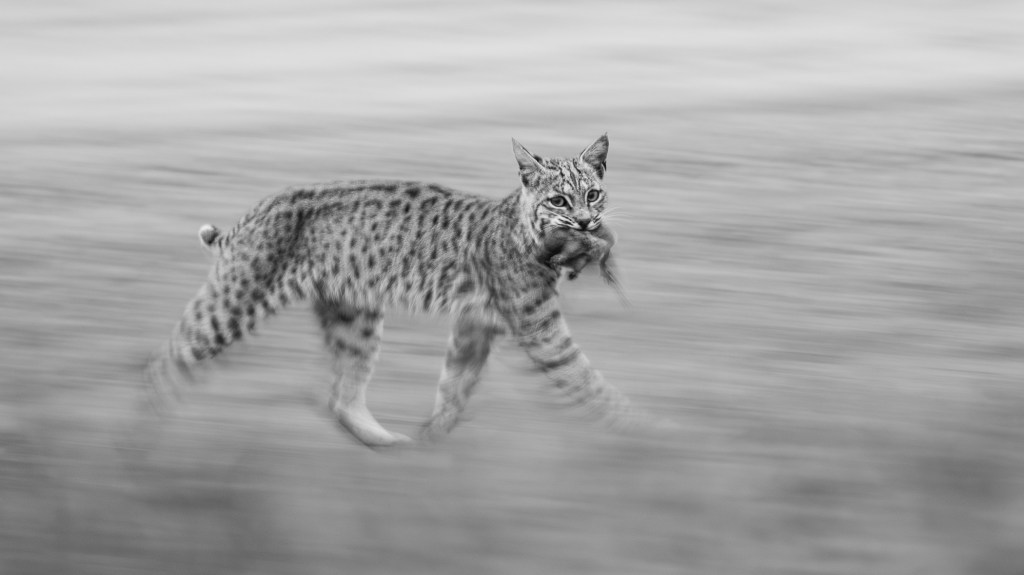
In November, the international photography organization Nature Talks, based in the Netherlands, awarded Dale first place in the youth division of its 2025 Nature Photographer of the Year contest, for his stunning image of a trotting bobcat with prey in its jaws.
Jury member Marlon del Aguila Guerrero, an acclaimed Peruvian wildlife photographer, said that judges had been wowed by the “execution” and “technical control” Dale had summoned “to create a stunning panning image of this bobcat, and above all, with the perfect timing of the connection of gazes, which made us feel invited to share its moment of successful hunting. A rarely seen mastery, surprising to come from such a young talent.”
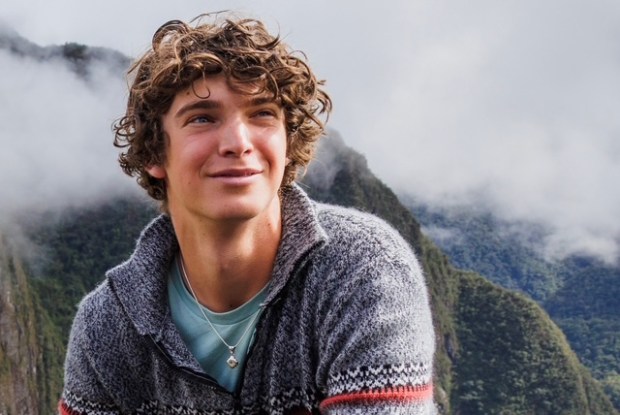 Leo Dale, wildlife photographer and student at Colby College in Waterville, Maine, seen here in an undated photo.(Darren Duarte)
On Dec. 10, the National Wildlife Federation named Dale as the winner of its annual wilderness photography contest, in the “young photographers” division, for his haunting image of a coyote in silhouette atop a ridge, backlit by the setting sun.
Dale’s profound attachment to the natural world was practically preordained.
His parents are Richard Dale and Caitlin Cornwall. Richard is the founder and director of the Sonoma Ecology Center, a nonprofit focused on ecological research, education and preservation. Caitlin, a self-described “biologist who has now also gotten into climate and housing,” has spent nearly three decades at the center in various integral roles, and is now its senior project manager.
In addition to hiking nearly every weekend, the family would embark on summer road trips to places like the Sierra Nevada or the Pacific Northwest. While he loves those parts of the planet, Leo’s favorite landscape is the rugged coast of Marin and Sonoma counties – “’cause there are so many great opportunities for finding bobcats and coyotes,” he said.
Along that coast, he added, those animals “are a little bit more habituated to people, so it can be a bit easier to have a longer experience with them.”
Late afternoon was yielding to dusk at Point Reyes National Seashore on the day last January that he made his most remarkable image. Dale had already taken some “classical” pictures of a bobcat that day, some “pretty nice shots” that weren’t “anything special.”
Heading home, he saw the car of some fellow photogs, and pulled over to say hello.
Those photographers had been shooting a vividly spotted bobcat, but stopped due to fading light.
Dale decided to take some “panning pictures.”
Panning entails leaving the camera’s shutter open longer while “moving the lens with the subject,” he explained. “So the subject stays in focus and the background gets blurred out.”
That technique allowed Dale to keep working in the encroaching darkness: “Leaving the shutter open longer, you can capture more light.”
He’d only been shooting that bobcat for a few minutes when it pounced on a gopher, then “did a perfect sort of run across an open area right in front of me,” with the prey still in its mouth.
“A lot of times when you’re shooting with the shutter speed that slow,” he said, everything can look fairly blurry. It can create a cool effect but it’s sometimes harder to tell what’s actually going on. In this case everything came together.
“I was really excited when I went back through the pictures and realized how sharp this shot came out.”
A month or two earlier, a quarter mile away, near the end of the day, Dale had been scanning a ridge backlit by “a really beautiful, kind of perfect photography sunset,” with the sun “coming up beneath this higher fog bank.”
In that moment a coyote made its unhurried way across the tableau, allowing Dale to capture the indelible image that won the National Wildlife Federation prize.
 This photo of a coyote at sunset was taken by Leo Dale at Point Reyes National Seashore in late 2024. The photo earned Dale first place in “young photographer’s” division of the National Wildlife Federation’s annual wilderness photography contest. (Leo Dale)
An only child, Leo has “oodles of cousins,” said his father. One of those cousins, five or so years older, has a preternatural gift for spotting wildlife.
Leo “learned that from his cousin,” said Caitlin – “how good you can get at spotting animals other people can’t see.”
And now, Richard added, with a smile, “it’s kind of annoying, when you take him out, you look out at a landscape and he’ll see five things before I see one.”
It was Richard was gave his then-6-year-old son a scratched old Panasonic point-and-shoot camera that was damaged, “but still took pictures,” he said.
Many upgrades later, Leo is now shooting with an OM-1, made by the company formerly known as Olympus. OM cameras “have a smaller sensor, which I really like because it means the lenses are a lot smaller, so i can carry two camera bodies around, with two different lenses, and hike around and not have to worry about carrying a heavy system.”
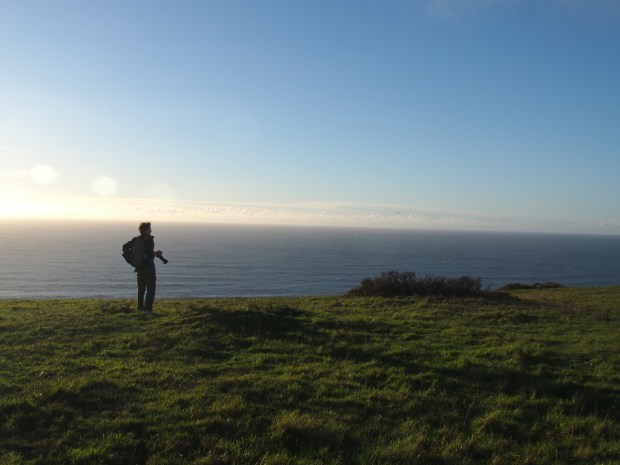 Wildlife photographer Leo Dale explores California’s North Coast (Leo Dale)
Not that endurance is a problem for Dale, who was a strong cross-country runner in high school.
At Colby, he intends to double major in environmental policy and economics.
His talent and passion for wildlife photography – where might that take him?
“I’m still not sure,” he replied.
“I’d love to be able to combine it with some of my environmental policy work in the future, but most of my interest is around climate change and the energy transition, which can be harder to directly link through wildlife photography.”
For now he said, he’s letting his photography “evolve on its own and sort of choose its own direction.”
That direction, since he got home from Colby on this holiday break, has often been west, to the coast that calls to him like a siren.
As Caitlin noted on a recent, wet and gloomy afternoon, “he’s out there now.”
You can reach Staff Writer Austin Murphy at 707-521-5214 or austin.murphy@pressdemocrat.com. On X @ausmurph88.