
Photograph: Stiftung Jüdisches Museum Berlin/Jewish Museum Berlin, Convolute/816, Curt Bloch collection
Free Upper West Side News, Delivered To Your Inbox
A remarkable Holocaust-era work of artistic resistance will be presented on the Upper West Side this January, when Congregation Rodeph Sholom hosts “Underwater Cabaret: The Story of a Holocaust Survivor” in observance of International Holocaust Remembrance Day.
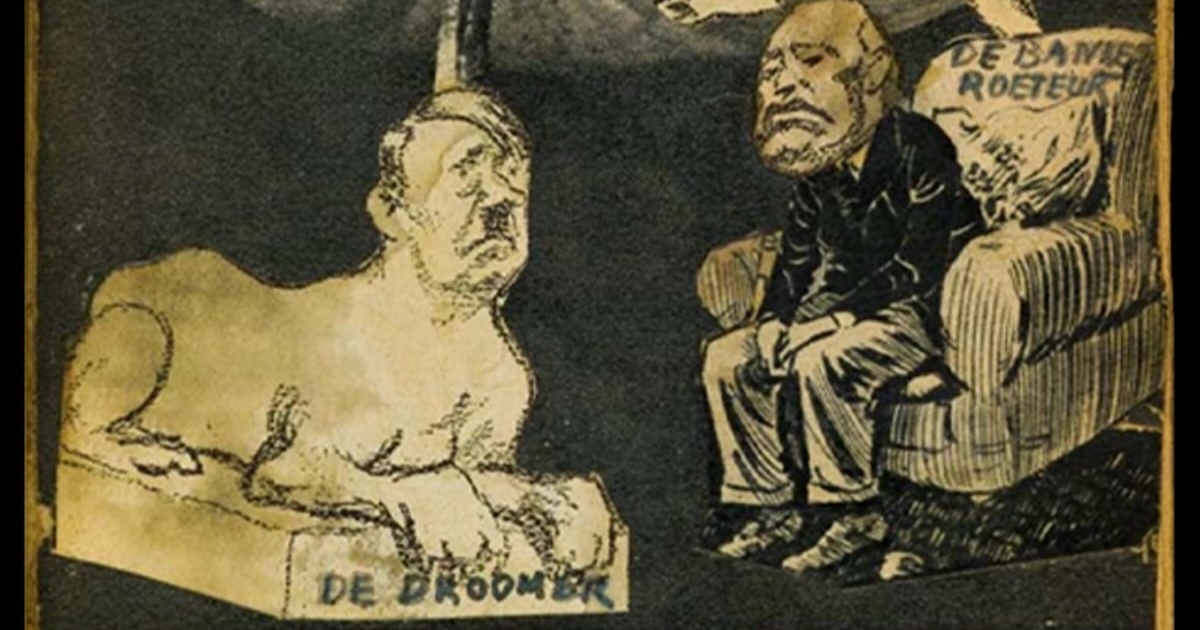
The program centers on Het Onderwater Cabaret (“The Underwater Cabaret”), a handmade magazine secretly created by Curt Bloch, a German Jewish lawyer who spent more than two years hiding in a crawl space beneath the roof of a Dutch home during the Nazi occupation of the Netherlands.
Between August 1943 and April 1945, Bloch produced 95 issues of the magazine, each assembled by hand using paper, ink, glue, and scraps of newspapers brought to him by members of the Dutch resistance. The single-copy publications combined satirical poetry, photomontage, and song lyrics that mocked Nazi leaders, dismantled propaganda, and responded directly to wartime events — all while Bloch lived under constant threat of discovery.

Photograph: Stiftung Jüdisches Museum Berlin/Jewish Museum Berlin, Convolute/816, Curt Bloch collection
Bloch’s extraordinary story and the survival of the magazines were the subject of a widely read 2023 article in The New York Times, which detailed how the fragile works were circulated discreetly among trusted helpers and fellow Jews in hiding before being returned to Bloch for safekeeping. Against overwhelming odds, all 95 issues survived the war.
The title Het Onderwater Cabaret comes from the Dutch term onderduiken, meaning “to dive under,” a common expression for going into hiding during the occupation. Bloch’s work drew inspiration from prewar antifascist publications and frequently targeted Nazi propaganda minister Joseph Goebbels, expressing a consistent belief that the regime would ultimately fail.

Photograph: Stiftung Jüdisches Museum Berlin/Jewish Museum Berlin, Convolute/816, Curt Bloch collection
After the war, Bloch emigrated to New York, where the magazines sat largely unnoticed for decades. His daughter, Simone Bloch, grew up seeing them at home but did not fully grasp their historical significance at the time. Years later, renewed interest from her own daughter helped bring the work to broader public attention, leading to books, museum exhibitions in Europe, and international recognition of The Underwater Cabaret as one of the few previously unknown literary works created in hiding during the Holocaust.
On January 22, Simone Bloch — now an Upper West Side resident — will present the story at Rodeph Sholom alongside German designer Thilo von Debschitz, whose firm helped transform the archive into an award-winning digital and exhibition experience. Their half-hour presentation will include translated poems that retain their original rhyme, along with historical images and context.
The event holds particular resonance for the neighborhood. Bloch’s widow, now 100 years old, lives on the Upper West Side and was herself forced into labor camps as a teenager during the war.
The January 22 program marks the first time The Underwater Cabaret will be presented in the United States in English and is currently planned as a one-night-only event. Organizers hope it will spark interest from New York cultural institutions and lead to a future exhibition in the city.
The presentation will take place on January 22 at Congregation Rodeph Sholom and is open to the public. Register to attend here.
Have a news tip? Send it to us here!
