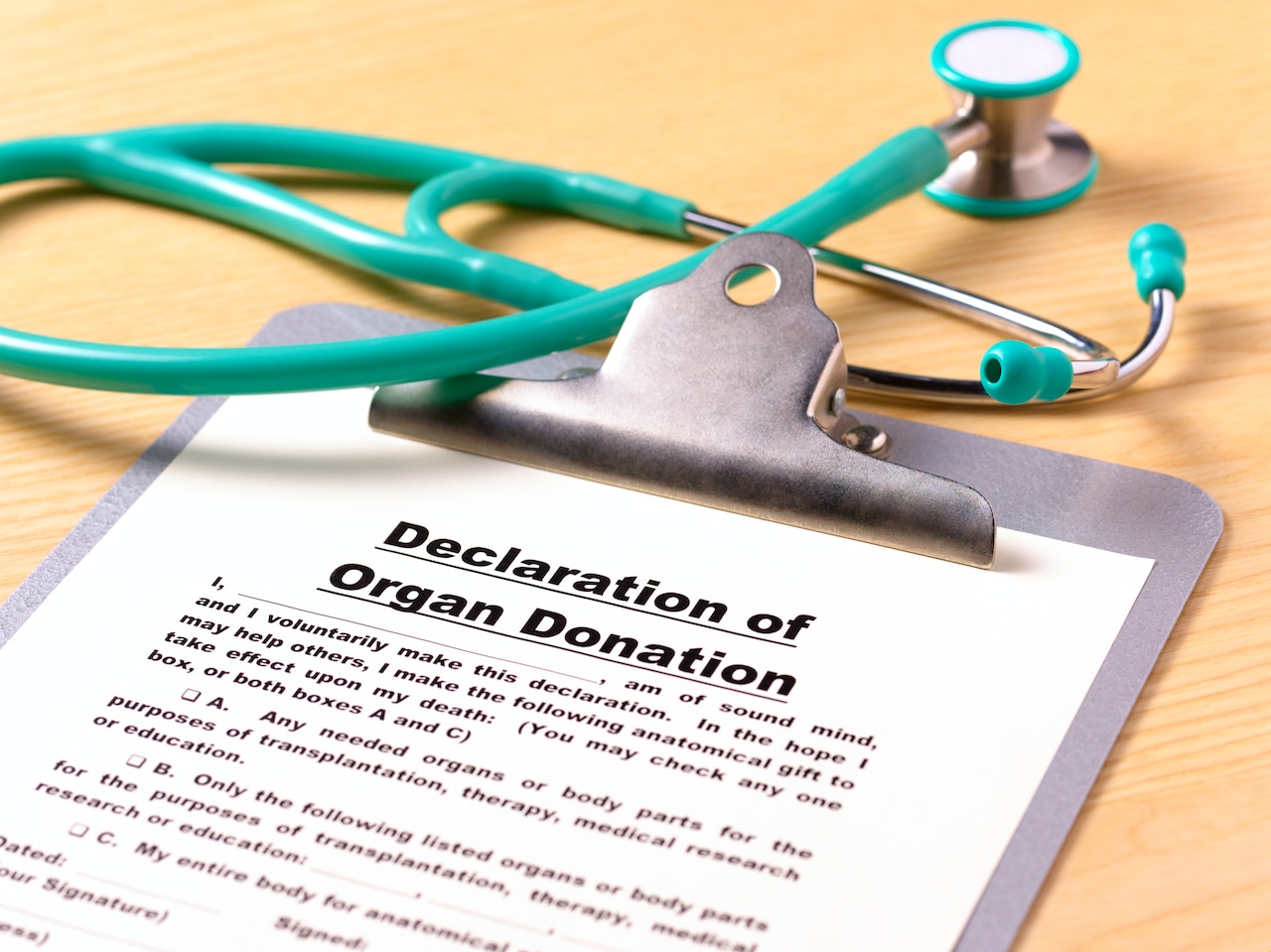
STATEN ISLAND, N.Y. — A new amendment to public health law, set to take effect Jan. 1, 2026, in New York state, will expand organ donation authority beyond family members for the first time.
The new law expands New York’s anatomical gift statute by allowing a close friend, as defined in the Family Health Care Decisions Act of 2010, to authorize organ, eye, or tissue donation on behalf of a deceased individual who left no documented wishes and has no available family.
The new law, signed by Gov. Kathy Hochul, was introduced in the Assembly in January 2025 by Amy Paulin, chairwoman of the Assembly Health Committee. It passed in the Assembly on March 3, the Senate on June 11, and was signed into law on Nov. 21.
Until now, New York remained one of only seven states nationwide that still didn’t allow close friends to make posthumous anatomical gifts on behalf of a loved one, despite the Family Health Care Decision Act authorizing close friends to act as health decision makers for living individuals.
Locally, Staten Island Assemblymembers Charles D. Fall and Sam Pirozzolo voted in favor of the bill. Assemblymember Michael Reilly, a Republican representing the South Shore, also voted in favor of the bill. Assemblymember Michael Tannousis, a Republican representing the East Shore and South Brooklyn, was excused on the day of the vote. Sen. Jessica Scarcella-Spanton, a Democrat who represents the North Shore, voted for the change. Sen. Andrew J. Lanza, a Republican representing the South Shore, did not.
The bill was passed in the state Senate by Sen. Gustavo Rivera of the Bronx.
“This legislation is about ensuring that no opportunity to save a life is lost simply because the person who knew the decedent best wasn’t legally recognized,” said Paulin, a Democrat representing Westchester County, in an announcement when the bill was signed into law. “Close friends often serve as caregivers, decision-makers, and are the people who know an individual’s values more than anyone else. It’s only right that they be trusted with this responsibility when no family member is available.”
Organ and tissue donation saves countless lives every year, she said.
“This seemingly small but meaningful change brings New York in line with 43 states and Washington, D.C., and removes an unnecessary barrier that has prevented some donations from moving forward,” Paulin said. “No New Yorker should be denied the chance to give the gift of life simply because the law doesn’t acknowledge the closest person in their life.”
The change ensures equitable treatment of diverse personal relationships and consistency across New York’s public health statutes, Paulin said in her announcement.
Fall, a Democrat representing the North Shore and parts of Brooklyn and Manhattan, said the people who knew someone best and could honor their values were blocked from making life-saving decisions because of outdated legal limits. “By allowing close friends to authorize donations when there’s no next of kin or documented choice, New York shows respect for real human relationships and increases the chance to save lives,” he said.
Pirozzolo, a Republican representing Staten Island’s South and West shores, said he sees the value of organ donation and has recently become a registered donor. “It’s the ultimate way I can help others,’’ he said.
Currently, about 8,000 people are on the waiting list for donor organs in New York, according to LiveOnNY, the nonprofit organization that facilitates organ tissue and transplants in the greater New York City area. One organ donor can save eight lives and one tissue donor can help 50 to 75 people, according to LiveOnNY.
Currently, in New York state, the average wait for a deceased-donor kidney ranges from three to seven years, based on national data published by Kidney Transplant Services at Stony Brook University Hospital. Across the United States, the median wait time for a first-time kidney transplant is about 33 months, the hospital data showed.
According to the new law, if multiple siblings or others considered by law to be in the same class exist, a majority must agree if there is an objection.
“Allowing close friends to honor a loved one’s wishes and give the gift of life is an act of dignity and love,’’ said Fall. ”I’m grateful to see our state affirm the value of these relationships and expand the chance to save lives.”
The office of Scarcella-Spanton did not reply to a request for comment by the time of publication.
A spokesperson for Leonard Achan, president and CEO of LiveOnNY, said he could not comment at this time on the legislative change.