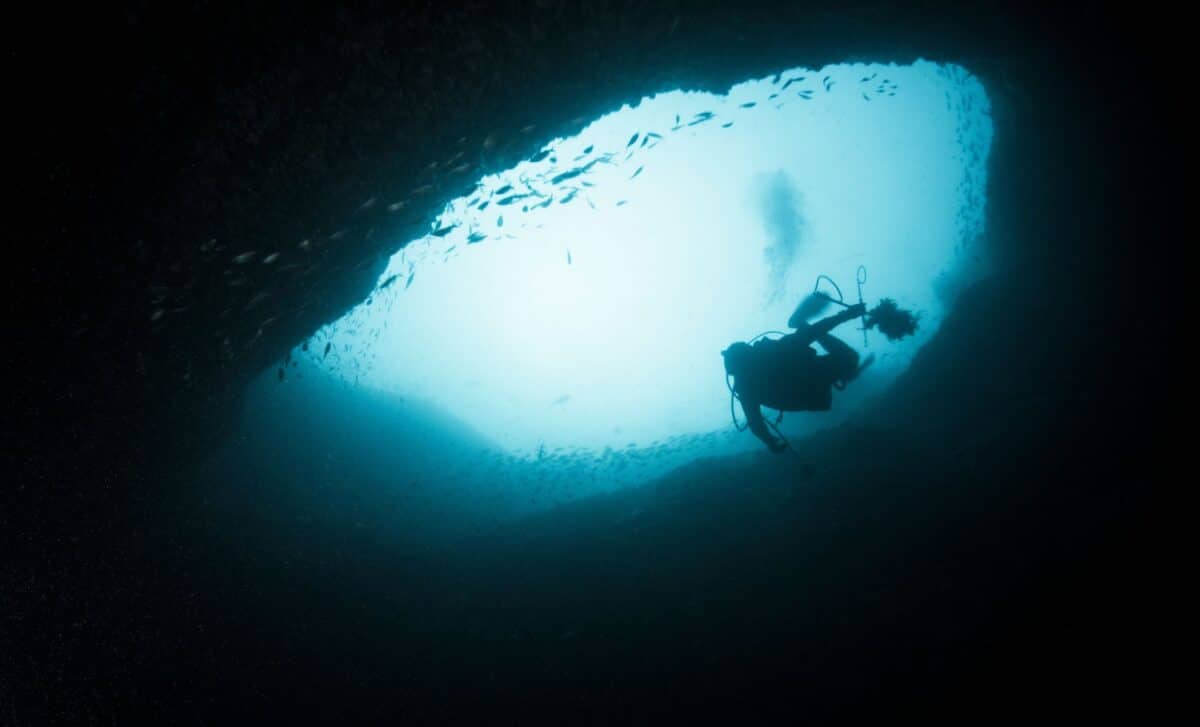
A team of researchers has confirmed the discovery of the deepest known blue hole on the planet in the waters of Chetumal Bay, Mexico. Detailed in a study published in Frontiers in Marine Science, the Taam Ja’ Blue Hole plunges over 420 meters below sea level, making it deeper than any other underwater sinkhole previously measured. Despite recent advances in exploration technology, the bottom of this vast marine cavity remains unreached, leaving its full depth, and the secrets it might contain.
An Unexpected Record-holder Beneath The Waters Of Mexico
The revelation came after a December expedition that challenged previous estimates. The Taam Ja’ Blue Hole, once thought to be around 274 meters deep, was reexamined using new instruments and shown to far exceed that number. This site, located along the Yucatán Peninsula, is now ranked deeper than blue holes in the South China Sea, Bahamas, and Egypt.
Researchers detailed their findings in the journal Frontiers in Marine Science after returning to the site at the start of December. The team used an instrument called SWiFT CTD, designed to measure conductivity, temperature, and depth with higher accuracy than the echo sounders used in past expeditions. Unlike previous devices, this equipment provided clearer measurements despite the irregular shape and varying water density of the pit.
“The TJBH is now the deepest blue hole discovered to date, exhibiting water depths surpassing 420 mbsl [meters below sea level], with its bottom yet to be reached,” explained the authors of the study.
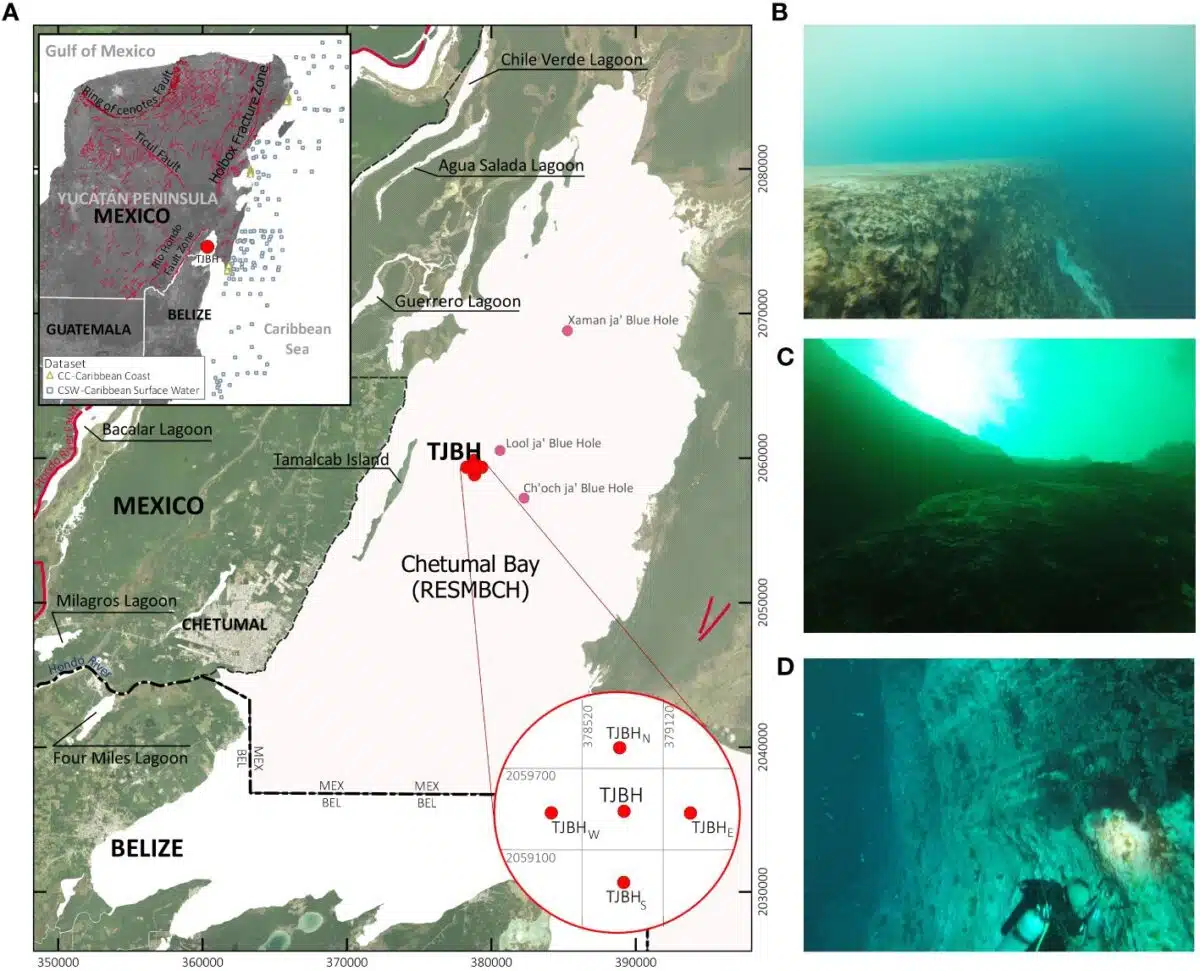 Geographical Location of the Taam Ja’ Blue Hole. Credit: Frontiers in Marine Science
An Underwater World Still Out Of Reach
Despite the improved technology, the bottom remains elusive. The SWiFT CTD device used during the mission was unable to reach the base of the sinkhole. As stated by the research, this leaves an open question about just how deep the void truly is.
The mesopelagic zone, often referred to as the twilight zone, begins at roughly 200 meters below sea level, where sunlight fades drastically. The known depth already extends well into this region. Yet, exploration is hindered by the narrow entrances and complex formations that characterize these systems, making them largely inaccessible to automated submersibles.
The National Oceanic and Atmospheric Administration (NOAA) explains that many pits remain unexplored because of these constraints. In fact, according to NOAA, early reports of such formations often came not from scientists but from fishermen and recreational divers familiar with their locations.
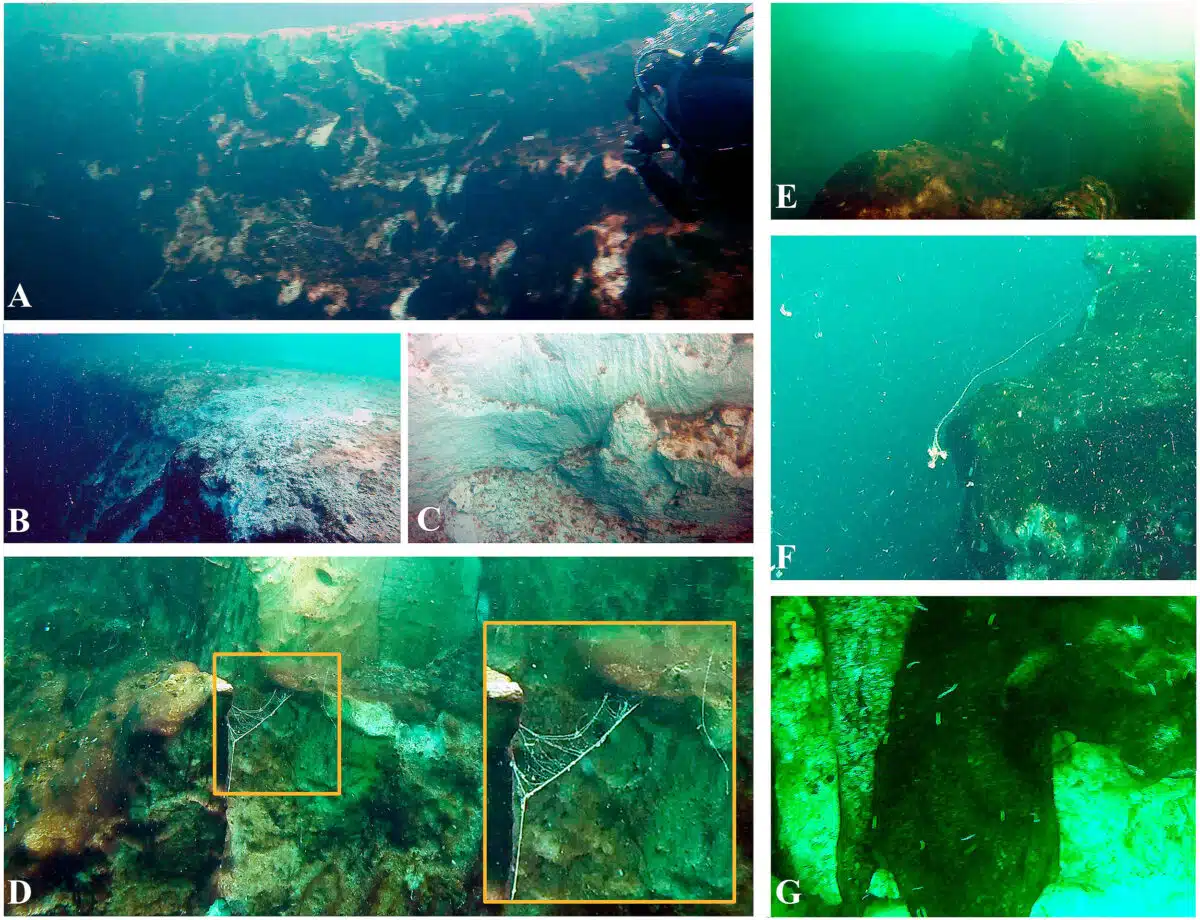 Morphology and biology of the Taam Ja’ Blue Hole. Credit: Frontiers in Marine Science
The Ocean’s Most Mysterious Life Zones
Blue holes may appear foreboding, but they serve as critical habitats in otherwise barren ocean environments. As reported by CBS News, these formations can be biological oases, home to corals, sponges, mollusks, sea turtles, and even sharks.
The diverse marine life within them is often cut off from the surrounding sea, creating isolated ecosystems with unique species compositions. But despite their potential importance, the full distribution and biological complexity of blue holes remains poorly understood.
“The opening of a blue hole can be several hundred feet underwater, and for many holes, the opening is too small for an automated submersible,” noted NOAA. “In fact, the first reports of blue holes did not come from scientists or researchers, but actually came from fishermen and recreational divers.”
The location, with its enormous depth and still-unexplored bottom, underscores how much remains unknown beneath the surface.