2026 is right around the corner, and the D-FW office real estate market is closing out another year of recalibration.
A lot of this might sound old hat at this point, but it’s hard to overstate the transformative impact of the COVID-19 pandemic when it comes to office space. Remote and hybrid schedules have become commonplace, and developers are embracing adaptive reuse in areas like downtown Dallas, where occupancy rates have failed to recover in a meaningful way.
In fact, The Wall Street Journal just reported some pretty dismal figures on Sunday. Downtown Dallas apparently has the second-highest vacancy rate out of all the nation’s city centers, coming in behind only Seattle, according to CoStar data on the first three quarters of 2025. During the same period, transactions in the central business district totaled only $51.7 million. Meanwhile, suburban markets clocked roughly $1.8 billion, per MSCI data.
None of that’s to say that office is dead in the Metroplex. D-FW is still poised to capitalize on corporate relocations, and neighborhoods like Uptown are benefiting from downtown Dallas’ office market downturn.
Here are some highlights from our coverage this year on the office sector, as well as a couple of things we missed worth calling attention to.
Y’all Street Players Plant Flags
Remote and hybrid schedules be damned, when Y’all Street finally takes shape, there’s a good chance it could be a real live center of financial sector activity — maybe in the downtown financial district Mike Ablon and Mike Hoque want to realize and anchor with Bank of America Plaza.
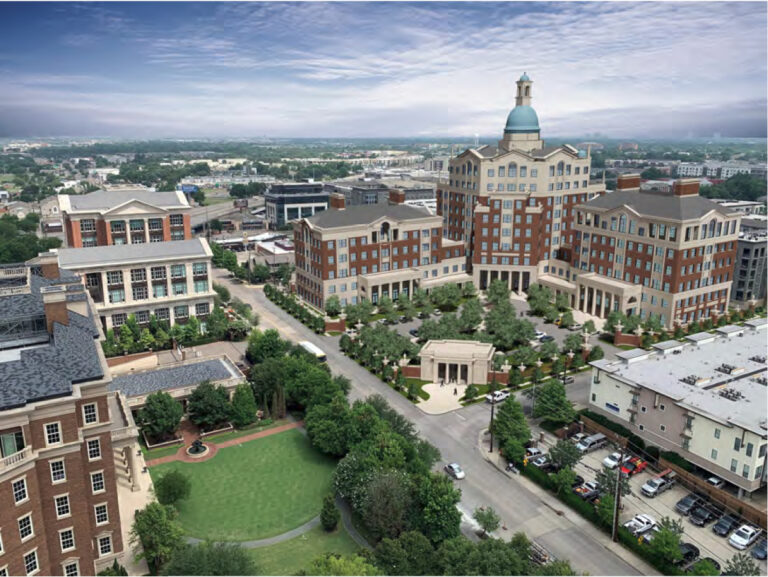 Rendering of Old Parkland Hospital redevelopment, where NYSE set up shop.
In the meantime, big names like the New York Stock Exchange and Scotiabank are leasing office space in Uptown and Victory Park, respectively. The announcements followed last year’s news of the Texas Stock Exchange temporarily setting up shop just southeast of Highland Park at Weir’s Plaza.
Wells Fargo Opens New Sustainable Campus
In an important opening to a new chapter in the Metroplex’s business history, Wells Fargo celebrated the launch of its new 22-acre campus in Las Colinas in October. With two buildings comprising 850,000 square feet and a number of state-of-the-art amenities, the facility marks the consolidation of several D-FW offices.
Dallas-based KDC developed the $570 million campus, with Corgan responsible for design and Austin Commercial on construction. Stakeholders put an emphasis on sustainability, equipping the buildings with solar power, smart irrigation systems, and weather-optimized dynamic glass for energy efficiency.
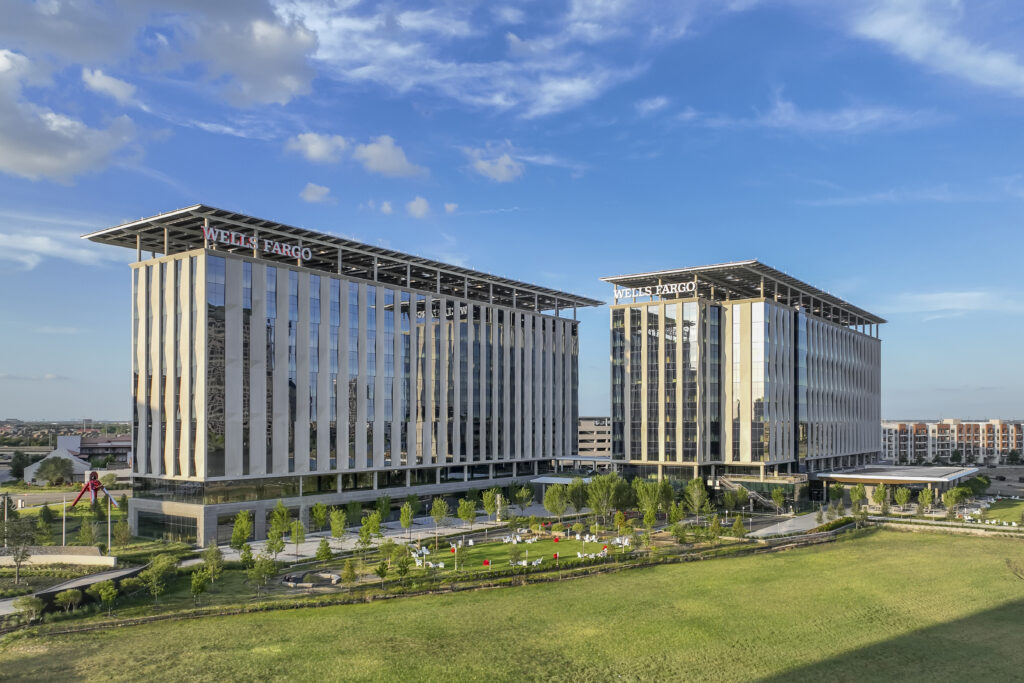 Rendering of new Wells Fargo campus in Las Colinas
“This new Wells Fargo campus is more than just a milestone, it’s a testament to the unmatched economic climate we have created in Texas,” Gov. Greg Abbott said. “From world class infrastructure, to a highly skilled workforce, Texas offers everything that job creators need to succeed. Texas continues to attract world class employers because they know Texas is where businesses prosper and the future of America’s economy is built.”
Tenants Trending Toward More Upscale Digs
One dynamic that’s been in play has been a flight to quality, with many businesses opting to pay a premium for high-end office space in strategic locations instead of saving on overhead by leasing in Class B or C buildings.
Citadel Partners has been leveraging that angle in downtown Fort Worth, and Ramrock Real Estate LLC and Lincoln Property Company are looking to capitalize on the trend through a new mixed-use redevelopment of Preston Center in Dallas. The project will include 300,000 square feet of Class AA office space.
Some Office Towers Still Command Big Dollars, Others… Not So Much
What year-in-review doesn’t flag the biggest deals? For the office sector in 2025, two stand out in particular. During the summer, The Link at Uptown, a 25-story office tower was purchased by Cousins Properties for $218 million.
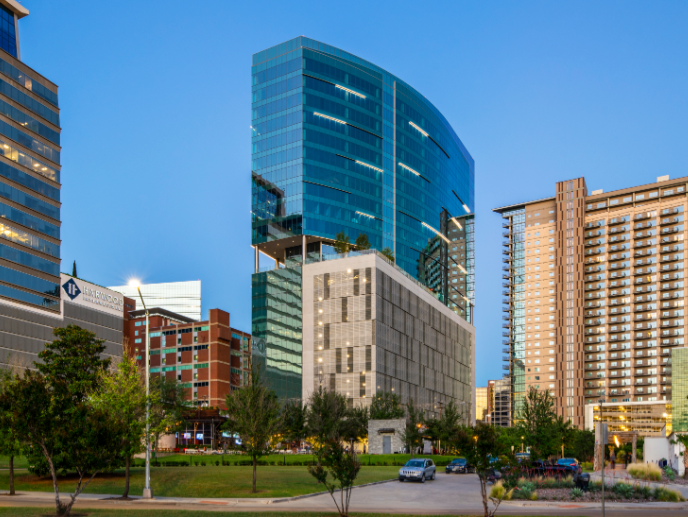 The Link at Uptown. Kaizen Development Partners website.
That was the biggest office transaction of the year until Fort Worth-based Crescent Real Estate snatched up the 457,000-square-foot Texas Capital Center just north of Dallas’ central business district a few months later for a whopping $292 million, clocking the biggest purchase in the city limits since 2022.
Recently, though, a real bargain deal facilitated by JLL showed what else is possible. This month, it was reported that Real Capital Solutions bought the Walnut Glen office tower for roughly a third of its 2016 selling price. The 18-story building over by Texas Health Presbyterian Dallas (which had a vacancy rate hovering just under 50%) fetched a price of only $26.1 million, despite its prime spot along the Central Expressway.
The Far North Dallas office tower at 17950 Preston Rd. has also struggled with vacancy. It was picked up at a foreclosure auction in April 2025 for $13.85 million. Now, its conversion potential is being touted, just like the 185,000-square-foot, blue-paneled downtown office tower at 211 N Ervay St. that’s back on the market after a stint on the auction block.
Conversions have been a productive outlet for underperforming office space, with Dallas cementing its place among the top cities for adaptive reuse. There’s no doubt they’ll be another big part of the sector’s story next year.