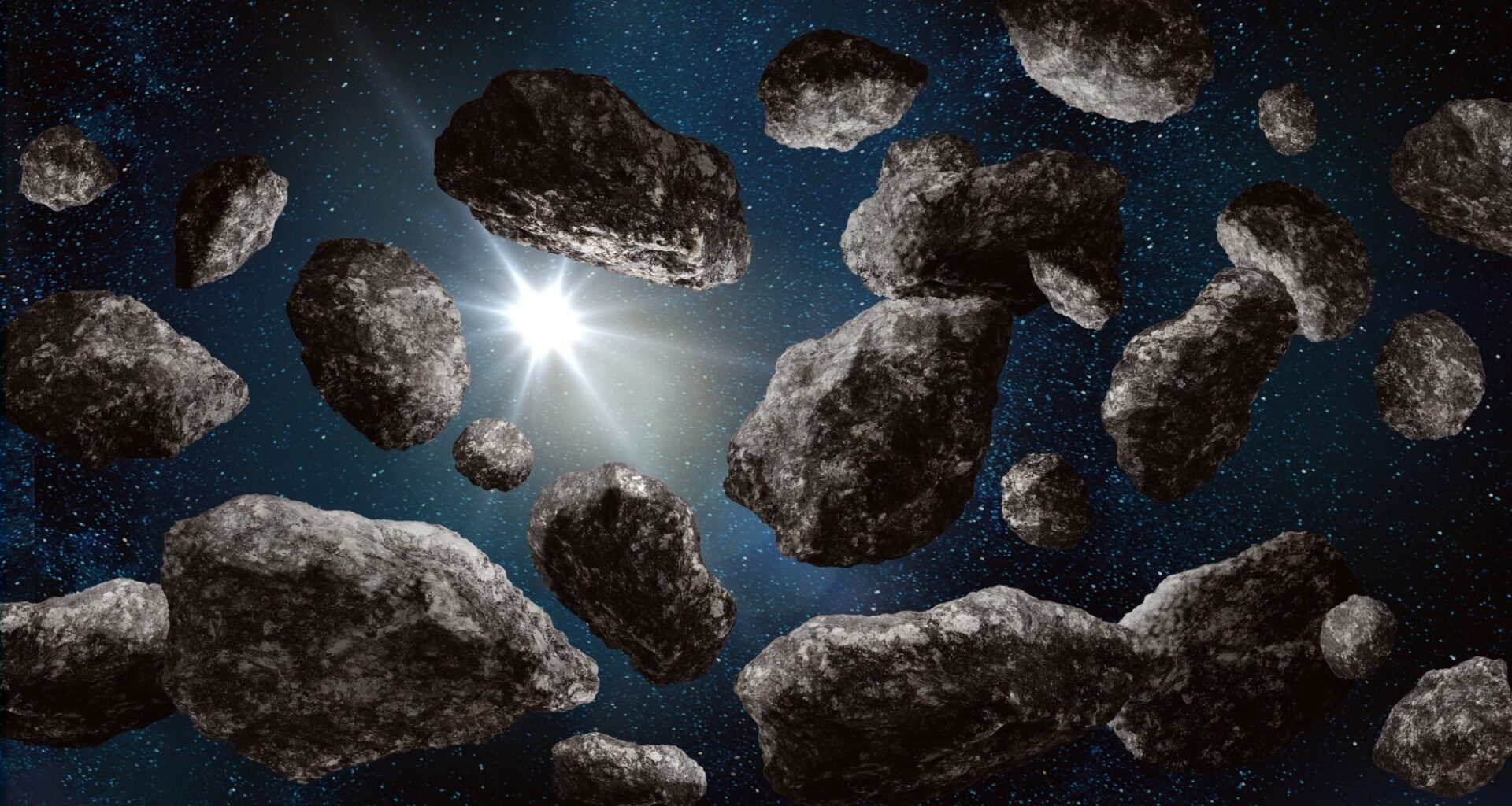
Led by Amir Siraj, a doctoral student in astrophysics at Princeton University, the study reveals a tightly bound group of Kuiper Belt Objects (KBOs) near the known “kernel” structure; an established low-tilt orbital clump. By using sophisticated data-mining techniques and refined orbital measurements, the team uncovered a second, denser cluster, challenging long-standing ideas about how planetary migration shaped the outer solar system.
The Kuiper Belt lies beyond Neptune, roughly 4 billion miles (43 astronomical units) from the Sun, and contains frozen remnants from the early formation of the solar system. In 2011, astronomers first reported the kernel, a population of cold classical KBOs thought to have formed in place due to their stable, low-inclination orbits. Until now, this feature stood out as a unique structure. But the discovery of a neighboring cluster, now referred to as the inner kernel, has added a new, unexplained feature to this distant region.
Precision Clustering Reveals Unexpected Orbital Calm
The discovery emerged from an analysis of 1,650 known KBOs. According to Earth.com, Siraj’s team applied DBSCAN, a density-based clustering algorithm, to identify patterns not immediately visible to the eye. Their approach focused on “free elements“, components of an orbit that are unaffected by gravitational forcing from the planets, rather than raw orbital elements such as inclination and eccentricity.
 © PeteDraper from Getty Images Signature / Canva
To reduce observational noise, they recalculated all KBO orbits using barycentric coordinates, which take the solar system’s center of mass as a reference point. This method allowed the researchers to filter out distortions caused by the Sun’s wobble and focus on subtle orbital features.
What emerged was a compact group of KBOs near the ecliptic, the plane of Earth’s orbit around the Sun, with paths that are unusually round and consistently spaced. Even after accounting for observational bias, regions where telescopes tend to miss dimmer objects, the inner kernel maintained its structure, clearly separated from the original kernel.
The Legacy Of Neptune’s Migration
The behavior of these KBOs is particularly surprising given the gravitational influence of Neptune, which would normally disturb such orderly configurations. In existing models, Neptune’s slow outward migration through the outer solar system stirred up debris and left a trail of scattered objects. But the inner kernel, with its low eccentricity and inclination, seems to have remained untouched by this process.
This has led researchers to reconsider the mechanics of Neptune’s movement. One explanation may lie in gravitational capture, where a planet’s pull temporarily traps nearby objects, allowing them to settle into stable orbits. Another possible mechanism involves orbital resonances, where objects complete orbits in a timed ratio with Neptune, allowing them to survive in narrow bands.
According to the study, the region separating the kernel and inner kernel may be influenced by the 7:4 mean-motion resonance, a configuration where Neptune completes seven orbits for every four by a KBO. This resonance could explain the apparent gap between the clusters, but researchers also noted that slight changes in clustering parameters can blur the distinction between them, raising questions about whether they are truly separate populations or part of a continuous structure.
Data Quality Sharpens The Picture Of Early Solar System
The study emphasizes the importance of multi-opposition data, observations of the same object over several years, to reduce errors and confirm orbital features. Even with good observational coverage, planetary forces can blur orbital structures unless the forced elements are properly removed. Each added observation extends the orbital arc, refining the model used to define a KBO’s motion.
As noted by the same source, the research benefits from precise software tools that allow scientists to analyze phase space, the combination of an object’s position and motion, at a level that goes beyond what visual analysis can achieve. This technical accuracy is essential for identifying faint orbital groupings like the inner kernel.
The findings also reinforce the role of cold classical KBOs as time capsules of the solar system’s earliest moments. Bodies like Arrokoth, visited by NASA’s New Horizons mission, have remained largely unchanged for billions of years, avoiding the violent scattering events that affected other regions. Their chemistry and motion help scientists reconstruct conditions before the planets migrated.
Some theories have considered whether the inner kernel could be a collisional family, a group of objects created by a past impact, but the unusually tight orbital spacing makes this less likely. According to the authors, a group formed through collisions would typically exhibit more orbital spread.
With more data expected from future surveys like the Vera C. Rubin Observatory, which will conduct a wide-field scan of the sky, researchers anticipate finding additional KBO clusters. A larger sample will reduce the selection effect, biases introduced by what telescopes can or cannot detect, and help confirm whether the inner kernel is a separate structure or simply the inner boundary of the known kernel.