Ketamine is a dangerous anesthetic commonly known on the street as “Special K,” “Donkey Dust,” and “Cat Killer,” the agency said.
PHILADELPHIA — U.S. Customs and Border Protection officers intercepted six separate ketamine smuggling operations in Philadelphia, the most recent a Dec. 11 shipment from Europe to addresses in the United States, the agency said Monday in a press release.
Ketamine hydrochloride is a Schedule III non-narcotic compound regulated under the Controlled Substances Act, the agency said. It is a dangerous anesthetic commonly known on the street as “Special K,” “Donkey Dust,” and “Cat Killer,” and is smoked, snorted, or mixed in beverages, or cut with other dangerous drugs.
Overdoses can lead to serious health threats, such as nausea, elevated heart rate, unconsciousness, convulsions, and respiratory failure, according to CBP.
Ketamine is used lawfully by medical professionals to treat human and animal patients, but it can also be used illegally as a hallucinogen, similar to phencyclidine (PCP), by drug abusers, the agency said.
Sexual predators can also use ketamine to incapacitate their victims, according to the agency.
Each of the six shipments, which arrived between Sept. 23 through Dec. 11, were manifested as something different, the agency said. Four shipments arrived from the United Kingdom, one from France, and one from The Netherlands.
Four shipments were destined for Florida and two to Connecticut, according to CBP.
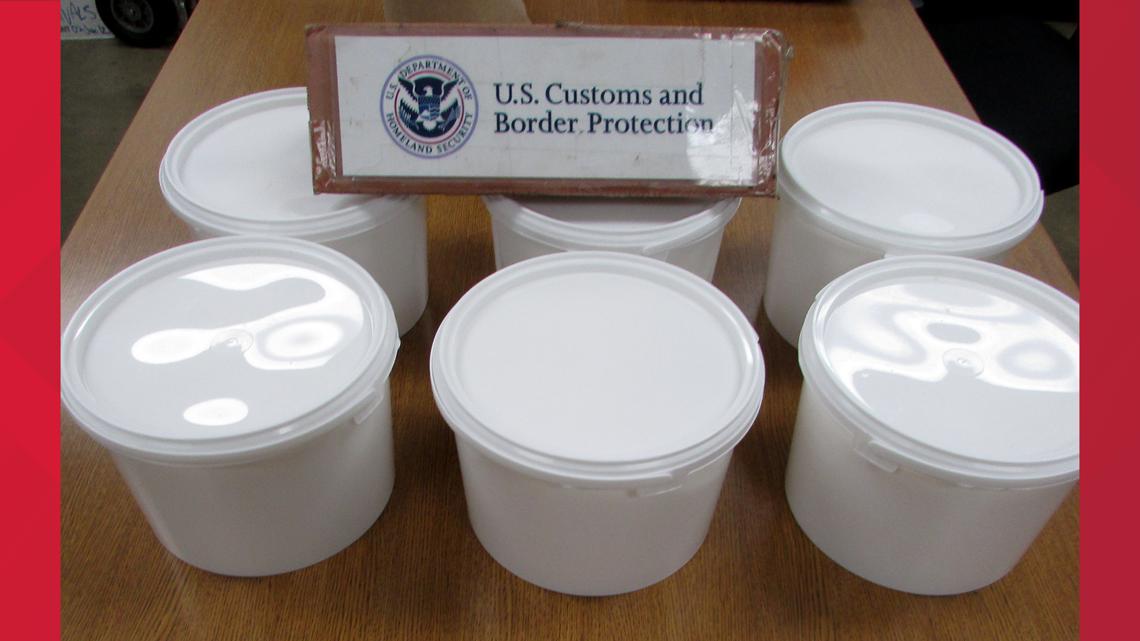
CBP officers inspected the shipments and discovered a white, crystalline substance concealed inside objects such as a punching bag base, plastic cleaning solvent bottles, plastic shell cases, and vacuum-sealed bags.
Officers used a handheld elemental isotope analysis tool to test samples of each of the substances and confirmed the samples to be ketamine hydrochloride.
Officers seized the ketamine.
“Customs and Border Protection officers vigilantly safeguard our communities from the scourge of dangerous drugs, such as this ketamine, which has been used by sexual predators to assault victims,” said Cleatus P. Hunt, Jr., Area Port Director for CBP’s Area Port of Philadelphia. “CBP officers remain committed to disrupting drug smuggling attempts and working with our law enforcement partners to hold drug trafficking organizations accountable.”