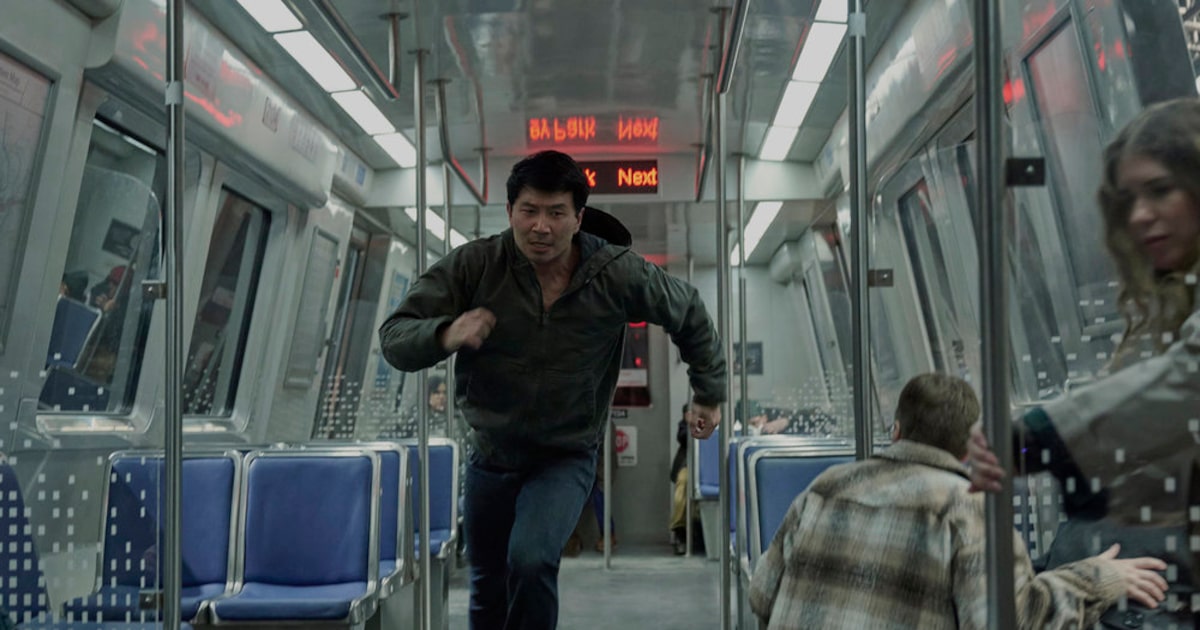
Thomas Brandon, the Fort Worth-raised creator of Peacock’s sci-fi spy thriller The Copenhagen Test, poses a dystopian dilemma in his new show: What if your ears and eyes could be hacked?
The eight-episode show, which premiered Dec. 27, centers around Alexander Hale (Simu Liu), an analyst for clandestine agency The Orphanage that monitors others in the intelligence apparatus. Unwittingly, Hale has been a mole for an unknown entity that has hacked part of his nervous system.
“He knows that everything around him is fake now and everything is being broadcast. It’s all a show, he’s also essentially living in a Truman Show world,” Brandon says.
The meta-existential idea sprouted around 2017, when Brandon’s wife had her laptop infected with ransomware and the people responsible demanded Bitcoin (“I did not pay the ransom,” he notes).
News Roundups
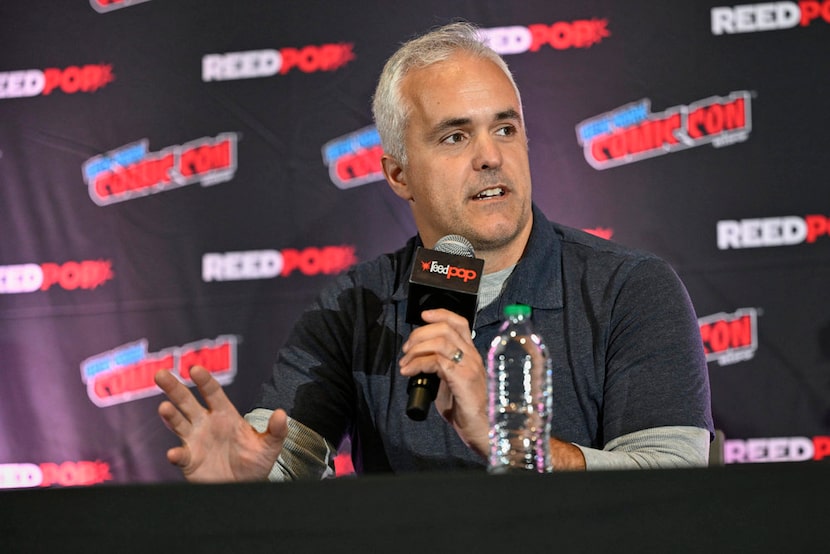
Thomas Brandon, creator of “The Copenhagen Test,” hails from southwest Fort Worth.
Peacock / Scott Gries/Peacock
“I started thinking ‘Okay, if I’m worried about my webcam, my phone, my laptop, what’s next? What’s five minutes in the future?’” he said. “It speaks to an anxiety a lot of us have, which is, just by participating in the Internet … how am I being used by someone right now without knowing it?”
This interview has been edited and condensed.
Describe your upbringing in North Texas.
I grew up in southwest Fort Worth and then we moved to Weatherford for a long period. I was homeschooled the whole way in a kind of Evangelical enclave. There was a long, protracted battle of whether homeschooling was even legal in a lot of different states, and so there was some fear of truant officers, school buses and that we would be found out by the larger culture. It created in me a view of always looking beneath the surface of the world that you’re inside of.
You were a student at Dallas Baptist University, before you studied film in grad school. Were you making films or writing there?
I made my first film getting a bunch of people on campus to say the Pledge of Allegiance — using them one word at a time and stitching it all together. It created this imperfect, jagged, kind of quilt. It was like 90 seconds long. The Copenhagen Test also delves into these waters asking questions of “What does allegiance mean? And allegiance to whom and to what?” If you look up and you realize you don’t like the direction your country is going, what then? It’s interesting to think about how my first project was a kind of fractured, playful look at how allegiance can be defined in different ways by different people — not that I knew I was doing that in 2003.
How do you feel about surveillance in your personal life — the information and data about you collected by the apps you use?
I’ve been taken with the work of Yuval Noah Harari, who is a historian, who has written that the greatest thing we can do is make sure that the choices in our life are made by us and not for us by the algorithms and the giant companies, because they will do that. They are hacking what it means to be human. I limit notifications on my phone so that I don’t get notifications from apps because I don’t like my attention being drawn, which I feel like is a form of surveillance. The flip side of it is I really view surveillance as a tool like all technology. It’s value-neutral.
In ‘The Copenhagen Test,’ former President George H.W. Bush, who also served as director of the CIA, is credited with creating The Orphanage. Do you think he would ever have toyed with that idea — a watchdog for the watchdog?
I think so. That’s kind of why I put it there, honestly, I wanted it to feel a little bipartisan, because I’m so deeply nostalgic for an era where the Republican guy you didn’t vote for was not a monster. I really do view George H.W. Bush as one of the last presidents with real integrity. As you pointed out, a lot of people don’t know — former director of the CIA — he would be the first person to stand up and say he knows where the excesses are … where it could be fallible.
How did growing up in Texas mold your approach to storytelling?
The thing that will always be with me from my time in Texas is a love of the horizon, especially growing up just a little bit west of the city [Fort Worth] — the expansive sky and space and the ability to be able to gaze out and kind of get lost in thought. That was fundamental to making me who I am as a storyteller. An expansive horizon could be filled by anything. It feels like potential.
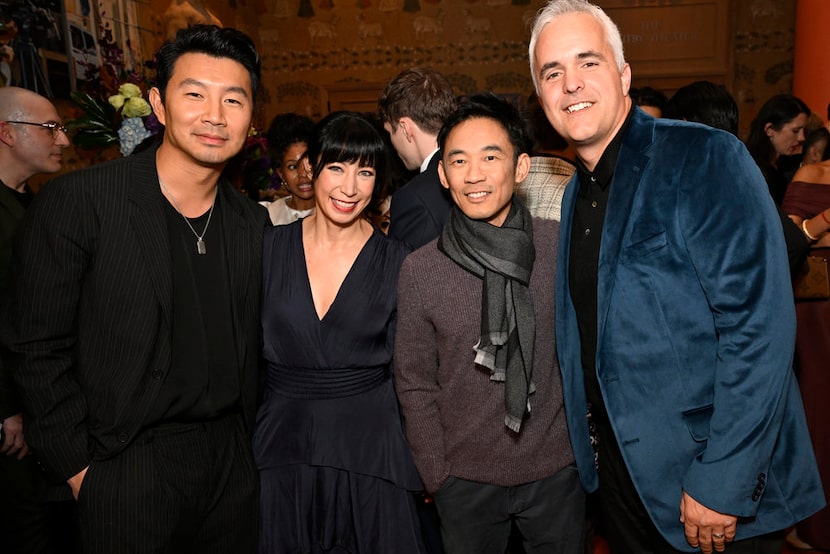
Simu Liu (from left), Jennifer Yale, James Wan and Thomas Brandon attend the premiere of “The Copenhagen Test” at The Whitby Hotel in New York City on Dec. 16, 2025
Peacock / Scott Gries/Peacock