By Brenda Hillegas
For over 50 years, Brandywine Workshop and Archives has played a major role in shaping contemporary fine-art printmaking. Founded in Philadelphia in 1972 by artist and educator Allan L. Edmunds, the nonprofit continues to bring together artists, collectors, and educators from across the globe to explore the field.
Over the decades, BWA has also produced limited-edition prints in collaboration with nearly 400 artists, with works in collections nationwide including the National Gallery of Art. The BWA’s permanent collection includes more than 1,100 limited-edition fine-art prints created by visiting artists and donated works from leading printmaking institutions such as the Robert Blackburn Printmaking Workshop (New York City), Taller Experimental de Gráfica (Havana), Hatch Billops Collection (New York City), and Self Help Graphics & Art (Los Angeles).
As a nonprofit, BWA reinvests all proceeds from print sales directly into its artist residency programs to offer fully funded opportunities that allow artists to focus entirely on experimentation and production.
Now entering a new chapter, BWA is expanding its public presence through gallery exhibitions, community programming, and digital initiatives designed to bring printmaking to wider audiences. Newly appointed Executive Director Rebecca Morrison describes BWA as “more than a studio” and “a full ecosystem of technical mastery, creative partnership, and global perspective.” Under her leadership, the organization is reimagining how visitors experience and engage with fine-art printmaking.
Morrison recently sat down with Metro to talk about about her time with BWA, what visitors can expect from the gallery space, and why this artform remains vital and accessible today.
What drew you to Brandywine Workshop and Archives and what excites you most about leading the organization now?
What initially drew me to Brandywine Workshop and Archives was the chance to experience the organization from the inside. I first worked with them as a consultant and had the opportunity to tour the print shop, collaborate at art fairs like The Armory Show, and watch firsthand how people responded to the work. I was struck by the caliber of artists, the breadth of the collection, and the fact that BWA has preserved such a technically demanding and historically significant art form while continuing to push it forward.
What excites me most about leading BWA now is the moment we’re in. With more than 50 years of history behind us, we have an extraordinary foundation to build on — an expansive collection, a global network of artists, and a growing audience that’s hungry for accessible, high-quality art. This role enables me to combine my business background with my personal interest in the arts, stewarding a legacy institution into its next chapter by balancing preservation with modernization and expanding how people experience and engage with the work.
BWA is expanding its public access and programming. What can visitors expect when they visit the gallery space?
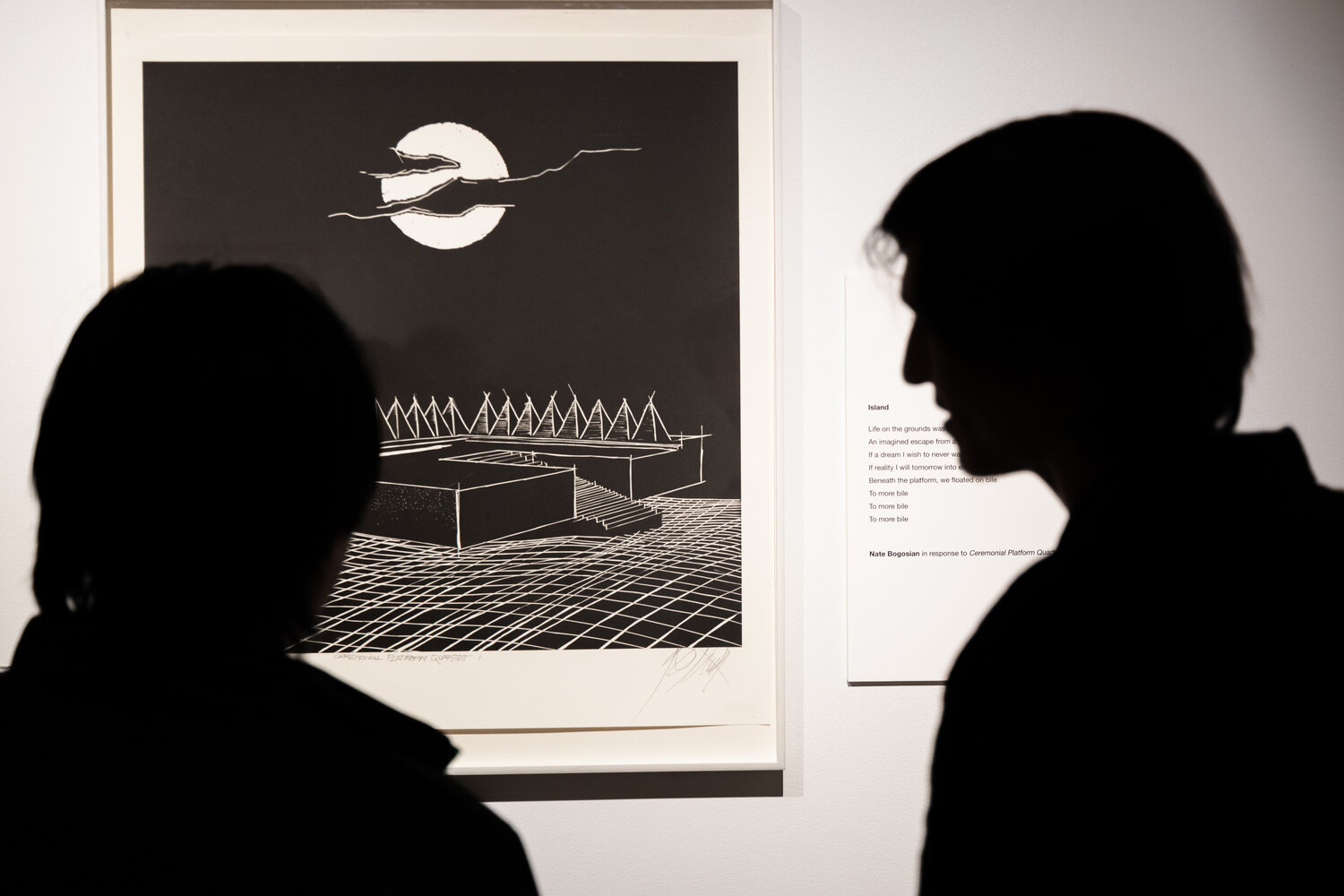
Visitors can expect to encounter a wide range of work that reflects both BWA’s local roots and its global reach. The gallery showcases prints by Philadelphia-based artists alongside work by international artists, highlighting the full creative range of printmaking. Seeing the work up close often surprises people; many don’t realize that prints can be richly layered, highly detailed, and physically made by hand to create works on paper that are as expressive and technically complex as paintings or sculptures.
Looking ahead, our programming will reflect larger conversations, particularly in 2026, as we approach the nation’s Semiquincentennial. Through exhibitions and artist conversations, we’ll explore ideas of identity, belonging, and what it means to be American from various perspectives. While most of our artists are U.S.-based, many come from immigrant communities, bringing global viewpoints into dialogue within the gallery. The goal is for visitors to experience the space not just as a place to view art, but as a place for conversation, discovery, and connection.
For people who may not be familiar with fine-art printmaking, what would you like them to understand about the process or why prints matter?
I would want people to understand that fine-art printmaking is both highly artistic, democratic, and deeply valuable. While prints are often misunderstood as being less significant than one-of-a-kind works, that couldn’t be further from the truth. Many prints are created in small editions and are entirely hand-produced through close collaboration between artists and master printers. That process requires extraordinary technical skill and allows artists to experiment, translate their ideas into new forms, and push their practice in unexpected directions.
Printmaking also matters because it is inherently democratic. By producing multiple works within an edition, artists can make high-quality art more accessible and approachable without sacrificing integrity or value. Prints allow people to live with work by artists they admire — artists whose sculptures, paintings, or large-scale works might otherwise be out of reach — while also helping preserve a vital art form at a time when master printers and specialized equipment are becoming increasingly rare. At Brandywine, preserving and sharing that knowledge is central to our mission, and we hope that opening the process to more people will inspire the next generation of artists and printmakers.
BWA’s Firehouse Gallery and Printed Image Gallery (730 South Broad Street) is open by appointment, with guided tours Tuesdays between 10 a.m. and 5 p.m. and Wednesdays beginning at 5 p.m. when BWA’s evening series, ArtistNConversation, are held. Works are also available on BWA’s website and Artura.org for public viewing.