San Diego has fast-casual outlets for almost every ethnic food, from tacos and falafels to Korean fried chicken and kebabs and gyros, but in a first for the county, it will soon be getting a venue specializing exclusively in the popular Japanese rice ball snack, onigiri.
Already well established in Northern California, Onigilly Japanese Kitchen is coming next year to the Westfield UTC mall, part of an ambitious Southern California expansion, says its founder, Koji Kanematsu, a former computer systems developer. He launched Onigilly (a play on the onigiri name) with a friend a few years after moving from Japan to San Francisco in 2006.
He was surprised at the time to discover there were few places selling his favorite childhood snack, which is a ubiquitous staple in his homeland. He has since worked hard to acquaint non-Japanese consumers with what is admittedly a very niche brand. In so doing, he has tinkered over the years with the look and recipe of onigiri, which are balls made with lightly salted steamed rice, wrapped in nori (seaweed), and embellished with a variety of savory fillings like tuna or pickled plum.
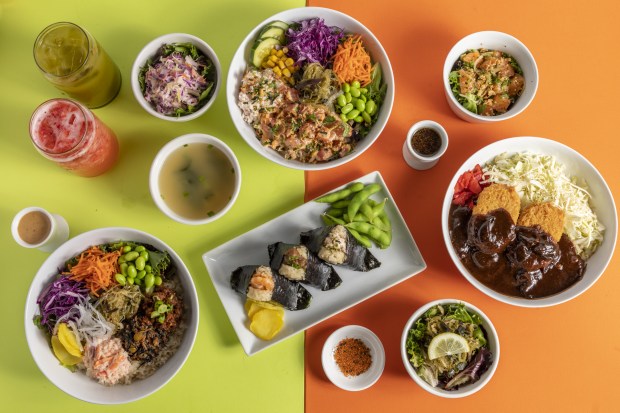 The new location at Westfield UTC will feature Onitilly’s version of Japanese rice balls feature more than 30 different varieties. (Onigilly)
The San Francisco-based chain, which currently has seven locations, four of which are situated in shopping centers, has plans to open as many as 20 to 30 outlets in Southern California, including six or more in San Diego. The UTC location, which will take over a poke place, should open by this summer, depending on how long it takes to secure city permits, Kanematsu said.
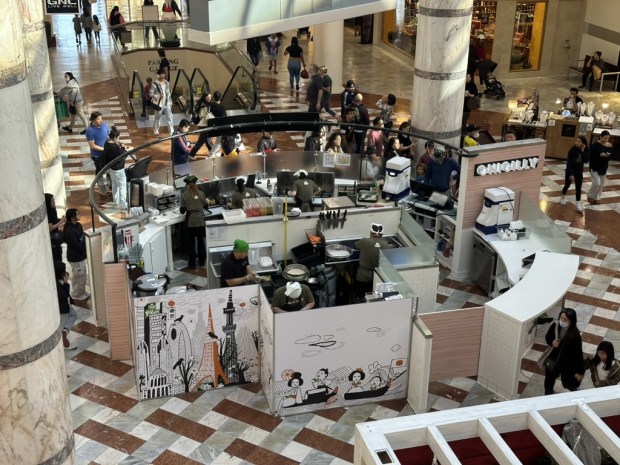 Onigilly, a new Japanese fast food concept coming to San Diego, will feature the rice bowl snack, onigiri, which is popular throughout Japan. (Onigilly)
The expansion, he said, will be driven by a franchising program, which started just a few months ago. The first San Diego location will be overseen by father and son Aki and Kenji Iko, who first expressed interest in the concept three years ago, but at that time, there were no plans to franchise, Kanematsu said.
“We felt that San Diego is great for outdoor dining year-round, the weather is pretty good, and onigiri is great for eating outdoors,” he said. “We found the location for the franchisee and negotiated a 10-year lease.”
The franchisee, he said, will cover the expense of building out the space. He estimates a typical cost of $50,000 to $100,000 for existing spaces that are in good condition. Onigilly venues are typically small in size, from 300 to 500 square feet.
Other Southern California mall locations that are planned in the near future include the Del Amo Fashion Center in Torrance, the Brea Mall, Ontario Mills, and Westfield Culver City.
While many people may not be familiar with the Japanese grab-and-go snack, Kanematsu said he believes it will catch on quickly in San Diego, as it has at the chain’s other locations.
“We intentionally open in non-Japanese areas because we want to educate American people,” he said. “We used to have more traditional flavors and the traditional style of the onigiri, but we couldn’t sell them, so we changed the style and recipe and made a lot of adjustments.”
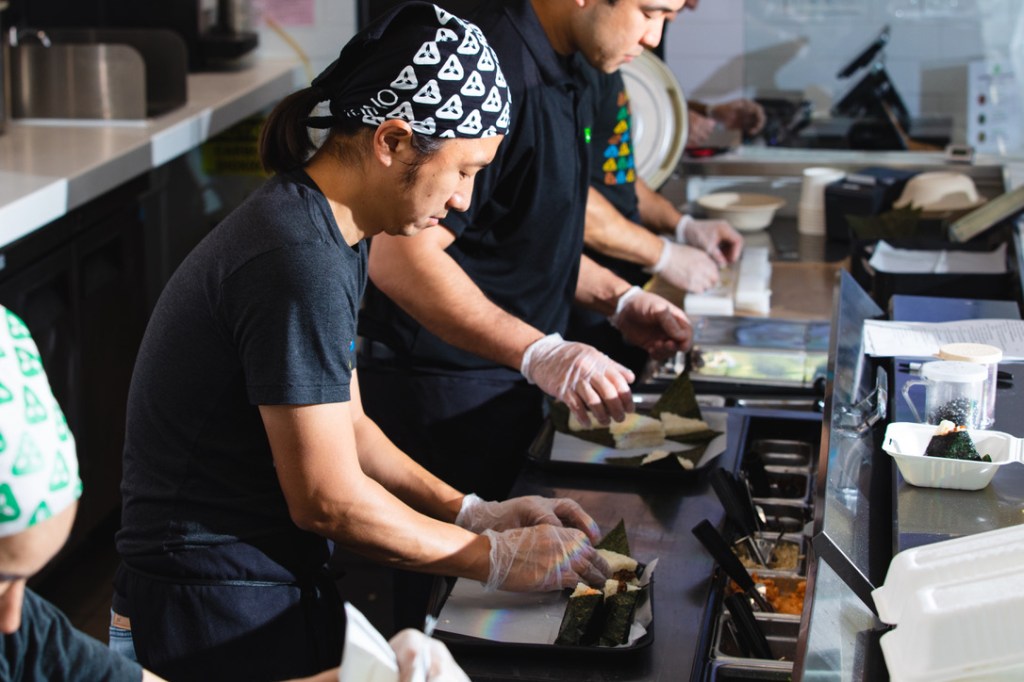
For instance, the rice snacks sold at Onigilly are not fashioned as balls but rather as triangular “sandwiches” so that the filling is clearly visible, Kanematsu explained. Among the fillings are teriyaki chicken, tempura shrimp and shitake mushrooms. While onigiri differ from sushi in that they typically don’t include raw fish, there are a few rice snacks on the Onigilly menu that are filled with raw fish.
In a recent year-end news release, Onigilly touted its sales growth and increasing revenue, saying it expected to end 2025 with record sales and double-digit traffic growth. Its San Francisco restaurant, for example, saw a 28% increase in traffic, while the San Jose location grew 18%, and annual revenue averaged close to $2 million per store, Kanematsu said.
He acknowledged, though, that as the company embarks on franchising, the operators can’t expect first-year revenue to approach $2 million.
“We know how to do this, but for the franchised locations, we will need to train the owners,” he said, “so they should not expect as much at first.”