Support CleanTechnica’s work through a Substack subscription or on Stripe.
File this under A for Another Thing Trump Failed At. US President Donald Trump threw everything he had against the renewable energy movement in 2025, killing off new clean power jobs by the thousands, eviscerating billions in new investments, and needlessly raising electricity costs, to boot. Still, for all the pain Trump has foisted upon ordinary working Americans, he failed to stop wind and solar from dominating new capacity additions this year — and his remaining three years in office promise more of the same.
Renewable Energy Jobs Down …
Wait … whut? How can renewable energy dominate capacity additions over the next three years when thousands of households have lost their work in cleantech fields? After all, the numbers don’t lie. People are hurting all over the country as a result of Trump’s pullback on federal support for wind, solar, and EV-related projects. Surely that means Trump has won the war on renewables.
“Businesses canceled, closed, and scaled back nearly $1.6 billion worth of large-scale factories and clean energy projects in September, bringing the total cost of projects cancelled in the private-sector to over $24 billion in 2025 alone,” the business organization E2 noted in October.
The pullbacks resulted in a job loss of almost 21,000 by September, E2 estimated. The hurt was not confined to Trump’s political enemies, either. E2 calculated that Congressional districts under Republican representation lost 15,000 of those jobs, the consequence of losing $12.4 billion in investments as of September.
Hands down, the highlight of Trump’s war on renewables has been his gleefully malevolent attack on the domestic offshore wind industry, an effort that has upended energy planning across coastal states while costing thousands of construction, manufacturing, and services jobs all around the industry’s 40-state supply chain. Still, offshore wind was an easy target. The industry depends on federal offshore leases under Trump’s control. All he had to do was pull the leases, and, well, maybe it’s not so easy after all.
Earlier this month a federal judge affirmed Trump’s authority to stop issuing new offshore leases, but the same judge also revoked Trump’s ham-handed “suspension” of offshore leases already under permit. Last week, Trump clapped back by issuing an emergency order halting work on 5 offshore wind farms that are way beyond the permit phase and deep into construction. That move also wound up in court again after one of the developers, Dominion Energy, sued to resume work.
A hearing was scheduled for Monday, December 29, but the judge decided to reschedule to January 16 in order to review the classified Defense Department report that purportedly compelled the work to halt. Even if work eventually resumes on all five projects, the damage has been done. Construction delays cost money, and local ratepayers will be left holding the bag for increased costs.
… But Renewable Energy Prevails
Despite the widespread human pain and financial consequences of this year’s abrupt U-turn in federal energy policy, Trump failed to stop the forward momentum of the renewable energy revolution. After all, wind and solar — particularly solar — are now the most economical, accessible, and fastest ways to get more kilowatts into the grid (here’s a recent example). Trump lives in an intentionally fact-free world of his own making, but the sun will keep rising and the wind will keep blowing regardless of his intentions.
Again, the numbers don’t lie. Let’s take a look at the latest news from the SUN DAY Campaign, where Ken Bossong has spent years summarizing data from federal agencies and underscoring the renewable energy highlights (see our SUN DAY Campaign archive here).
SUN DAY’s latest analyses of data from the Federal Energy Regulatory Commission can be found in full online under the headline, “Solar Dominates for the 25th Consecutive Month Providing 98% of New U.S. Electrical Generating Capacity in September and >75% Year-to-Date,” (here’s one source), which pretty much sums up the situation.
“Solar has now been the largest source of new generating capacity added each month for 25 months straight: September 2023 – September 2025. During that period, total utility-scale solar capacity grew from 91.82 gigawatts (GW) to 158.43-GW. No other energy source added anything close to that amount of new capacity,” Bossong elaborated.
For all of Trump’s efforts to stamp every last wind turbine into the ground, the domestic wind industry came in second only to solar for new capacity additions. Wind accounted for 11.7 gigawatts during the two-year period, blowing past natural gas, which is the only other domestic energy resource readily available for increase at scale. Gas only registered 4.6 gigawatts during that period.
“Year-to-date (YTD), solar and wind have each added more new capacity than did natural gas,” Bossong emphasizes.
How It Started …
To be clear, the damage done this year will continue to ripple out into lost opportunities and higher electricity rates. Still, Bossong draws attention to the strong showing of renewable energy past 2025 and into 2028, with solar pulling far ahead of the pack.
“FERC reports that net ‘high probability’ net additions of solar between October 2025 and September 2028 total 90,614-MW [90.614 gigawatts] – an amount almost four times the forecast net ‘high probability’ additions for wind (23,093-MW), the second fastest growing resource,” Bossong notes.
In the same forecast period, other so-called clean(er) fuels are far behind. Natural gas racks up less than 7 gigawatts in added capacity, and nuclear registers a lowly 335 megawatts — a pretty poor showing considering that Trump has based his entire energy policy around the existence of a purported national emergency — you know, like the kind that demands an “immediate remedy.”
As for Trump’s pledge to keep the coal fires burning in power plants all over the country, he pledged to do the same thing during his first term in office. That was a colossal failure, one that will continue into his second term. FERC projects that coal will shrink — not expand, shrink — by just over 24 gigawatts by 2028. Oil, which has a much smaller starting footprint, is also poised to shrink another 1.6 gigawatts during that period.
“Taken together, the net new ‘high probability’ net utility-scale capacity additions by all renewable energy sources over the next three years – i.e., the Trump Administration’s remaining time in office – would total 114,239-MW,” Bossong summarizes. “On the other hand, the installed capacity of fossil fuels and nuclear power combined would shrink by 18,596-MW.”
How It Ended …
Against this backdrop, it’s helpful to recall that Trump’s energy “emergency” declaration hit the Federal Register on January 29, 2025, directing federal agencies to facilitate the production of “crude oil, natural gas, lease condensates, natural gas liquids, refined petroleum products, uranium, coal, biofuels, geothermal heat, the kinetic movement of flowing water, and critical minerals” as listed in Section 8 (here’s that link again).
So much for facilitating. Sharp-eyed readers will notice that at least three forms of renewable energy explicitly made the cut — biomass, geothermal, and hydropower — with marine energy also included as an unstated extension of “the kinetic movement of flowing water.” The idea that any of those three can provide an”immediate remedy” for a national energy emergency is laughable, particularly in the case of marine energy, which has barely gotten past the technology demonstration stage. If anyone gets the last laugh, it will be the geothermal industry, which is just beginning — emphasis on beginning — to capitalize on a next-generation R&D effort.
As for the here and now, well, here we are. If you have any thoughts about that, drop a note in the comment thread. Better yet, find your representatives in Congress and let them know what you think.
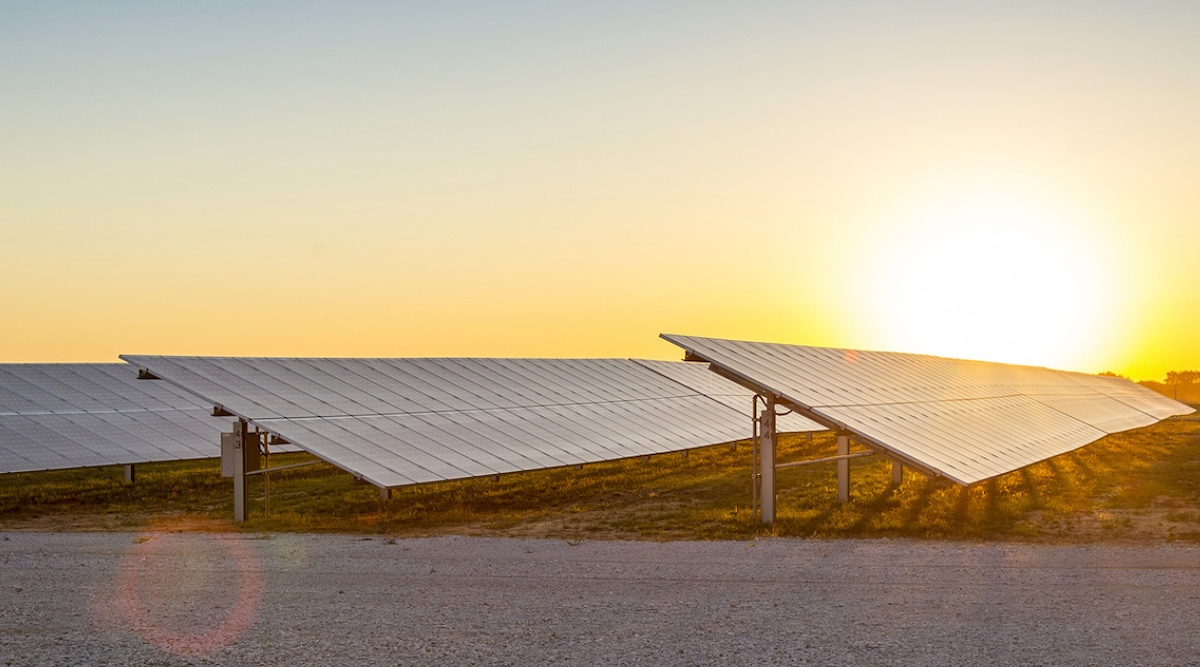
Photo: When US President Trump declared a national energy emergency in January, renewable energy quickly rose to the occasion (coal, not so much) [credit: (cropped): US Department of Energy).
Sign up for CleanTechnica’s Weekly Substack for Zach and Scott’s in-depth analyses and high level summaries, sign up for our daily newsletter, and follow us on Google News!
Advertisement
Have a tip for CleanTechnica? Want to advertise? Want to suggest a guest for our CleanTech Talk podcast? Contact us here.
Sign up for our daily newsletter for 15 new cleantech stories a day. Or sign up for our weekly one on top stories of the week if daily is too frequent.
CleanTechnica uses affiliate links. See our policy here.
CleanTechnica’s Comment Policy