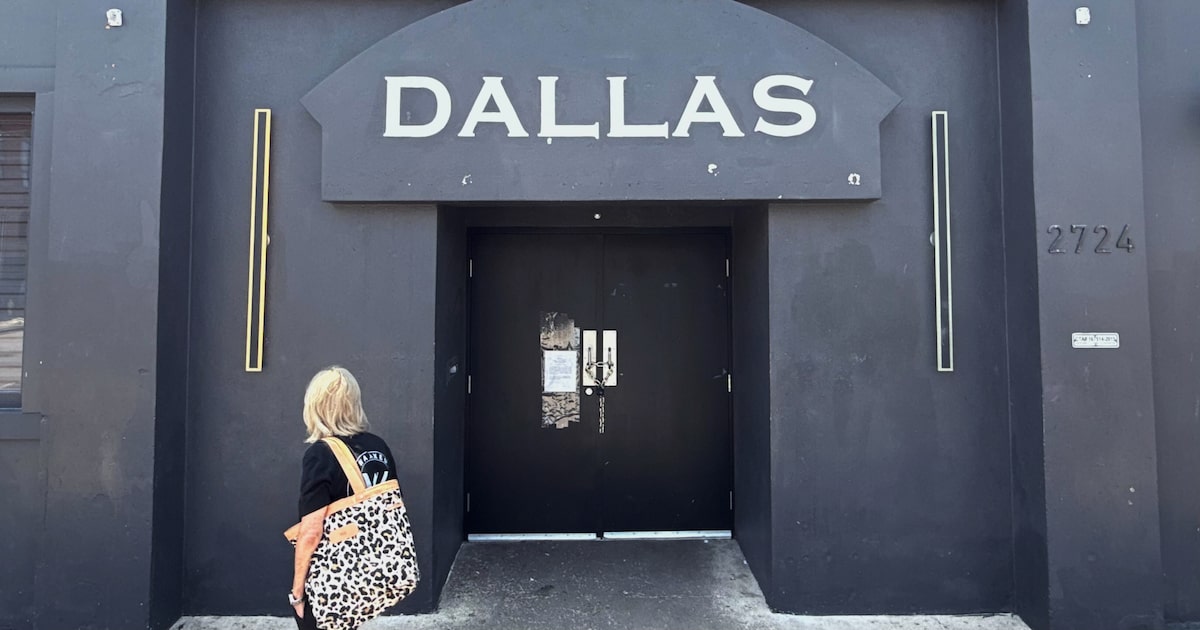
An attorney for the real estate firm that sued Rodeo Dallas said the company dropped its claims after the bar agreed to leave its Deep Ellum location by New Year’s Eve.
Ben Riemer, representing Asana Partners, said the agreement was part of a settlement between the bar and its landlord, Westdale Properties.
“Accordingly, our lawsuit is now moot, and we have dismissed it,” Riemer said in a statement to The Dallas Morning News.
J.D. Ybanez, a co-owner of Rodeo Dallas, called Riemer “a liar,” though he declined to comment on the bar’s status with Westdale. He said he’s unsure if the original Deep Ellum location will ever reopen, but vowed to eventually return to the area.
Political Points
“I love Deep Ellum, and I’m not gonna let anybody stop me from conducting business in places that I want to,” Ybanez said.
He helped open a new bar in Uptown in November called Rodeo Uptown, denying it was a replacement for the Deep Ellum location. He currently operates locations in Dallas’ Uptown, Fort Worth and in Arizona.
A lawyer for Westdale did not respond to requests for comment.
Court records show separate lawsuits in Dallas County district court involving Rodeo Dallas, one from Asana Partners and another against Westdale, were dismissed. A state appeals court challenge to the temporary injunction that shut down Rodeo Dallas remains active, pending the bar’s response to a dismissal request.
In the Westdale lawsuit, the judge granted an agreed order of dismissal on Dec. 16, stating the parties had settled their disputes. The dismissal was “with prejudice,” meaning the case cannot be refiled.
Rodeo Dallas sued Westdale in October to challenge a ruling overturning an earlier order allowing the bar to re-enter the property.
Dallas City Council Member Jesse Moreno, who represents the area, did not return requests for comment.
Stephanie Keller Hudiburg, executive director of the Deep Ellum Foundation, declined to comment on the legal disputes involving Rodeo Dallas or the possibility of its operators returning to the area.
She emphasized the foundation’s role is to support and promote all businesses in Deep Ellum, helping them thrive as part of the neighborhood. The Deep Ellum Foundation is a nonprofit that manages the area’s Public Improvement District and handles public and private funds to improve and support the downtown-area neighborhood.
Asana Partners now wants to recover the $2.25 million cash bond it posted to secure the injunction in the now-dismissed lawsuit. Rodeo Dallas is opposing this, arguing the money should cover its losses from the months-long closure.
“To me, this sets a dangerous precedent,” Ybanez told The News. “They have a lot of my competitors as tenants, and it was essentially a lawsuit where, if you have the money, you can get your competitors shut down. It’s mind-blowing that that can even happen.”
Ybanez echoed concerns he made in a September video posted to the bar’s Instagram page, where he accused Asana Partners of using the lawsuit to push out Black and Latino customers from Deep Ellum and raise its property values. Asana Partners owns 30 properties and six parking lots in Deep Ellum, including several near Rodeo Dallas.
Riemer said Asana Partners’ focus had been on protecting residents and visitors in Deep Ellum.
“We’re pleased with this outcome,” Riemer said in his statement.
The controversy at Rodeo Dallas reflects broader public safety concerns in Deep Ellum, where business owners, workers, and residents during the summer pushed the city for action. In response, the city increased weekend police patrols and added nighttime staffing to address issues like overserving alcohol at bars and clubs.
This summer, the Texas Alcoholic Beverage Commission investigated allegations that Rodeo Dallas sold alcohol to minors. In late July, the city warned the bar to correct multiple code violations by Aug. 25 or face a possible shutdown, citing 16 alleged crimes, including disorderly conduct, assault, and murder, linked to the bar over the past year. The city said the bar failed to make meaningful improvements despite warnings.
On Aug. 5, Rodeo Dallas’ landlord, Westdale, chained the bar’s doors shut due to lease violations. The bar briefly reopened the next day after obtaining a court order, but Asana Partners filed its lawsuit on Aug. 8 and secured a court order closing Rodeo Dallas the same day.
According to court records, Dallas officials sent a Sept. 4 letter to the owners of Rodeo Dallas, saying their efforts to address violations and improve safety at the Deep Ellum bar weren’t sufficient.
The city said the bar still operated more like a nightclub than a restaurant, violating zoning rules. It criticized Rodeo’s security measures, including an unsigned security contract and inadequate surveillance cameras. The city also said Rodeo ignored recommendations to adjust its hours to reduce crime and large crowds and failed to show a real plan for managing crowds.
Dallas County District Court Judge Veretta Frazier approved Asana Partners’ request for a temporary injunction on Sept. 5, indefinitely blocking the bar from opening. Frazier cited testimony that Rodeo Dallas overserved alcohol, served underage customers, and failed to prevent violence, which fueled late-night disturbances and physical harm to police officers. She also noted that the bar’s environment forced nearby Asana Partners businesses to close before midnight to avoid disruptions from crowds of hundreds of people leaving at Rodeo Dallas’ 2 a.m. closing time.
Rodeo Dallas appealed the ruling to the Fifth Court of Appeals in Dallas in September and filed an emergency motion to reopen the bar pending the higher court’s review. The appeals court denied the emergency motion in October, and the case was transferred to the 12th Court of Appeals that same month.
In its emergency motion to reopen the bar, Rodeo Dallas argued that the injunction was too broad and that crime in Deep Ellum predated the bar’s 2023 opening. The bar also noted that its lease with Westdale Properties could be terminated if it couldn’t operate for more than 90 consecutive days or 120 total days in a year.
Asana Partners filed to drop its suit on Dec. 18, stating in court documents that it “no longer desires to prosecute its suit.” The dismissal was granted “without prejudice,” meaning the firm could refile the case in the future.