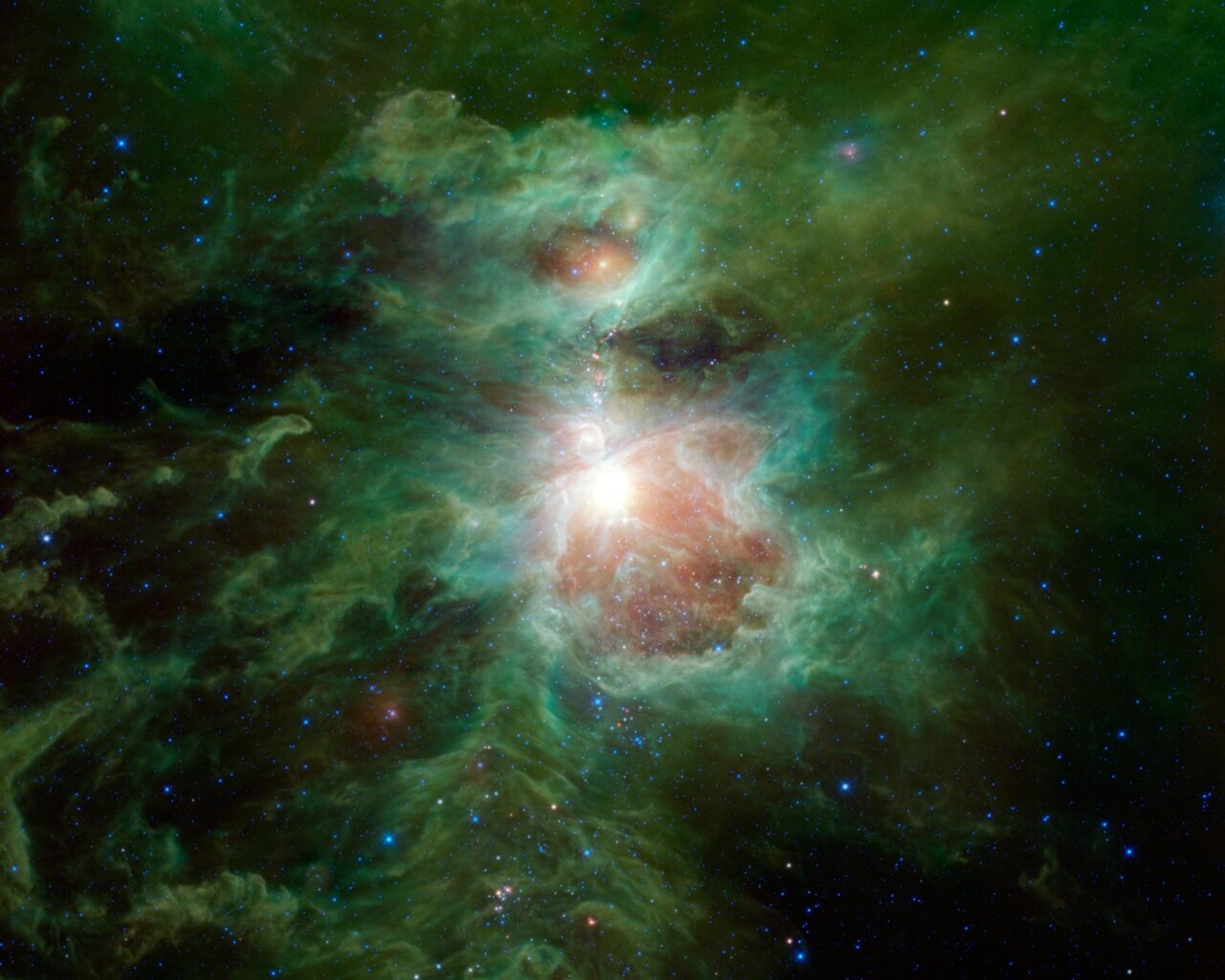
Many astronomical sights have received cool nicknames, but it’s hard to compete with the “cosmic fire of creation.”
Better known as the Orion Nebula (and officially dubbed Messier 42), the nebula is an enormous cloud of gas and dust where thousands of stars are born, according to NASA. At only 15 light years away, it’s the nearest large star-forming region to Earth. The nebula burns with intense ultraviolet light that radiates from only a few very big, bright stars, making it visible on Earth.
Well documented for thousands of years by people around the world, the nebula is particularly important to Mayan culture, whose people see it as a blazing fire that sits within the hearth of creation — represented in the sky by three stars that surround the nebula. From that standpoint, the Orion Nebula can be seen as the “cosmic fire of creation,” NASA said.
The nebula is easy to spot in the night sky, where it’s most visible in the Northern Hemisphere from roughly November to March. Look for the three stars close together that make up Orion’s belt, then look below that for the three spaced apart stars that make up Orion’s sword. The center of those stars, which appears a little fuzzy, is the nebula.
You can easily spot the star with an unaided eye, but with binoculars you might be able to make out the faint haze that surrounds it. A telescope offers an even better look at the nebula.
And then there’s NASA’s jaw-dropping images, which show yet another incredible sight that burns deep in the night sky.
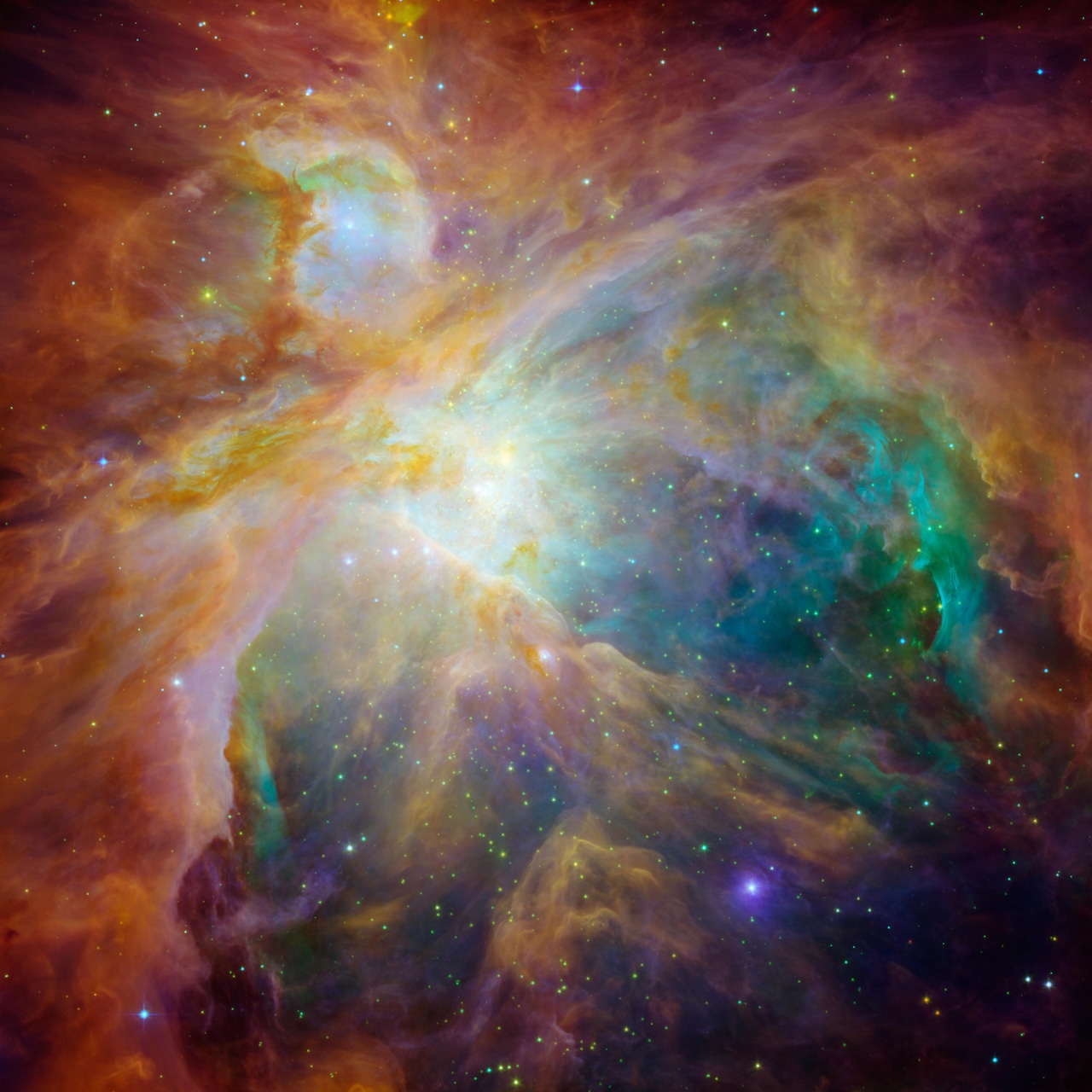 NASA’s Spitzer and Hubble Space Telescopes have teamed up to expose the chaos that baby stars are creating 1,500 light-years away in a cosmic cloud called the Orion nebula.NASA/JPL-Caltech/STScI