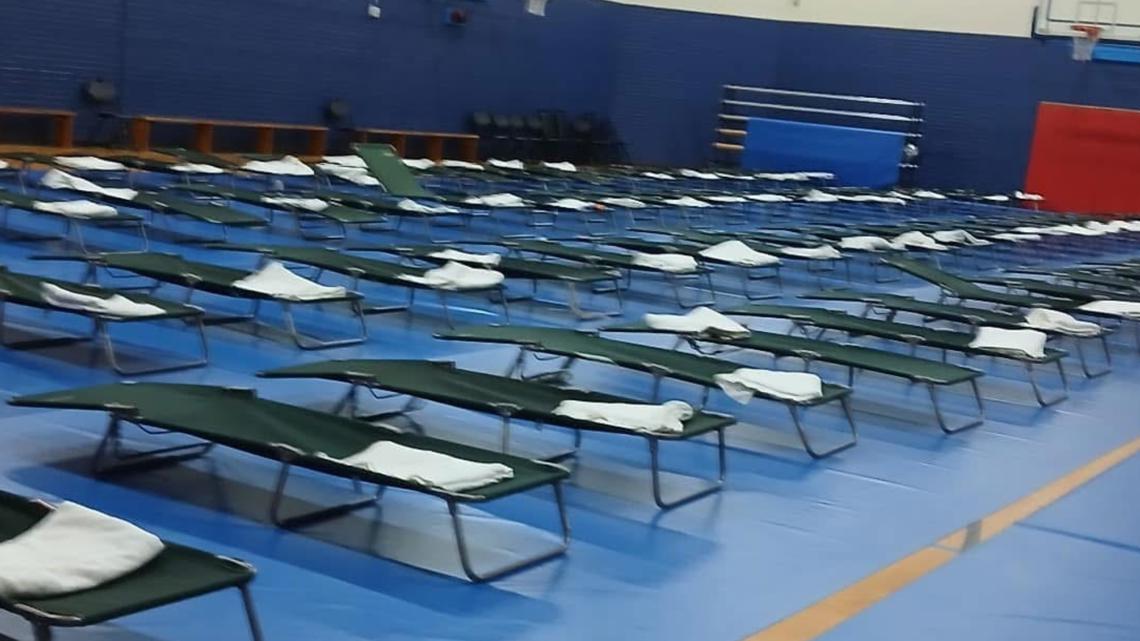
The proposal outlines better budgeting, less demand for on-duty city staff and avoids using recreation centers as overnight warming locations.
DALLAS — It’s hard to look past.
“If you have eyes to see and ears to hear, you can see the problem,” said Pastor Wayne Walker, OurCalling CEO.
For Walker, it’s even harder to ignore.
“We have about 8.5 million people in the metroplex now, and we need more spaces,” Walker said.
Many are especially reminded of this during inclement weather, so the city of Dallas has been considering changing its policy.
“If we think about this as your own family member stuck out in the cold or your own family member out under a bridge, it really changes the conversation to how do we care for people and not how do we cage them or move them or shift them or get them out of sight, out of mind,” he said.
Walker runs OurCalling which helps unhoused populations in Dallas County.
As it currently stands, Fair Park is the primary location to shelter individuals during inclement weather. The Austin Street Center is used as an overflow.
They have the capacity to serve about 1,300 people at a time.
In winter 2023-2024, the cost to serve hit $2.9 million. That’s more than triple what the city expected in its budget.
“The problem is even at Fair Park, as great as it is, it doesn’t have showers, it doesn’t have a commercial kitchen,” Walker said.
In December, the city’s office of emergency management & crisis response proposed a two-level approach: one for short-term warming operation and another for extended sheltering.
Both would make more use of city-contracted and permitted warming locations such as OurCalling.
Walker said the city is also looking at temperature requirements and how long.
“Instead of it being freezing, it’s going to be below freezing, and instead of it being for three hours, it’s got to be four hours,” Walker said. “We’ve been doing it where we serve hot meals, three meals a day, but it looks like it might be moving to where they’re not serving meals at all.”
Dallas City Council is expected to discuss the plan this January. The proposal outlines better budgeting, less demand for on-duty city staff, and avoids using recreation centers as overnight warming locations.
Meanwhile, Walker said one large facility would work best, but until then, they plan to continue the service they currently provide.
“We are committed to making sure our neighbors have a safe place to go, regardless of what the city does,” Walker said.