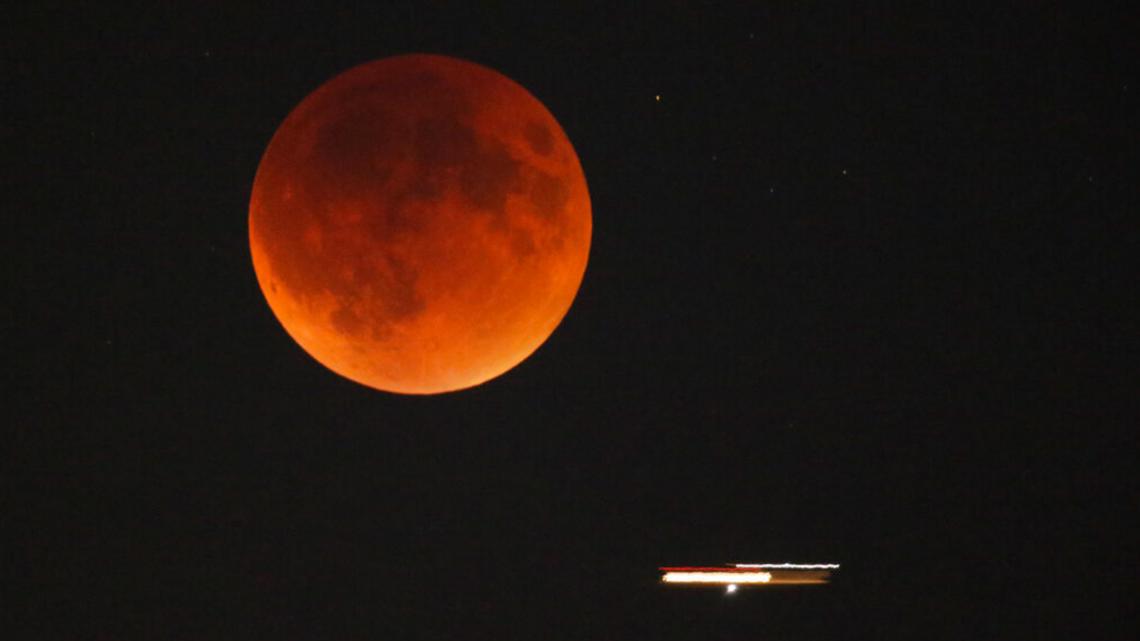
From a January supermoon to a total lunar eclipse and a blood moon, the new year offers plenty of reasons to look up.
SEATTLE — The new year will bring a host of celestial treats for skywatchers, including an extra full moon, micromoons, blood moons and three supermoons.
Along with several bright, visible planets that align during certain months, 2026 will offer rare sights for anyone willing to look up. The action begins this weekend.
RELATED: The Sky Above | 2025 Year in Review
The first supermoon of the year arrives Jan. 3. A supermoon occurs when the moon is closest to Earth and appears larger and brighter than usual. The full Wolf Moon may be difficult to see in some areas as rain and clouds move in and out, but it will be the last supermoon until November.
Another highlight comes March 3, when a rare total lunar eclipse will be visible across the Pacific Northwest. The eclipse will last 58 minutes and turn the moon a reddish color, often called a blood moon. The last total lunar eclipse visible in North America occurred in November 2022.
Skywatchers will also see two full moons in May. The first appears May 1. The second, known as a blue moon, rises May 31. Both will be micromoons, with the smallest full moon of the year occurring May 31.
According to EarthSky, a micromoon is the opposite of a supermoon. It occurs when a new or full moon reaches apogee, its greatest distance from Earth. A full micromoon appears about 12 to 14% smaller than a full supermoon and about 7% smaller than an average full moon. EarthSky reports the average distance to the moon is 238,900 miles, while the full micromoon on May 31 will be the most distant full moon of the year at 252,360 miles.
Overall, 2026 is shaping up to be an excellent year for skywatchers and science enthusiasts alike, with multiple rare events lighting up the night sky throughout the year.