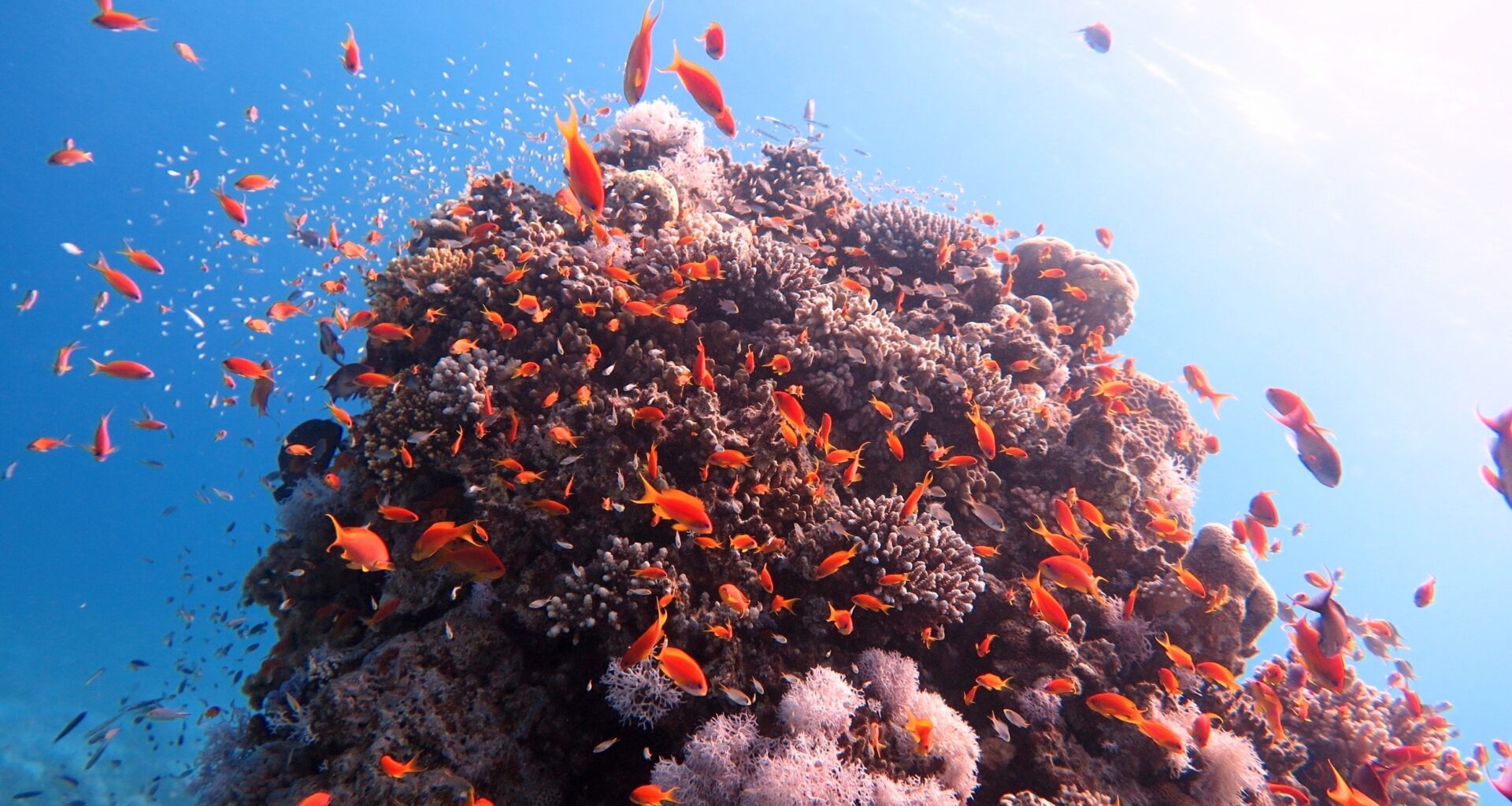
Coral reefs are known for their color, fish, and complex shapes. What often goes unnoticed is the quiet, constant work happening in the water just above them.
New research shows that reefs do more than host life. They also set a daily rhythm for the smallest ocean residents, shaping when microbes appear, disappear, and change roles over the course of a single day.

The study was led by Dr. Herdís G. R. Steinsdóttir, working under the guidance of Dr. Miguel J. Frada at the Hebrew University of Jerusalem.
Reefs controlling microbe patterns
Microbes drift through seawater everywhere, but their lives follow a tighter schedule near reefs. Their numbers rise and fall. Different groups trade places as daylight fades and returns.
These shifts happen fast, sometimes within hours, and they repeat day after day.
That pattern hints at reefs acting less like passive scenery and more like active conductors, quietly keeping time in the surrounding ocean.
Watching the reef clock tick
To catch these changes in action, the researchers tracked the water above a coral reef through full daily cycles.
The team collected samples every six hours, across both winter and summer, and compared reef waters with nearby open sea. This tight schedule allowed them to see changes that would vanish in broader surveys.
The work focused on waters in the northern Gulf of Aqaba in the Red Sea. By following microbes hour by hour, the team uncovered patterns that had slipped past earlier studies.
Bacteria, microalgae, and microscopic predators all showed strong daily swings that were shaped by their proximity to the reef.
A reef that actively shapes life
The study shows that reefs consistently hold fewer bacteria and microalgae than nearby open waters. That difference was steady across seasons – pointing to active removal rather than chance.
Grazing, filtering, and other natural reef processes appear to thin out these microbes as part of everyday life.
At the same time, another group surged after sunset. Heterotrophic protists, tiny predators that feed on bacteria, spiked at night. In some cases, their numbers jumped by as much as 80 percent.
This nighttime rise suggests that predation plays a major role in setting the daily balance of microbial life near reefs.
Midday signals from coral partners
One of the clearest daily signals came from a group closely tied to corals themselves.
Genetic traces of Symbiodiniaceae, a family of dinoflagellates known for living inside coral tissues, peaked around midday in reef waters. The timing hints at daily cycles linked to light and coral metabolism.
These midday peaks suggest release, growth, or turnover that follows the sun.
Even outside coral bodies, their microbial partners appear to leave a strong daily imprint on the surrounding water. That imprint repeats again and again, regardless of season.
Daily patterns of microbe activity
“These daily microbial rhythms were as strong as, and sometimes stronger than, seasonal differences,” said Dr. Steinsdóttir. “This shows that time of day is a critical factor when studying reef-associated microbial communities.”
That finding challenges a common habit in marine research. Many studies rely on single snapshots taken at convenient times. This work shows that a morning sample and a nighttime sample from the same spot can tell very different stories.
“We found that the reef is not just passively surrounded by microbes,” said Dr. Frada. “It actively structures microbial life in time, creating daily patterns that repeat across seasons and influence how energy and nutrients move through the ecosystem.”
To reveal these patterns, the team combined genetic sequencing, flow cytometry, imaging technologies, and biogeochemical measurements.
Each method added a different angle, allowing the researchers to follow microbes as living, changing communities rather than static counts.
The result is one of the most detailed time-based views of microbial life around coral reefs so far. It shows reefs shaping not only space, but time itself, in the waters they touch.
Why these rhythms matter
Daily microbial cycles may offer a new way to keep tabs on reef health.
Because microbes respond quickly to change, shifts in their daily patterns could signal stress long before damage becomes obvious. In a warming ocean, that sensitivity matters.
Reefs already face pressure from heat, pollution, and acidification. Understanding how they organize life at the smallest scales adds a new layer to reef science.
It shows that even the tiniest organisms live by the reef’s clock, ticking steadily with the rise and fall of the sun.
The research is published in the journal Science Advances.
—–
Like what you read? Subscribe to our newsletter for engaging articles, exclusive content, and the latest updates.
Check us out on EarthSnap, a free app brought to you by Eric Ralls and Earth.com.
—–