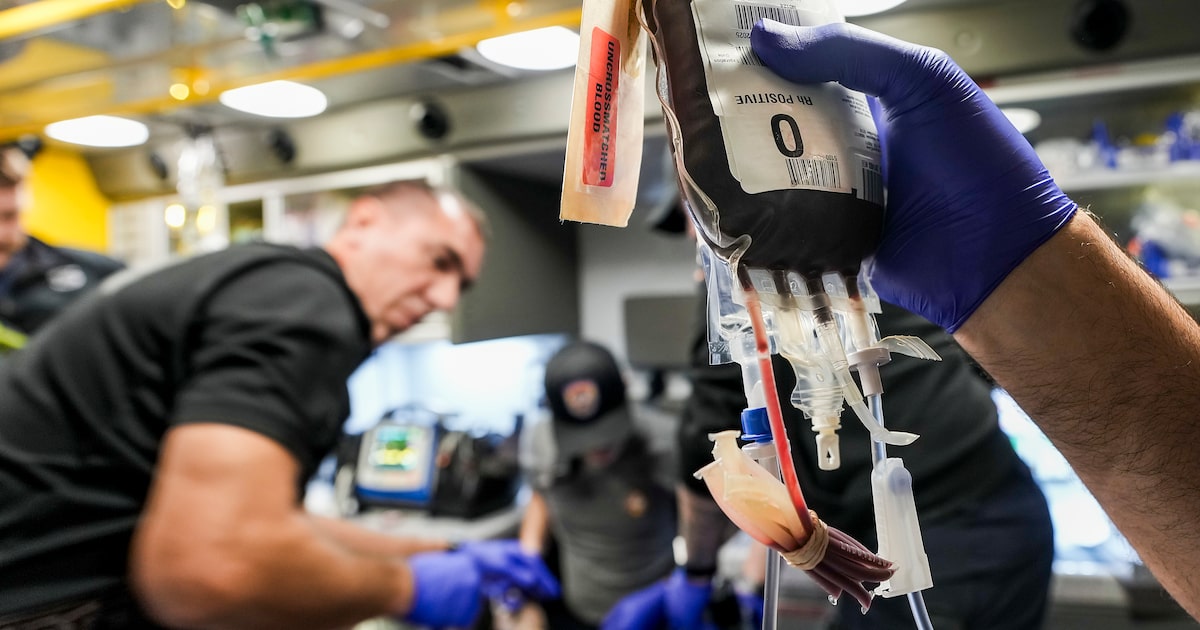
Strapped to a stretcher in the back of an ambulance, the shooting victim moaned, then screamed. Blood splattered across the person’s cheeks and neck, seeped through the gauze looped around a leg and dripped onto the floor.
A group of first responders with the Fort Worth Fire Department surrounded their patient, whose body was peppered with gunshot wounds.
“Please,” the patient begged. “Help me.”
A few minutes later, on the way to the hospital, Trent Robinson, a critical care paramedic and captain, asked the patient to rate their pain on a scale of 10.
Breaking News
“It’s a 20.”
“It’s a 20? OK.”
Robinson wanted to stabilize the patient’s blood pressure, which was dangerously low. Early readings of vital signs showed blood pressure of 60 over 40, and a pulse of more than 130. Together, they signaled that the person’s body was compensating for a significant amount of blood loss.
As a supervisor, Robinson is responsible for carrying a unit of blood with him in a cooler as he responds to calls across the sprawl of Fort Worth and its neighboring communities. That chilly fall night, his bag of blood became vital. The patient received it on the way to the hospital, and more blood upon arrival.
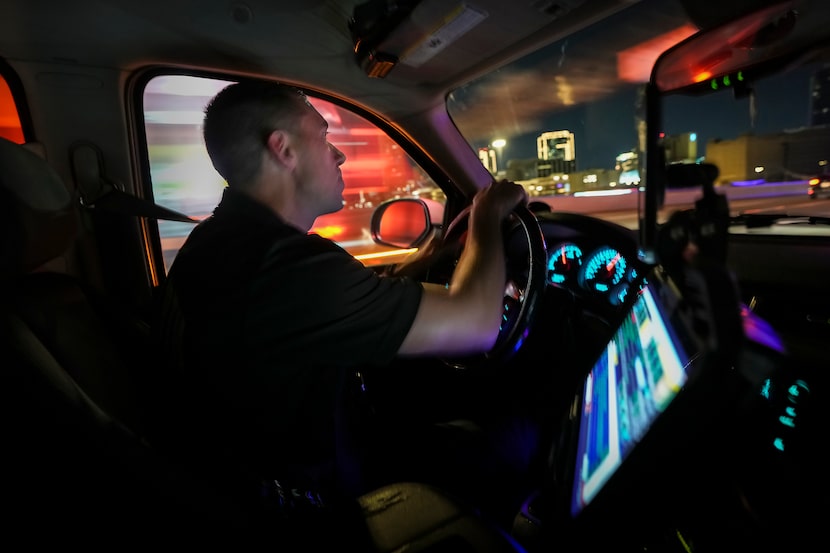
Fort Worth Fire Department Capt. Trent Robinson passes the downtown Fort Worth skyline as he responds to a call.
Smiley N. Pool / Staff Photographer
Up until recently, that kind of advanced care for bleeding patients in Fort Worth was out of reach. Now, it’s the standard.
Nationwide, bleeding patients typically do not receive transfusions until they reach a hospital. By that time, medical research shows, it can be too late. Those with the most severe hemorrhaging frequently bleed out at the site of their injuries, on the way to the hospital or soon after they arrive.
That is why a growing number of EMS providers, including in North Texas, have created programs to make lifesaving blood products available immediately on ground and on air ambulances. The goal: to quickly replace lost blood in the patients who need it the most, giving them the best possible chance of survival.
In the first eight months of Fort Worth’s blood program, paramedics have transfused more than 150 units of blood into 140 patients, according to data as of mid-December. More than 60% of those patients had been injured in shootings, stabbings, car crashes and other accidents. The remainder were bleeding from medical causes such as gastrointestinal disorders, liver disease and pregnancy complications.
A year ago, first responders in neither Fort Worth nor Dallas — home to the two largest emergency medical service providers in North Texas — were carrying blood products. Now, both cities have established mobile transfusion programs, along with EMS providers in Arlington.
Together, emergency medicine specialists say, these programs have significantly improved the standard of care available to bleeding patients across the Metroplex.
“Within about a year or so, we went from nothing,” said Dr. Jeff Jarvis, chief medical officer and system medical director for the city of Fort Worth, “to lots of blood available.”
The proliferation of blood programs in North Texas comes after publication of a six-part series in The Dallas Morning News and the San Antonio Express-News in late 2023 that uncovered a national crisis of potentially preventable bleeding deaths. The reporting identified efforts to speed up transfusions for hemorrhaging patients as the single most impactful policy change to improve survival rates.
The month after its launch, Dallas Fire-Rescue’s blood program was credited with saving the life of a local emergency medicine physician who was bleeding out in her bathroom from a postpartum hemorrhage.
The shooting patient that Robinson recently treated also survived initial injuries and was expected to be discharged from the hospital.
Robinson is confident that quick access to blood played a role in that outcome. In the ambulance, he’d witnessed the reversal of the patient’s hemorrhagic shock in real time. As the blood flowed into the patient, their blood pressure strengthened from 60 over 40 to 101 over 55, while their rapid heart rate began to ease.
The Fort Worth Fire Department provided The News access to paramedics as they administered blood in the field on the condition that no patient would be identified for privacy reasons.
At first, Robinson, who has worked in EMS for more than two decades, was skeptical of the idea of administering blood on ambulances. It seemed like medics didn’t spend enough time with patients for it to matter. He also worried that taking the extra time to transfuse blood ran the risk of delaying timely transport of patients to a hospital.
His thinking changed after he rode out in 2024 with paramedics with the San Antonio Fire Department, which has administered nearly 1,800 units of blood over the past seven years, as part of an innovative program that put blood on ambulances and helicopters across the region. Robinson saw firsthand how seamlessly transfusions were integrated into care and how much they benefited the patients who couldn’t wait until they made it to a hospital. The success stories, he said, were numerous.
Now, Robinson is a believer. Among his colleagues in Fort Worth, he is one of the most prolific transfusers of blood.
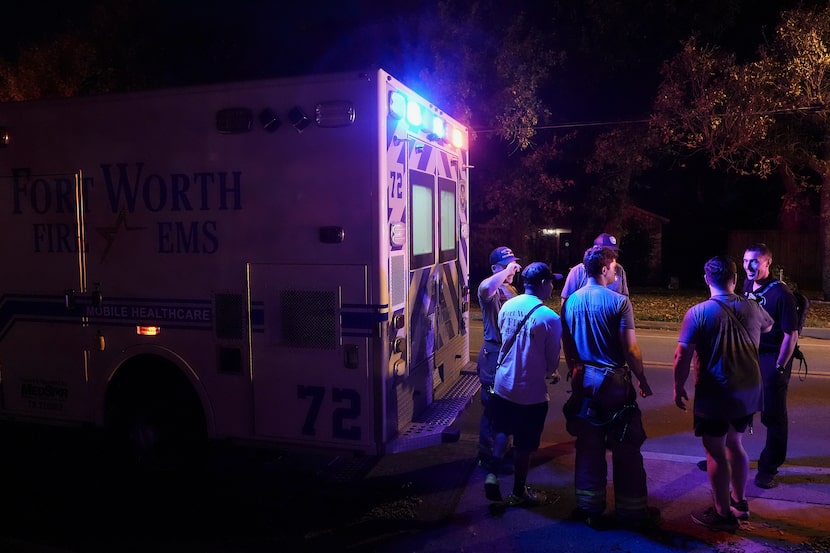
Fort Worth Fire Department Capt. Trent Robinson (far right) talks with fellow firefighters and paramedics after responding to a call.
Smiley N. Pool / Staff Photographer
“This is definitely the best improvement in prehospital health care that I’ve seen in my career,” he said.
That belief is shared by Dr. CJ Winckler, deputy medical director for the San Antonio Fire Department. He’s seen it, professionally and personally.
In late 2024, Winckler’s father suffered massive blood loss after a motorcycle wreck in November 2024 that severed one of his legs. Before he was transported to San Antonio, emergency responders in Kendall County gave him a unit of whole blood and applied a tourniquet. At University Hospital, he received another 15 units of blood in the operating room. He was hospitalized for four months.
“My dad would not be alive,” Winckler said, “without prehospital whole blood.”
Success stories like that have given Winckler and others involved with the blood program in South Texas — where paramedics have transfused almost 3,500 units of blood in the field since 2018 — the evidence they need to secure funding for their efforts from local and state officials.
During the 2025 legislative session, Winckler traveled to Austin, where he previously worked as a paramedic, to help pitch state legislators on a statewide blood program. The idea is to make prehospital blood more readily available across Texas, including in rural areas where hospital transport times are longer.
During his testimony, Winckler told state senators that, no matter where a bleeding patient is located, their physiology — their need for blood — is the same. Their care, he said, should be the same, too.
Winckler and his colleagues requested $4 million in funding. Legislators approved $10 million.
The program, Winckler said, sells itself.
Smiley N. Pool contributed reporting.