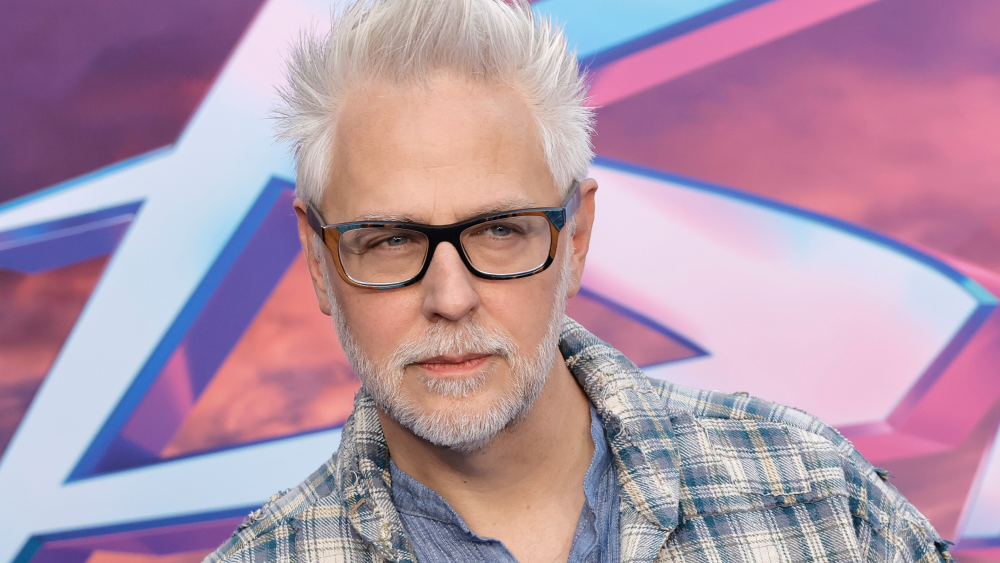
James Gunn looks tired but energized as he settles into his chair for the Variety Awards Circuit Podcast, having just flown in from Atlanta. He’s already into pre-production on “Man of Tomorrow,” the follow-up to this summer’s “Superman.” so exhaustion would be expected. Gunn is not only directing the film, but he’s also running DC Studios alongside Peter Safran — an unprecedented balancing act he calls “the hardest movie I’ve ever made.”
The conversation is taking place only two hours before the entertainment landscape shifted, with Netflix announcing an $82 billion acquisition of Warner Bros. — a reminder of how quickly the ground beneath the Hollywood industry, DC, and Gunn himself, continues to move.
Nonetheless, we’re talking about “Superman,” where Gunn leans in, his eyes brighten and discusses what drew him to the character — which wasn’t the scale or mythology.
“When I first talked to the cast and crew, I wanted to make something about goodness,” Gunn says. “This guy isn’t perfect, even though he’s Superman. He’s really just trying to do his best. He’s good-natured. He’s loving. He sees the best in everyone.”
That idea was Superman is not a god, but a sincere, sometimes awkward moral presence. That became Gunn’s anchor — and he credits Grant Morrison’s “All-Star Superman” for crystallizing that approach. “That was the thing that hooked me,” he shares. “That big lug of a superhero being genuinely kind. That’s what I took from the book.”
Unlike the relative freedom Gunn had with “Guardians of the Galaxy,” Superman came with a century’s worth of expectations, and of course, disagreements. “Everyone in the world thinks something different about Superman. Everybody knows who he is.”
The scrutiny extended beyond the cape. Gunn was aware that this film would be viewed as a referendum on the future of DC itself. “There were all the eyes on us — on DC, on the DCU, on everything,” he says. “That pressure was real.”
Casting, then, was non-negotiable. “If I couldn’t find Superman, I wasn’t going to make the movie,” Gunn says flatly. David Corenswet was the second audition he saw. “I remember thinking, ‘If that’s the worst we do, we’re in great shape.’”
What emerged is a film that leans toward optimism at a moment when superhero cinema has often favored grit. Gunn’s Superman isn’t naïve, but he is hopeful. Coming off the year we all had, that choice feels quite radical.
On this episode of the Variety Awards Circuit Podcast, Gunn talks about his process of making “Superman,” why he’ll never chase a prestige projects and what to expect from “Man of Tomorrow.”

Screengrab courtesy of DC Studios
Read excerpts from her interview below, which has been edited and condensed for clarity.
What made “Superman” the hardest film you’ve directed?
This was the hardest movie I’ve ever made. The next hardest was probably the first “Guardians.” With “Guardians,” you were building a corner of the universe that felt completely different from everything else Marvel was doing at the time. Here, I was reorienting something everyone already thinks they understand. Strangely, it’s the most comic-book-driven thing I’ve ever done. More than any of my other superhero films.
How did assembling your creative team shape the film?
I’ve worked with many of these people for years. Beth Mickel, my production designer, has been with me on the last three films. Steph Ceretti has overseen visual effects for multiple projects now. Being in charge of DC meant I could finally keep the team together instead of losing people between films. That continuity matters.
What were you most proud of in the visual effects, especially with Krypto the Dog?
Framestore’s work on Krypto is extraordinary. I’ll put those shots up against anything I’ve ever seen. ILM was incredible as well. It was just a world-class group of artists working at the highest level.
How does it feel to be both a filmmaker and a studio head at the same time?
I don’t think it’s ever really been done. Even Walt Disney was more of a producer than a director. It’s an experiment. And yes, sometimes it probably sounds like madness — especially since I don’t make the most conventional films. But I love big spectacle. That’s my jam. I originally said no to the job. I didn’t want to do what Kevin Feige does. But once Peter and I realized we’d be doing it together, it became exciting. I still don’t know if it’s sustainable long-term. It’s a lot. There just aren’t enough hours in the day.
What films made you fall in love with movies?
I think the first movie I saw in a theater was “The Aristocats.” Then “The Strongest Man in the World” with Kurt Russell. But it was “Star Wars” that completely changed me. That feeling of entering another world. And then “Raiders of the Lost Ark” made me aware of filmmakers themselves — George Lucas, Steven Spielberg. That’s when it clicked.
How do you think about prestige versus mainstream filmmaking?
I don’t care about prestige. I mean, sure, would it be cool to be nominated for Best Director or something? Yeah, would I rather have that than not? But it’s not really my concern. Occasionally I have ideas that are more independent movies, but I like making the kind of movies that I make, and I like making pop cinema, for lack of a better term. If I can have those things also be something that are emotionally resonant to people, or affect people in a deeper, more spiritual way, like a lot of people have told me that “Superman” did, a lot of people have told me that “Guardians 3” did, then that’s fantastic. That’s what I would love to be able to do. But I like making the big movies too. There’s an artistry to it, the creative flow. But then I also like the part of it that’s putting the big puzzle together and creating this machine that works for an audience to elicit a reaction from them, whether it’s emotional, whether it’s laughter, whether it’s screaming, whether it’s whatever it is. That’s the fun part of it.
Why did “Guardians of the Galaxy” feel like the right leap into big-budget filmmaking?
I had walked away from another studio project because they stripped everything personal out of it. Then “Guardians” came along and I thought, no one else can make this movie the way I can. I wanted to make a space opera. I love raccoons. It felt completely me. That’s always been my goal — to make big movies that still feel personal.
What can you tell us about “Man of Tomorrow?”
At its core, it’s about Clark and Lex. I relate to both of them. I relate to Lex’s ambition and obsession — minus the murder. And I relate to Superman’s belief in people, his Midwestern values. They’re two sides of me.
What does your partnership with Peter Safran bring to DC Studios?
Peter’s the best. He does everything I don’t do well. He keeps the ship steady, keeps everyone aligned, connects us with Jim Lee and the comics side, and unifies departments that used to operate separately. What we share is a genuine love for these characters. We know what a privilege it is to help shape how people see them now — and that responsibility is something we take seriously.
Variety’s “Awards Circuit” podcast, hosted by Clayton Davis, Jazz Tangcay, Emily Longeretta, Jenelle Riley and Michael Schneider, who also produces, is your one-stop source for lively conversations about the best in film and television. Each episode, “Awards Circuit” features interviews with top film and TV talent and creatives, discussions and debates about awards races and industry headlines, and much more. Subscribe via Apple Podcasts, Stitcher, Spotify or anywhere you download podcasts.