In a black and white photograph, two young men hold up a sign that reads ‘not married but willing to be’.
It’s a striking image, made more remarkable because it was taken about 125 years ago and a century before same-sex marriage was legalised anywhere in the world.
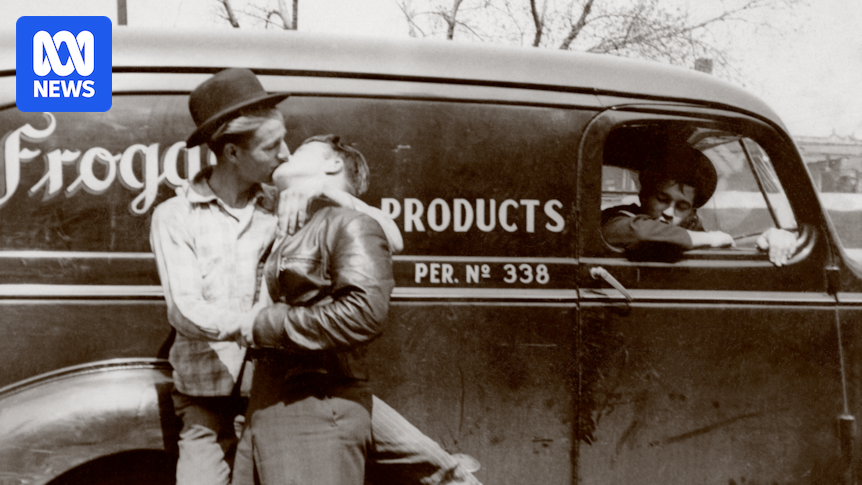
The identities of the men in the photo are a mystery, but a series of four other photos capture more tender moments between the pair.
They are some of more than 4,000 vintage snapshots of male romance collected by Hugh Nini and Neal Treadwell.
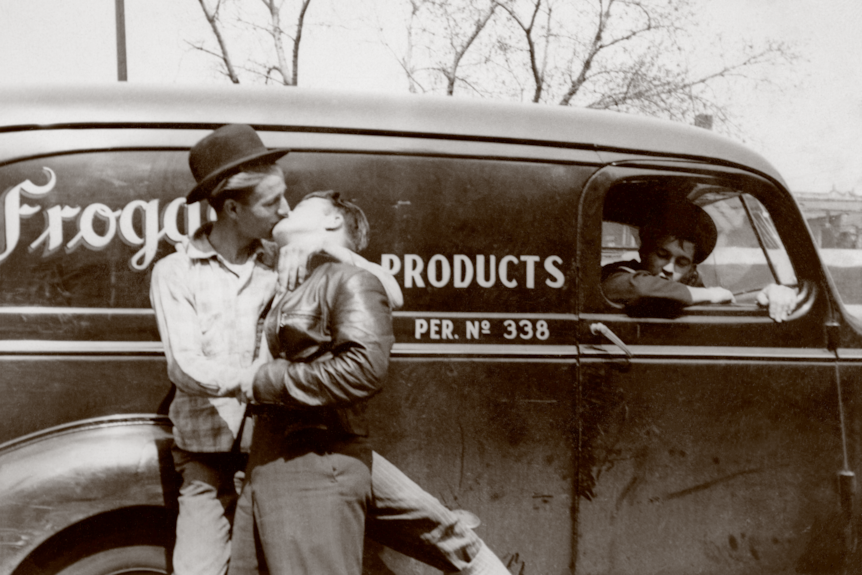
Two men kissing in front of a car. (Supplied: The Nini Treadwell Collection)
The project began by happenstance 25 years ago, when the American couple first unearthed a photo of men in love at an antique store in Dallas, Texas.
“We just couldn’t believe that it had ever been taken, and that it had survived what, at that point, was 70 years,” Mr Nini said.
One unmistakable look throughout time
That initial discovery has taken them on a journey around the world, sourcing images from flea markets, shoe boxes, family archives and auctions.
The images date between the 1850s and the 1950s, when relationships between men were often illegal and almost always hidden from public view.
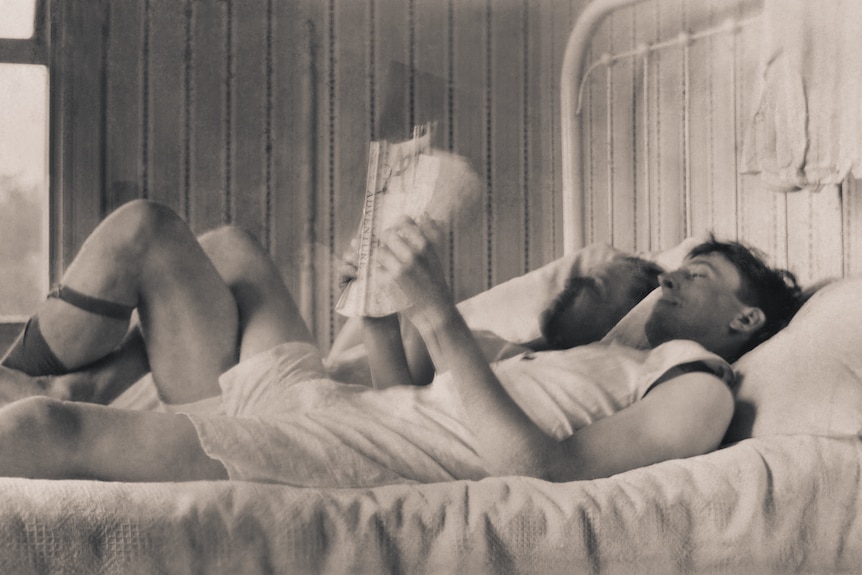
Two men lying on a bed reading. (Supplied: The Nini Treadwell Collection)
“There were trans couples back then, there were trans people back then, there were gay people back then, female couples — just as there is today,” Mr Nini said.
“These people made it through perhaps difficult times and survived and were so excited about their relationships with each other that they memorialised them with a photograph that they had to keep hidden for its very survival until it somehow it ended up in our laps.”
The photographs depict soldiers, sailors, wealthy couples and working-class men.
Some were taken in photo booths, others posed in studios, some couples reclined at the beach, and several were snapped kissing.
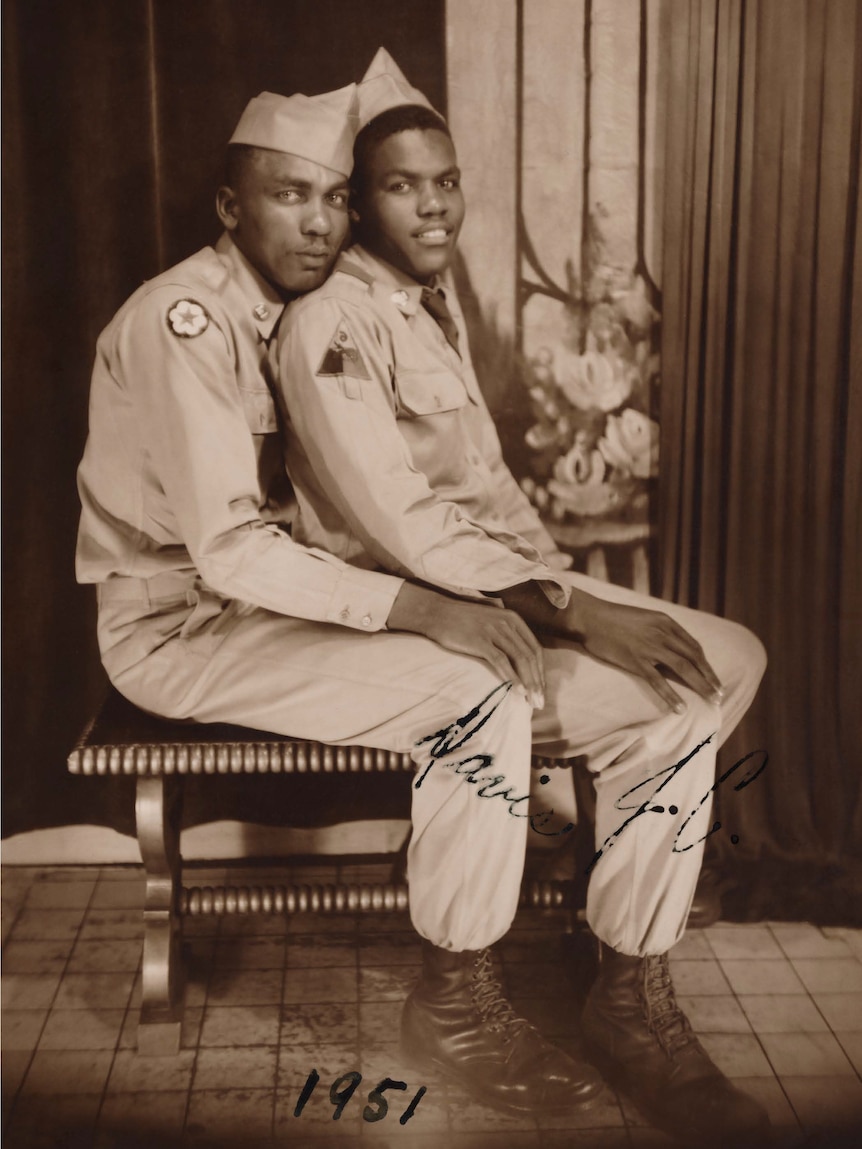
Two men sit hugging on a bench seat. The photo has the date 1951. (Supplied: The Nini Treadwell Collection)
Almost all the men in the images are anonymous, with a few handwritten inscriptions giving scant clues about their identities.
But all, Mr Treadwell said, had one thing in common.
“We call it the unmistakable look of love,”
he said.
“You see that sparkle in their eye, you can feel it when you look at the photographs.”
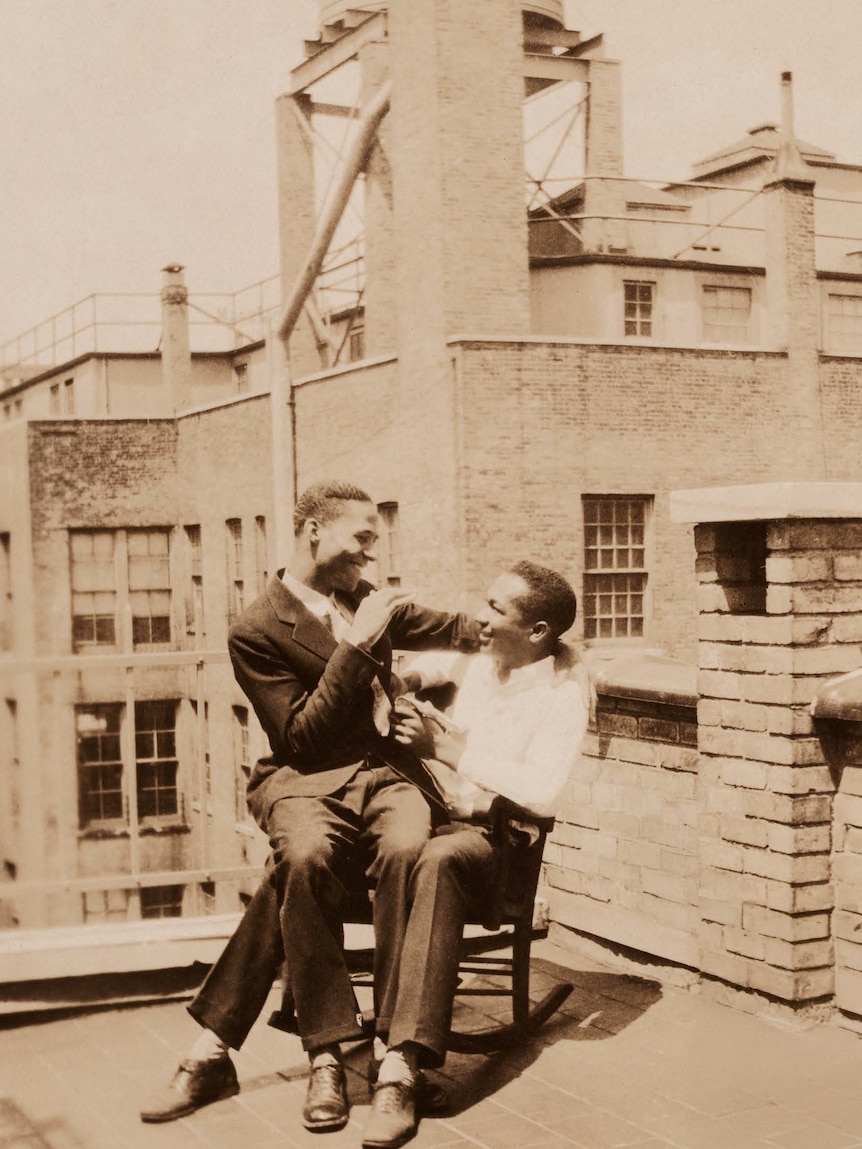
One of thousands of photos in the Nini Treadwell Collection. (Supplied: The Nini Treadwell Collection)
New exhibition
A selection of the collection, titled LOVING: Photographs of Men in Love 1850s-1950s, is on display for the first time in Australia at the Canberra Museum and Gallery (CMAG).
The photographs were brought to the capital after the Australian Ambassador to the European Union saw the exhibition in Geneva.
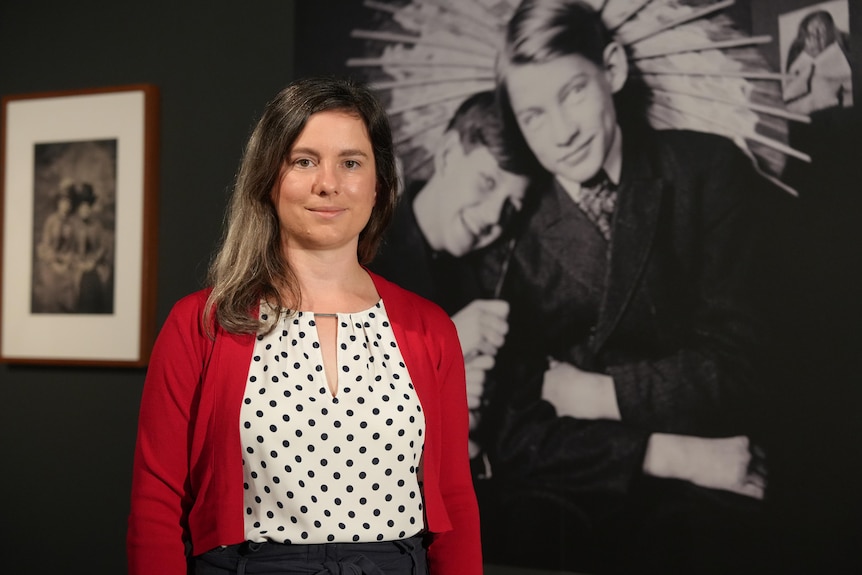
CMAG curator Nicole Sutherland said these historic stories of love should be shared. (ABC News: Lily Nothling)
CMAG curator Nicole Sutherland said the images resonated strongly with a contemporary audience.
“There’s this resilience of the couples — they’re being photographed at a time when it’s perhaps not acceptable, but also there’s just so much joy to be seen in these photos,” Ms Sutherland said.
“That love should be shared; it should be celebrated.
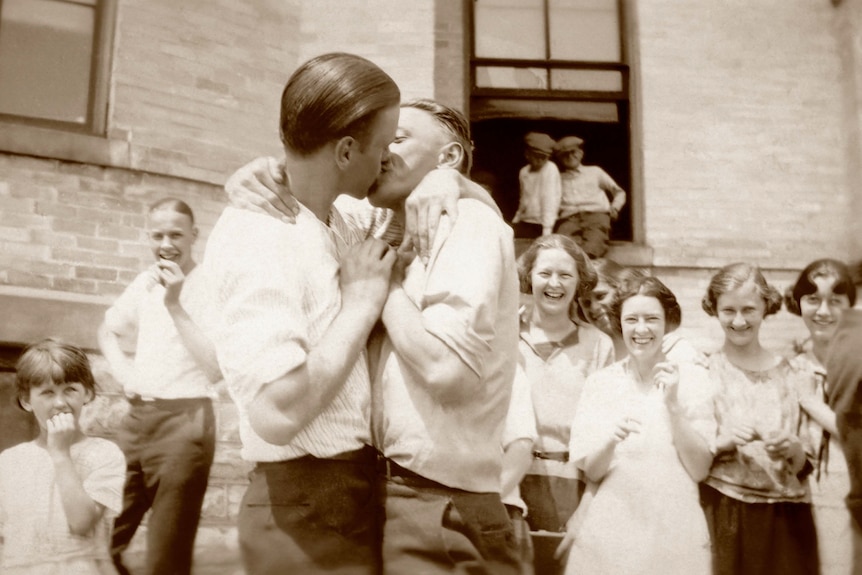
Two men kissing in front of onlookers. (Supplied: The Nini Treadwell Collection)
“For some of them, there was a degree of openness amongst their community or their social group about their relationship [and] we can see that some of the images [with] couples kissing in front of other people.”
When displayed together, some patterns in the photographs emerge.
Many of the men are snapped holding umbrellas, which is theorised to be a hidden symbol of queerness.
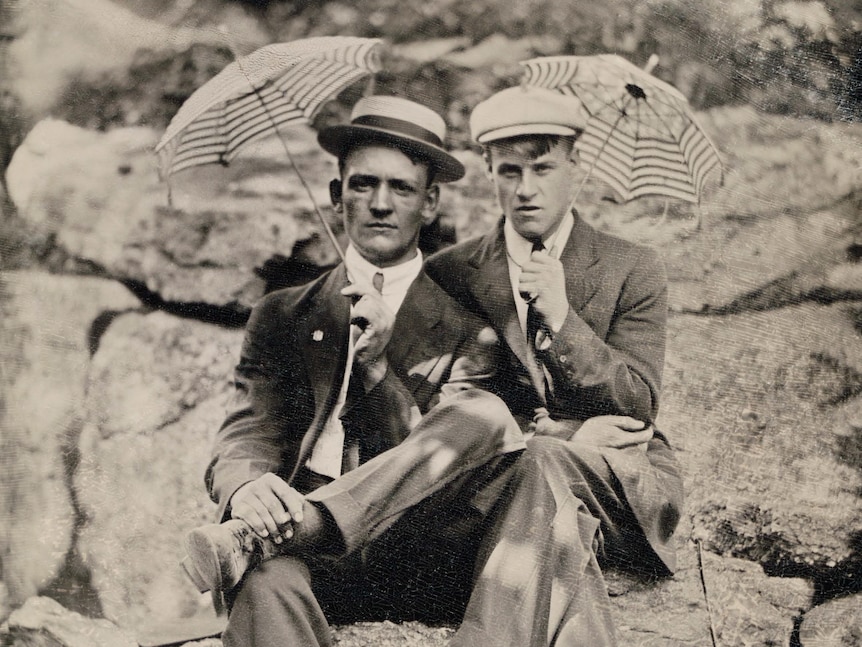
Umbrellas are theorised to be a hidden symbol of queerness.
(Supplied: The Nini Treadwell Collection)
Finding a family
For Mr Nini and Mr Treadwell, collecting the photos has become a lifelong undertaking.
They have published two books and say the response from the public has been overwhelming.
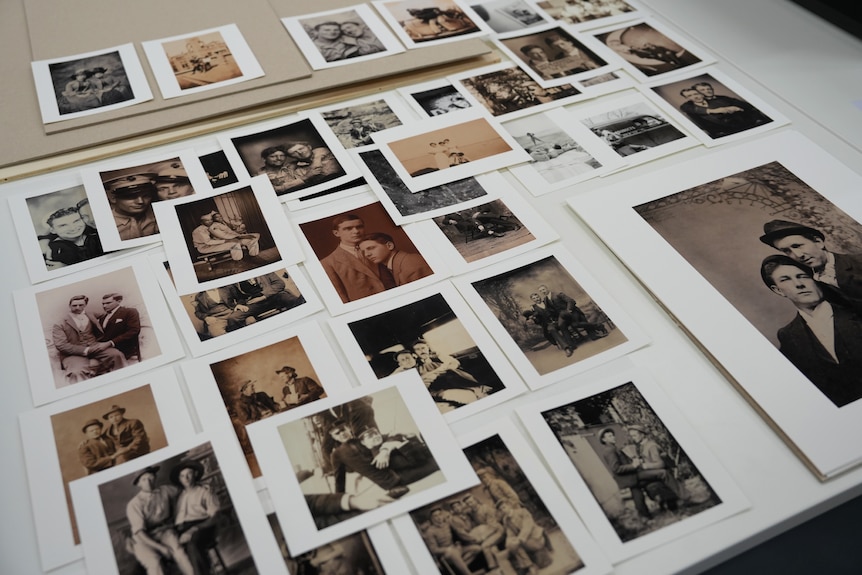
A selection of the photographs are on display at Canberra Museum and Gallery. (ABC News: Lily Nothling)
“Realising maybe for the first time that you have a history, it’s not your personal family history, but it’s our community history,”
Mr Nini said.
“People have either been heartened and found a renewed faith in that kind of love, or it’s just reinforced their existing faith in that kind of love.
“We don’t take any responsibility for that — this is all the couples who took the photographs, who hid them and kept them alive until we found them.
“It’s their message to the world; we just put it between the covers of a book.”