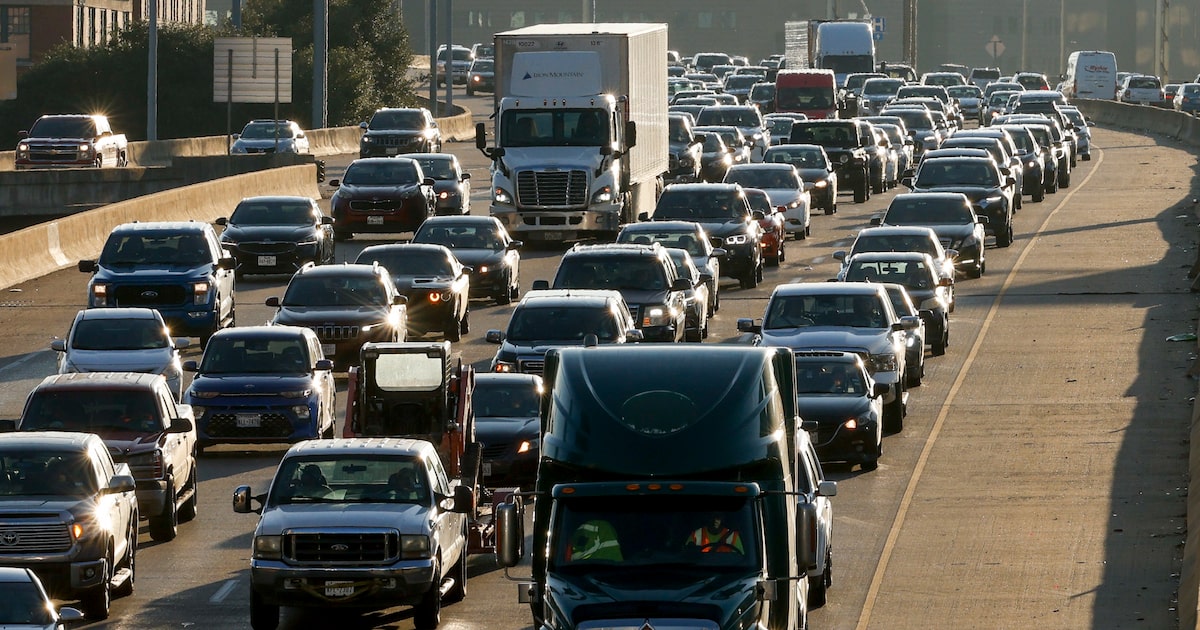
North Texans come from every background and every walk of life. They speak all sorts of languages and cherish many different traditions. But one experience unites us all: sitting in traffic.
Our newsroom reported that, on average, North Texans spent 69 hours sitting in traffic last year, per a recent study by Texas A&M University’s Transportation Institute. Of the state’s 100 most congested roadways, 41 are in Dallas-Fort Worth.
Dealing with traffic is a fact in any major metropolitan area, but it’s a pity how much time we waste on it. Our lives are already too busy, filled with the buzz of constant distraction. We are all short on life’s most valuable commodity.
So what can be done about it? Planning for the future and looking for creative solutions right now is critical.
Opinion
That will mean figuring out how to connect origin points and destinations efficiently in a region where urban sprawl expands outward, driving employment and residential centers further apart.
The best towns to raise a family in have gradually crept further from our urban core. Though they’re now boomtowns all the way out beyond U.S. 380, Celina and Melissa were dots on the Texas map not too long ago.
All this sprawl is happening at a time when travel patterns are changing, adding another layer of mess to transportation planning. Researchers found that delays are happening outside of rush hour, midday or on weekends, our newsroom reported.
Securing North Texas’ transportation future will require many different solutions. Developing around rail infrastructure can provide opportunities for those wanting to avoid standstill traffic. Better traffic signaling systems, and even roundabouts, can help in places.
Houstonians fared worse than we did on traffic, wasting an average of 77 hours last year. But the long hours North Texans spend on the road are nothing to be proud of.
Think what else you could do with almost three extra days a year. If you think back on last year, how many books did you read? Our answer, and we suspect yours too, is not nearly as many as you should have. It’s time that could be spent nurturing a family, too, making memories.
The good news is there are smart people trying to work traffic issues out. The North Central Texas Council of Governments worked hard on Transit 2.0, a study examining how to enhance transit in the area. And although the ongoing fight over Dallas Area Rapid Transit’s future has been a bitter one, the debate reflects a real desire to improve mobility.
Sure, you can listen to podcasts, audiobooks or music while sitting in that bumper-to-bumper traffic jam. But there’s more to life than mindlessly alternating between gas and brakes while passively absorbing information.