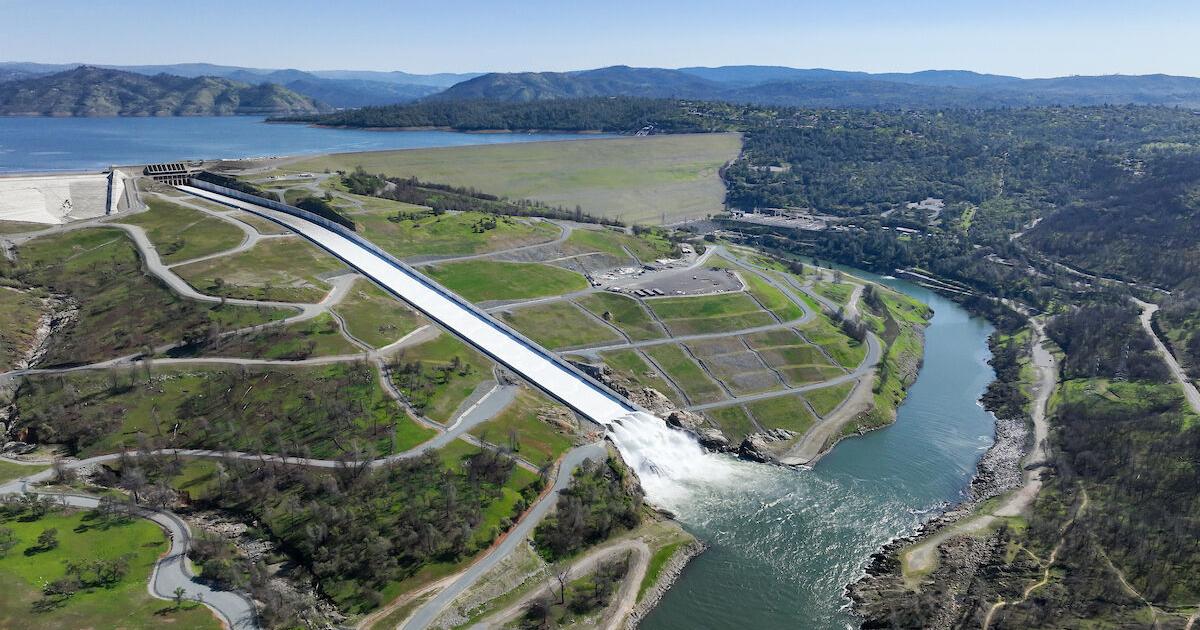
OROVILLE, Calif. – The Department of Water Resources has started increasing water releases from the Oroville-Thermalito Complex into the Feather River.
The move is in preparation for forecasted storms expected to last through the weekend, aimed at maintaining flood protection for nearby communities.
DWR anticipates using the Oroville Dam’s main spillway on January 5 for additional flood control measures. Runoff into Lake Oroville is projected to reach between 50,000 to 70,000 cubic feet per second by early next week.
Between mid-September and May, DWR manages Lake Oroville for flood control according to federal guidelines set by the U.S. Army Corps of Engineers. These regulations require maintaining a specific storage space to capture inflows from rain and future snowmelt, ensuring protection for downstream communities from potential floods.
Northern California experienced a dry spell in early December, but recent atmospheric river-driven storms have significantly increased reservoir storage at Lake Oroville. The lake’s elevation rose by approximately 58 feet between December 12 and December 31.
Releases into the Feather River are coordinated with the U.S. Army Corps of Engineers and other water operators. Recreation users of the Feather River should stay alert as river flows are expected to be swift and cold, with potential changes based on weather forecasts.
The current Oroville Reservoir level is at 826 feet elevation, with storage at 70% of its capacity.
Total releases to the Feather River are 15,000 cubic feet per second, potentially increasing to 25,000 cubic feet per second on Monday.
Lake Oroville is the largest storage facility in the State Water Project, serving flood protection and supporting environmental and water delivery needs for 27 million Californians. DWR continues monitoring lake levels, weather forecasts, and mountain snow levels to optimize water storage and ensure carryover storage into next year.
Currently, Feather River flows through the City of Oroville are at 3,000 cubic feet per second, with an additional 12,000 cubic feet per second being released from the Thermalito Afterbay River Outlet, totaling 15,000 cubic feet per second downstream. DWR assesses Feather River releases daily.
The public can track precipitation, snow, reservoir levels, and more at the California Data Exchange Center, with Lake Oroville gage station identified as “ORO.”