
Published on January 3, 2026
Alexa Grae; Photo: Courtesy of Alexa Grae
Out Front! Festival Runs from January 3 through January 11, 2026
Opening this weekend through January 11th, Out-FRONT! Festival returns to Judson Memorial Church for its fourth edition, continuing Pioneers Go East Collective’s commitment to centering queer and feminist artists creating provocative works. The festival arrives at a moment when visibility, accessibility, and community-building feel especially urgent.
In this conversation with Dance Enthusiast’s Theo Boguszewski, members of the Pioneers Go East producing and curatorial team reflect on the festival’s enduring mission, its growth into a key fixture of New York’s January performance landscape, and the values—radical care, artistic rigor, and making the invisible visible—that shape Out-FRONT! as both an artistic platform and a cultural intervention.
Theo Boguszewskin for The Dance Enthusiast: What is the history of the name “Pioneers Go East Collective”?
Philip Treviño: When Gian Marco Riccardo Lo Forte and Daniel Diaz created the Collective, they named it after a Walt Whitman poem, Pioneers! O Pioneers!, about the search for a brighter future. And so it’s this very forward-thinking idea about how we can make brighter futures for our artists and our Collective.
Out-FRONT! is now in its fourth edition. How has the festival’s mission evolved since it first started?
Treviño: Our mission has always been dedicated to LGBTQ and feminist interdisciplinary artists, choreographers and filmmakers. What’s really exciting is that we’ve been able to get the funding to support more artists and expand the festival. We’re returning to Judson Church, and they have become a home that really allows us to grow.

Dominica Greene; Photo: Steven Pisano
Remi Harris: This is my second Out-FRONT! as part of the team. The mission hasn’t changed; we still want to promote queer and feminist artists who are doing boundary pushing work, asking tough questions, and who have really distinct perspectives. What’s great this year is that it’s something that has been folded into the January event schedule, and something that people are looking forward to. We’ve also started this partnership with JanArtsNYC, and having that extra support has been phenomenal.
It’s also been really incredible to find those pathways and opportunities to promote different voices and uplift the amazing work that we’re seeing. Pioneers has the NEXT! mentorship program, and to have artists in that cohort being funneled through and presenting work at Out-FRONT! has been amazing.
Can you each share a synthesis of your background, and what led you to getting involved with Pioneers Go East Collective?
Harris: I am a dancer and a choreographer, and also a curator and arts administrator. I was working at Center for Performance Research (CPR) during the year that Pioneers Go East Collective was one of the artists in residence. I saw that they were doing amazing things, and had this amazing partnership with Judson. They were presenting not only their own work, but the work of different artists. So I just kept in touch. Gian Marco and Philip reached out and said, “hey, we have some additional funding for some support. Would you like to support us with some admin work?” And I said, “absolutely.” I really wanted to help amplify their programs.
I’ve been really grateful to support the NEXT! mentorship program that I mentioned, plus Out-FRONT! and the Crossroads series, which is a works in progress series, and also the NEXT! education program. We do in-school and after-school dance classes for all ages.

Ian Askew;Photo: Machel Ross
Treviño: I came to New York in 2002. I started as a stage manager in dance with a bunch of companies and then worked my way into working as a designer. It was in late 2017 that I joined Pioneers Go East Collective; Gian Marco asked me if I could design one of the shows that we were doing at La Mama. And so that was my start with the company as a designer.
How do you each define your respective roles in shaping the festival’s identity?.
Treviño: Initially, when we started the festival, we had some artists that we had been presenting in our other curated series, the Crossroads series. There were many artists who wanted to expand their work into a slightly larger presentation besides Crossroads and also to show work during the APAP season in order to get more visibility. So that was really the initial idea behind the curation of Out-FRONT!.
Harris: It really is a collaborative process. We are all listed as co-producers for this festival even though we have different tracks or focuses. Throughout the year we’re always in conversation about artists that we’re excited about. We’re always going to see shows, and we have this running list of folks that we think would be a good fit for Out-FRONT! We have an open door policy so if someone is interested in presenting, they’re welcome to schedule a conversation with us. We’re about to kick off Out-FRONT! 2026, but we’re already thinking about 2027.
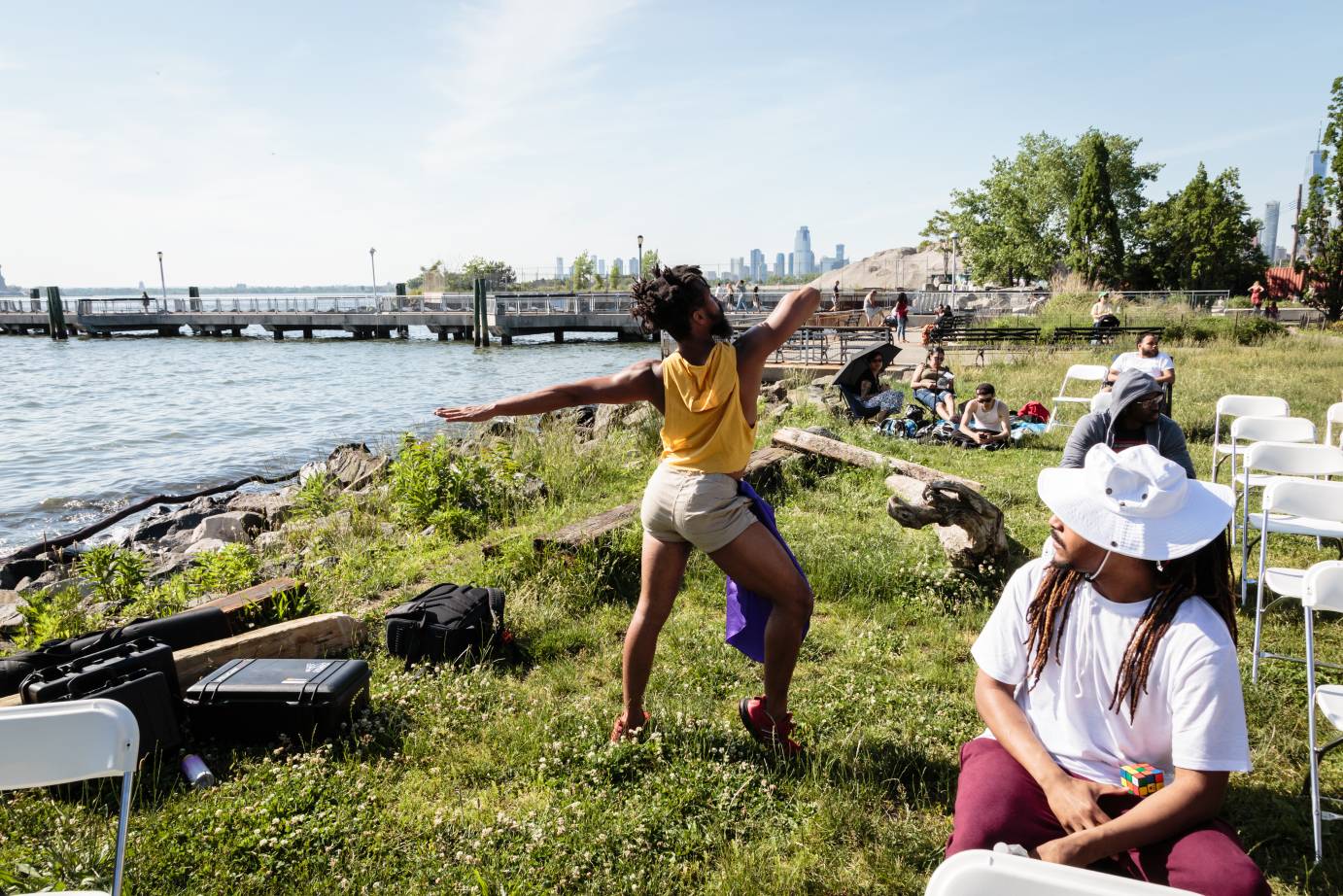
Johnnie Mercer; Photo: Courtesy of Johnnie Mercer
Judson Memorial Church has a long legacy of radical art making. What does it mean for you to situate OUT-Front! within that historical context?
Harris: Judson has a long history of uplifting radical voices. So it just made sense for Out-FRONT! to be there. As a dancer myself, performing in Judson is incredible. It’s something that everyone wants to do at some point in their career.
Treviño: The history of Judson within our downtown community is … well, books have been written about it. And when you’re in there, the space transforms and becomes magical in a way that really supports what we want to provide for our artists.
In the press release, Gian Marco Riccardo Lo Forte speaks about “making the invisible visible.” How does that idea translate into your curatorial and organizing decisions this year?
Treviño: Many of our artists are grappling with ideas about their identities. And a lot of times those identities aren’t visible. And so it’s about providing artists with a platform to be able to communicate their existence. Our communities have constantly been marginalized and we provide them with a space to have their voices heard. Of course, not all of our artists are necessarily making work that deals with their identities. Sometimes artists make work that is just about the work, but we provide support for both of those things to happen. For me, “making the invisible visible” is allowing artists to be able to have open dialogue.

Jo Warren; Photo Credit: Elyse Mertz
Are there any particular themes or threads that tie together the works that were selected for this year’s festival?
Harris: I know Philip said that not everyone touches on identity, but there are some really strong moments in some of the pieces that grapple with identity. Especially with DEI initiatives being rolled back, the theme of censorship has been something that I’ve seen throughout. How do I maintain my voice, my authenticity, who I AM, in an environment and culture that seems to want the complete opposite?
Treviño: Also references to history, and what it means to be a queer person and to be visible and invisible at the same time. How to be Out Front, and really stand in your truth.
Harris: I was thinking about how with social media, there’s so much visibility for our communities, but it’s in very small, 30 second clips on YouTube. And so the visibility is very accessible, but in a way that is commercialized and commodified. But, live performance is a way to connect to the performers on stage and their voices that cannot be done in any other way. And so it brings back the humanity of our artists and the visibility of their voices, and that is very much needed in our world right now.

Owen Prum; Photo Credit: Owen Prum
Can you speak about the experimental short films as part of the Out-FRONT! Film Series?
Harris: The collective interdisciplinary performances that merge storytelling and video have always been a component in Pioneers, so that’s something that we want to uplift in the festival as well. There are a lot of great dance shorts out there, and we wanted to carve out a space in the festival to present those. Each year we select six artists who are working within the film and movement realm with an interdisciplinary focus to share thoughts and themes. How do you encourage experimentation within the film medium to share lesser-known stories and explore that fusion between audio, visual language and new technologies and movement?
Treviño: And of course with the transition of COVID, all of a sudden we’re all filmmakers and we’re all making films. We had always incorporated film into our live performances, and so it was a natural transition for us.
Are there works that you’re particularly excited about this year?
Harris: We’re excited to present an artist from Norway, Corentin JPM Leven, who came through a relationship with the Norwegian Consulate. And that international relationship is something we’re really excited about and hope we can continue into 2027 and beyond.
I’m also excited to see the culmination of work for the artists who are in our NEXT! Mentorship program. Seeing the development of the work for the past two years through this program has been really inspiring.
Treviño: I’m excited about the pieces that have live music components because often that is something that is hard to pull together.
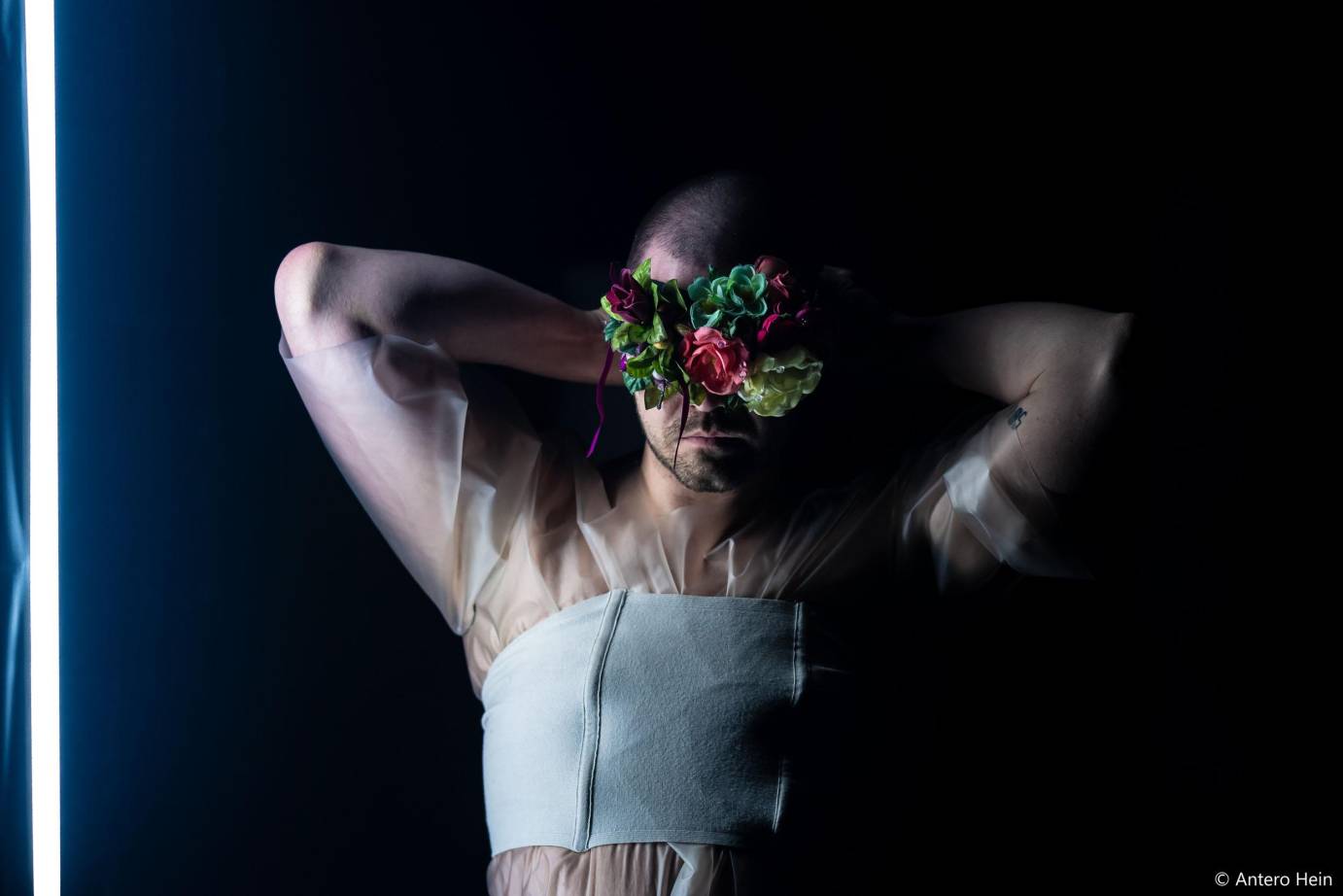
Corentin JPM Leven ;Photo: Antero Hein
How do you see the festival growing or evolving?
Treviño: This is our first year dealing with mentorship; I’m excited to see some of those artists go through the pipeline to presenting their work.
Harris: For me, evolution looks like continued relationships through the JanArtsNYC partnership, continuing partnership with Judson, and also possibly thinking of other satellite spaces that could be a cool complement to the festival. Last year we presented Angie Pittman and Kyle Marshall at the BAM Fisher Hillman studio for one night only.

Sugar Vendil; Photo: Raphael Galvis-Lan
In today’s political and social climate, what role do you think festivals like Out-FRONT! must play?
Treviño: I just posted on Facebook about the new rules and regulations around National Endowment for the Arts funding. A lot of them have gender restrictions and are anti-DEI. They are making it harder for people to create. So for me, it’s really about providing that support for artists that is missing and trying to make sure that we can continue on. We’re only in the first year of the current administration and unfortunately I don’t foresee it getting any better in terms of the support for artists.
Harris: I feel like art is under attack right now. Censorship is something that’s real and it scares me. Art has always been a reflection of the times and I think that’s going to continue to be the case. So I’m hoping Out-FRONT! will continue to platform artists who are responding to what’s happening in real time and fighting back and being radical and are not afraid to be their authentic selves.
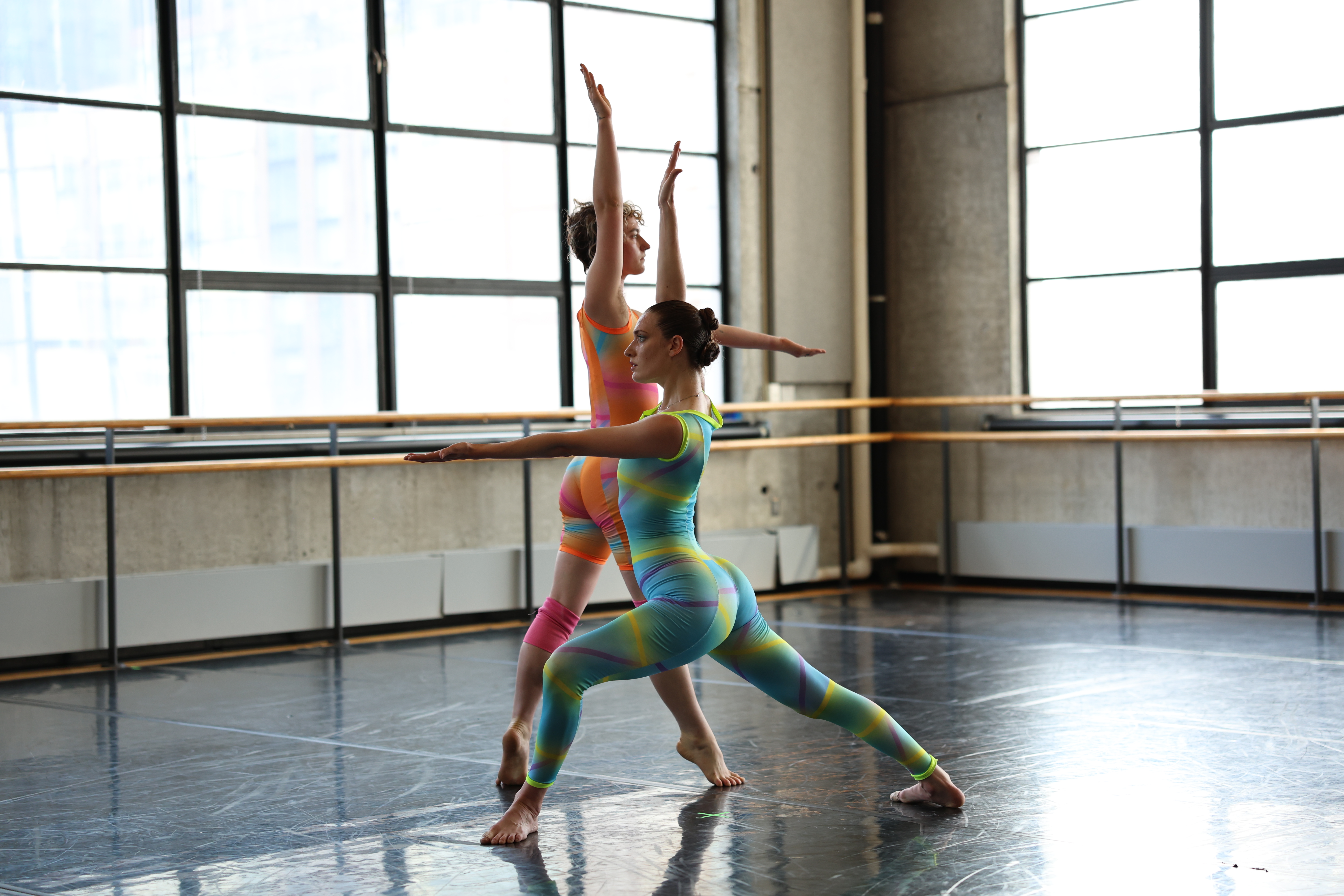
Suzzanne Ponomarenko; Photo: Suzzanne Ponomarenko Dance
The Dance Enthusiast Asks questions and creates conversation.
For more of The Dance Enthusiast Asks, click here.
The Dance Enthusiast – News, Reviews, Interviews and an Open Invitation for YOU to join the Dance Conversation.