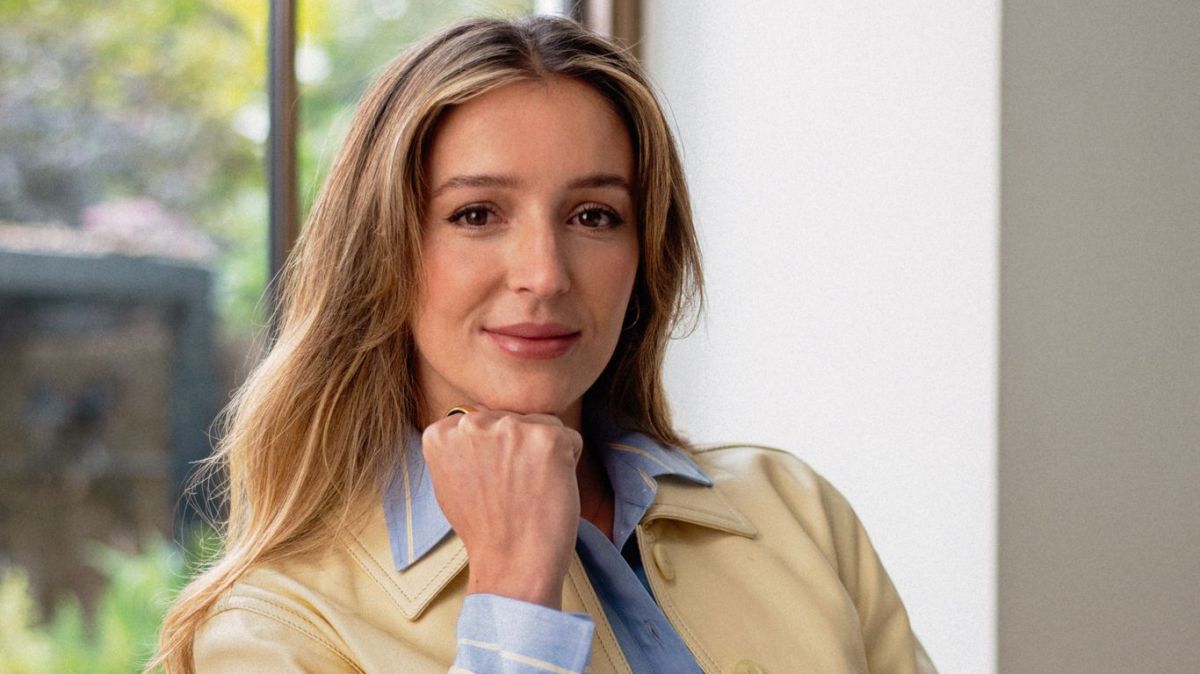
Ever since the doctor informed Laura Robson in 2022 there was no route back in, the former British No1 has channelled all the frustrated energy spent on fruitless years of rehab into so many new projects that she may never sit still again.
“There is some deep psychology in there I should probably unpack at some point,” she says with a laugh as she lists the various roles she now occupies.
While the majority of the tennis circuit enjoyed the short break between seasons, Robson was in the office at the All England Club in her capacity as player relations director amid crucial negotiations between the players, the four grand-slam tournaments and the tours about how to restructure an “unsustainable” calendar.
Next week she will resume punditry duties alongside Tim Henman on Sky Sports in the build-up to the Australian Open, before hosting coverage of the year’s first major on TNT Sports. From there the 31-year-old heads straight to Italy to present the Winter Olympics on TNT, too, while preparations intensify for the WTA 500 event at Queen’s in June, where she is the tournament director.

Robson’s busy 2026 starts with the build-up to the Australian Open
ROBERT PRANGE/GETTY IMAGES
Just for good measure, Robson has decided to run her first marathon in April. “I was looking at my training programme and the day of the Aussie Open final I have to run a 23k in the morning,” she says, laughing again.
“If you told me when I was 21 that I would be retired for a few years already, I would’ve been like, ‘No, that’s not possible.’ It never struck me that it could be taken away so quickly, so I think that’s why I’ve had this mindset since I properly retired of just saying yes to as many things as possible.
“Any job I want to do to the best of my ability. I had that in tennis as well, but going through all the ups and downs of playing, rehabbing, you feel like you’ve lost motivation because it’s so much to deal with.
“Now I can go into a job and prepare as best as possible and execute and it feels nice [unlike] when you do all the rehab and spend eight months working with a physio, doing everything humanly possible with a fitness trainer, and it still doesn’t go well.”
It is hard to believe it has been nearly two decades since Robson became a Wimbledon junior champion, aged 14. A top-30 player in the world and a 2012 Olympic silver medallist alongside Andy Murray in mixed doubles while still a teenager, she had the powerful game to become Britain’s female flagbearer for the next decade.
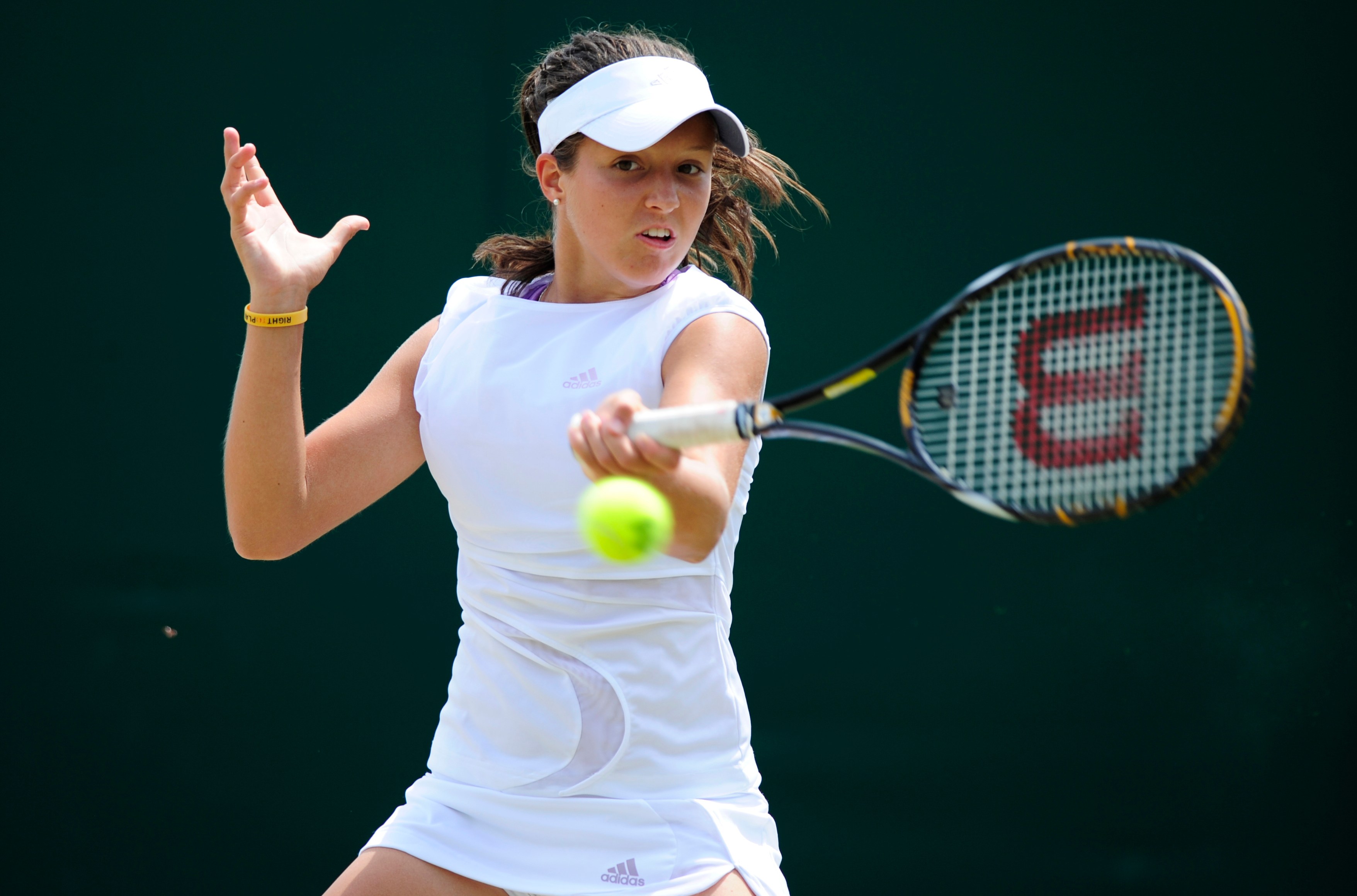
The left-hander won junior Wimbledon in 2008, but started struggling with injuries five years later
TIMES PHOTOGRAPHER MARC ASPLAND
But shortly after Wimbledon in 2013, when Murray claimed his first title and Robson reached the last 16, her body began to deteriorate. The fluidity of her forehand never recovered from two operations on her left wrist before three bouts of surgery failed to mend a persistent hip injury.
Robson’s last professional match was a $25,000 (about £18,500) event in Sunderland in 2019, when she withdrew after losing the opening set 6-0 against her compatriot Harriet Dart, but she persevered for three more years, stubbornly refusing to surrender her career despite the grief it kept inflicting until she was eventually told she had no choice.
“The hardest thing to accept was I just couldn’t play the way I used to and that it wasn’t my fault,” she says. “Your body lets you down. You want to hit the shot that you’ve hit a hundred times five years ago and it just doesn’t work any more.
“I officially retired because of my hip after the third surgery, I knew there was no way I could ever play a rotational sport again, but before that I had so many procedures done to my wrist it just never felt quite the same.
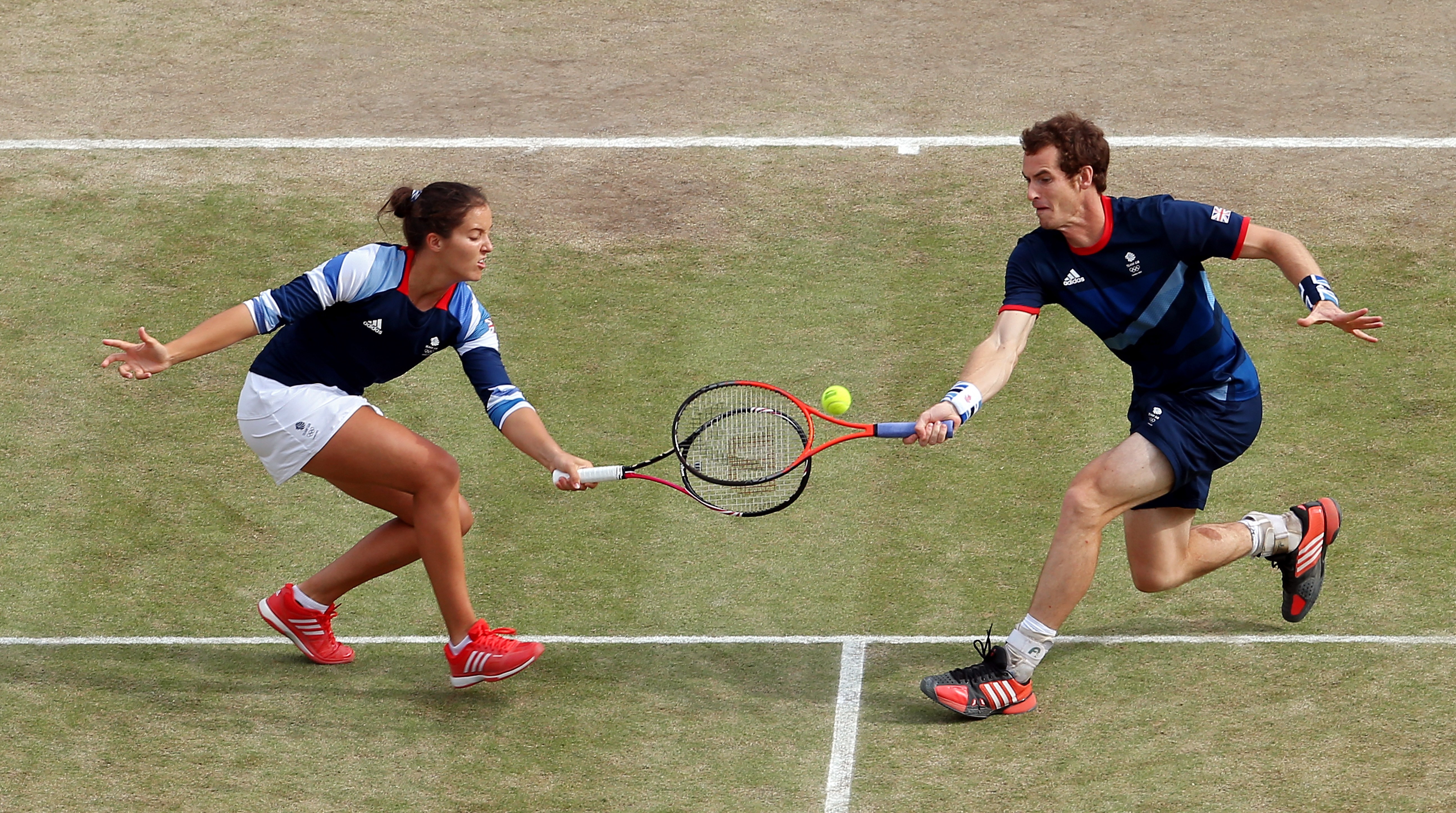
Highlights from Robson’s career include a silver medal alongside Murray at the 2012 Olympics
ELSA/GETTY IMAGES
“The last few years were such a mental battle that I just couldn’t do it any more, but in a way it was almost easier that a doctor said, ‘That’s enough,’ because otherwise you keep going on this cycle and you can’t get off the hamster wheel. It made it easier to let go and start a new life.”
That many of Robson’s former rivals from the juniors remain inside the world’s top 100 ensures the question of “what if” still lingers. “Maybe that’s not healthy, but it’s just human nature, isn’t it? But I’m far enough removed that I feel a lot healthier about it,” she says.
Therapy sessions during those injury lulls helped reach that sense of perspective too. “I did them on and off for years and definitely needed it at certain points in time. It’s only going to help you. I had so much that I felt was weighing on my shoulders. I just needed to get it all off my chest.”
Robson first ventured into broadcasting during one of those many periods of convalescence, initially working for BBC Radio 5 Live during the grass-court season. It just so happened that Steve Rider, the former sports presenter, is the father of one of her best friends and has remained a constant sounding board. Gigi Salmon, who works with Robson on Sky Sports, has acted as a mentor, too, while she also sought advice from the likes of Laura Woods and Gabby Logan before she moved into television.
“I think it’s pretty easy to tell when someone’s not being authentic to themselves, so I’ve asked a lot of people for advice about how to get better but still come across naturally,” Robson says. “I really enjoy presenting tennis, it’s kind of within my domain, but I want to be challenged and feel like I’m not stuck in one sport for the rest of my career, so when I was asked if I wanted to do the Winter Olympics it was the easiest yes ever.”

Robson, pictured with the Princess of Wales during Wimbledon in 2023, is player relations director at the All England Club and is also tournament director of the WTA event at Queen’s
JOHN WALTON/PA WIRE
Tennis pundits tend to be less opinionated than those in football and cricket, and Murray has shied away from such roles because the criticism used to grate with him or cause him to question his coaches. Robson is friends with many of the British players but operates by the rule that “if I wouldn’t say it to their face, I wouldn’t say it on TV”.
“I’m never trying to be overly critical but if someone’s played a bad match, you can’t ignore that fact,” she says. “Equally, I remember when I was playing, initially I would take things people said quite hard but then you watch the match back or speak to them and realise they were right most of the time. In a way, the players that I’m closer with are probably the ones that I can sound the most harsh about.”
There are some parallels between Robson’s and Emma Raducanu’s rises, not least the attention and injuries that have hindered the latter since winning the US Open in 2021.
“It’s hard to imagine the sort of pressure she has felt and it almost increases if she drops in level because everyone is like, ‘What’s going on?’ Before any big tournament, we’ll do a run of interviews for Sky or TNT or whoever and Emma is always the No1 subject that comes up,” Robson says.
“I think where she’s at at the moment is very good considering where she started in 2025. She’s back in the top 30 and seeded for a grand-slam again. Most people would jump at the chance for a season like that and yet there’s still this feeling among some of the press that it’s not enough.
“Well, if you compare her to [Aryna] Sabalenka, who’s winning every other week, of course, but that’s not to say she won’t eventually get there. It’s just going to require time and multiple seasons playing at this level. It’s still building blocks, but I’m just happy that she’s in the mix. It’s great when she does well. There’s almost no one that moves the dial like she does.”
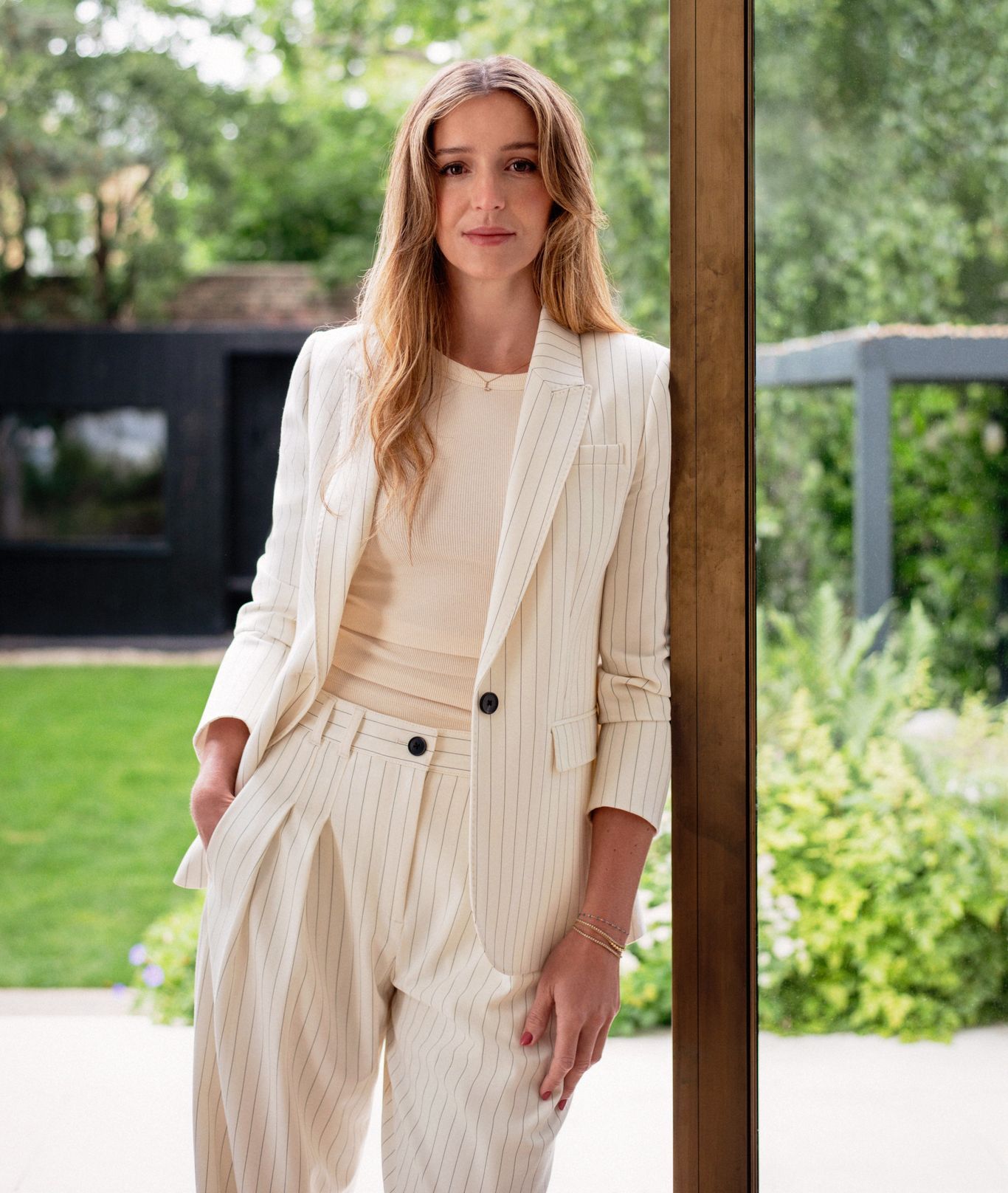
“It never struck me that [my playing career] could be taken away so quickly, so I think that’s why I’ve had this mindset since I retired of just saying yes to as many things as possible,” the 31-year-old says
Robson regrets persevering through pain during that 2013 season and so Raducanu’s decision to take nearly a year off to recover properly after undergoing surgery on both her wrists in 2023 seems astute. But an increasing number of players are succumbing to injury and burnout owing to the relentless nature of the tennis schedule — top WTA players must play in ten 1000-level tournaments (seven of which now last 12 days) and six 500-level events, along with the grand-slam events, or else risk fines and world ranking points deductions — with Carlos Alacaraz and Iga Swiatek among those who have regularly complained. The four slams have driven proposals to restructure the sport’s calendar, with Robson party to those boardroom discussions.
“It feels like such a pivotal time and there is a lot going on behind the scenes and part of my role [at Wimbledon] is to keep the lines of communication open [with the players],” Robson says. “I have the mindset of a former player, but equally I can understand from the tournament perspective because of the hard work we put in to make Queen’s even happen in the first place [last summer’s tournament was the first WTA 500-level event at the venue in more than 50 years], so I sit on both fences a little bit, but I think most players don’t feel [the schedule] is sustainable.”
Before she was made tournament director at Queen’s, Robson cut her teeth running a distinctly less glamorous ITF 25k event in Loughborough.
“Out of all the things I’ve done, that was definitely the hardest week,” she says, with her tasks there even extending to chauffeuring the players from their hotels to matches. After graduating to directing the Nottingham Open in 2023, Robson managed everything from Murray’s late wildcard entry that meant ripping up match schedules at the 11th hour and enhancing security protocols to delivering Cameron Norrie’s and Heather Watson’s forgotten laundry and constantly refilling the sweet bowl in the players’ lounge.
“Every morning I had to pop into Tesco Extra, you wouldn’t believe how fast they go,” she says. But a larger team at Queen’s means Robson’s main focus can be on luring marquee players to the event. “We had a sponsor last year that gave us sweets.”
It is an invariably hectic schedule of her own — with what little downtime there was now consumed by her ambition to break 3hr 30min in the marathon — but, after Robson’s life revolved so singularly around her playing career, there is a comfort in not having all of her eggs in one basket.
“I’m in this happy medium now where I can do a bit of everything and all of the things that I enjoy,” she says. “It’s just really fulfilling.”