Ask any millennial woman how much of their lives have been consumed by hating their body and, regardless of their size, I can promise you, it’s monopolized far too much.
If the tabloids at the grocery store check outs taught me anything, even women with supermodel bodies can be taught to despise themselves based on their reflection or pants size.
That’s because diet culture isn’t just a neutral set of health guidelines, it’s a sophisticated multi-billion-dollar system engineered to profit off people (especially women) feeling perpetually inadequate.
Like so many with perfectionist tendencies, my descent into diet perfection started harmlessly enough. I, like many other girls with anxiety and ADHD, had suffered from digestive maladies my entire life, gifting me a catch-all condition diagnosis of IBS (Irritable Bowel Syndrome).
It took decades – and becoming a registered dietician – to finally free myself from the food noise that had controlled my erratic eating habits and get in the best shape of my life as I approach my 40s, without drugs, counting calories, or even restricting my favorite treats.
As a teenager, when my anxiety was managed, I generally felt just fine. But when I left my small town and moved to Toronto, the flares came on full force. I was ready to do whatever I had to do to feel better.
I didn’t realize it then, but this is often the bait of wellness culture – the illusion of purity disguised as care.
At the recommendation of a family friend, I visited a homeopathic naturopath who told me I had a mysterious sugar intolerance (dietitian fact check: that was fake news).

Women’s magazines teach us that even those with supermodel bodies can be taught to despise themselves based on their reflection or pants size
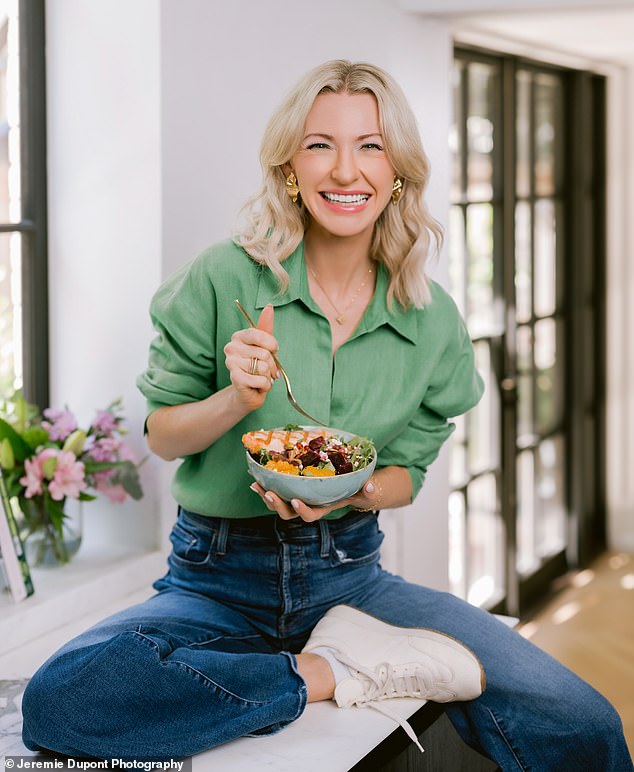
After just a few months, the food noise petered out, the incessant cravings disappeared, and Abbey’s sleep, digestion, energy and mood improved
Naturally, the supposed cure was a full sugar detox. I took these instructions to heart, tossing out every sauce, dressing, snack or drink that featured an ingredient ending in ‘-ose’ (shorthand for various forms of the sweet stuff).
After a few weeks of strict abstinence, some of my IBS symptoms were feeling better and bonus! I lost some weight. The compliments poured in with praise for my ‘discipline,’ my ‘health,’ and my evidently more toned body.
Naturally, my next thought was: ‘Well, if cutting out sugar gets me a round of applause, cutting out more bad things will get me a standing ovation.’
I then set my sights on fat.
Very quickly, my once-balanced diet of colorful salads, turkey burgers, and chocolate-chip cookies morphed into something joyless, bland and stale. What began as an experiment to feel better had very quickly swelled into a gripping fear of anything deemed unhealthy.
And as my list of ‘safe foods’ shrunk, so too did my increasingly feeble frame, stealing friendships, hobbies, laughter, and my identity.
It wasn’t yet a formal diagnosis, but I now know what I was suffering from in my late teens was an eating disorder called orthorexia – often considered an obsessive pursuit of dietary purity and healthfulness.
In reality, I was less healthy than I’d ever been.
That’s when the binges started. After dragging myself through months of dry kale and microwaved egg whites with sugar-free hot sauce, I would binge on all the foods I had restricted. Mountains of fries, pizza, pasta, cheesecake, donuts, and ice cream, all within a few hours.
With each week, the restrictions tightened, the binges swelled, and I plunged into a deeper state of depression and shame.
Eventually, as the validation I so desperately sought turned into whispers and words of concern, I knew something had to change.
As part of my recovery, I worked with a registered dietitian who helped me slowly get my weight to a healthier place, while also challenging the food fears that had overtaken my life.
One of the exercises I found most helpful was repeated exposure to my forbidden foods.
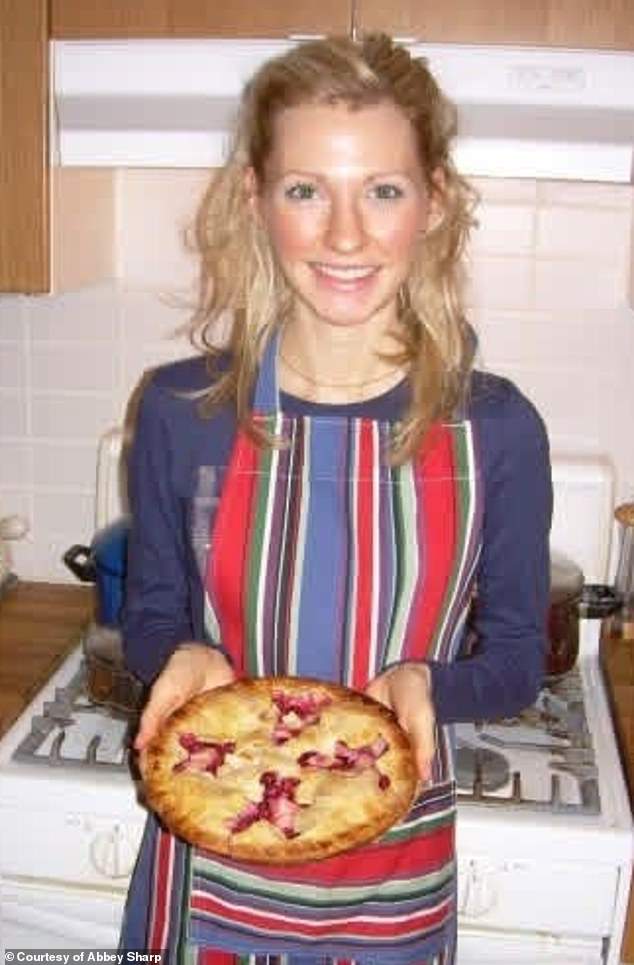
When Abbey moved to Toronto, her anxiety flared and her eating grew more disordered

As part of her recovery, Abbey worked with a registered dietitian who helped her slowly get her weight to a healthier place
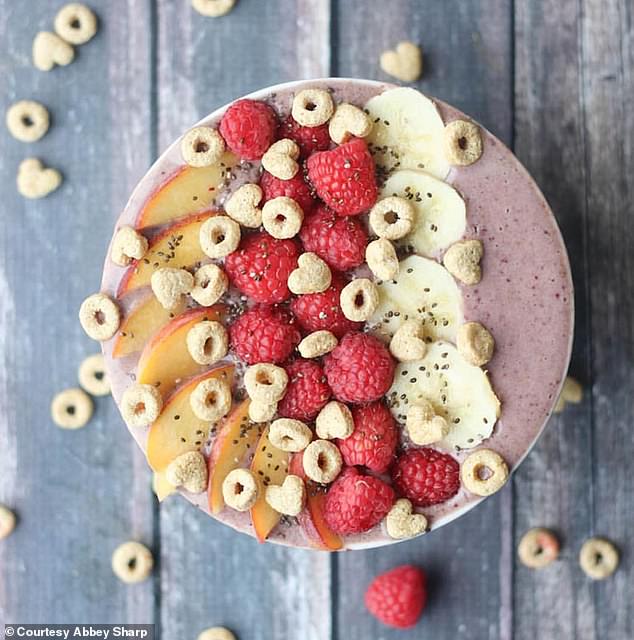
Abbey still enjoys her Lucky Charms, but eats them in a more healthy combo
When I was in the throes of my eating disorder, I had an obsession with sugary cereal. Lucky Charms, Cinnamon Toast Crunch, Frosted Flakes (oh my yum). If it was in my house on cheat day, I would polish off an entire box.
So I started to eat Frosted Flakes every day. To my surprise, nothing terrible happened. In contrast, something quite wonderful ensued. I stopped caring about it. Eating cereal every day knocked it off its pedestal, loosened its moral grip and neutralized the power it held over me for so long.
I continued this exposure therapy with lots of forbidden foods that I had been binging on, and in many cases, I learned that I don’t even like them that much.
In other cases, I discovered that I did still enjoy a previously forbidden food (pasta, bread, cheese – get at me!), but I just felt better when I ate them in moderation or alongside other nutritious foods.
This is when my Hunger Crushing Combo Method was born.
I found out for myself what is already backed up by science: that the simplest way to silence the food noise in our heads isn’t with drugs, calorie counting or the latest detox.
Instead, by combining two or more of the Hunger Crushing Compounds – protein, fiber, and healthy fats – we can turn our favorite ‘junk foods’ into balanced meals.
In the process, we crush the physical hunger and emotional cravings that are keeping us from reaching our healthiest happiest weight and a joyful relationship with food.
For example, despite all the exposure I gave myself with sugary cereal, I still love it.
But when I removed the morality around it, I learned that eating a mountainous bowl of what we call ‘naked carbs’ in their birthday suit doesn’t always feel great. I might feel sluggish, I might feel a little backed up, and because naked carbs are rapidly digested and absorbed, I’d likely feel hungry again (and often a bit irritable thanks to the blood sugar crash) shortly after.
In contrast, foods rich in protein, fiber, and healthy fats are the perfect anchors for naked carbs because they stimulate satiety hormones, quiet food noise and hunger hormones, balance blood sugars (so no spikes or subsequent crashes), and provide your body with the nutrients it needs to support focus, digestion, sleep and more.
In my case, I learned that if I build a big ol’ bowl of Greek yogurt (protein), added a handful of berries (fiber), a couple spoonfuls of nuts (healthy fats), and then topped it off with colorful magically delicious ‘breakfast marshmallows,’ I achieved both physical satiety and emotional satisfaction.
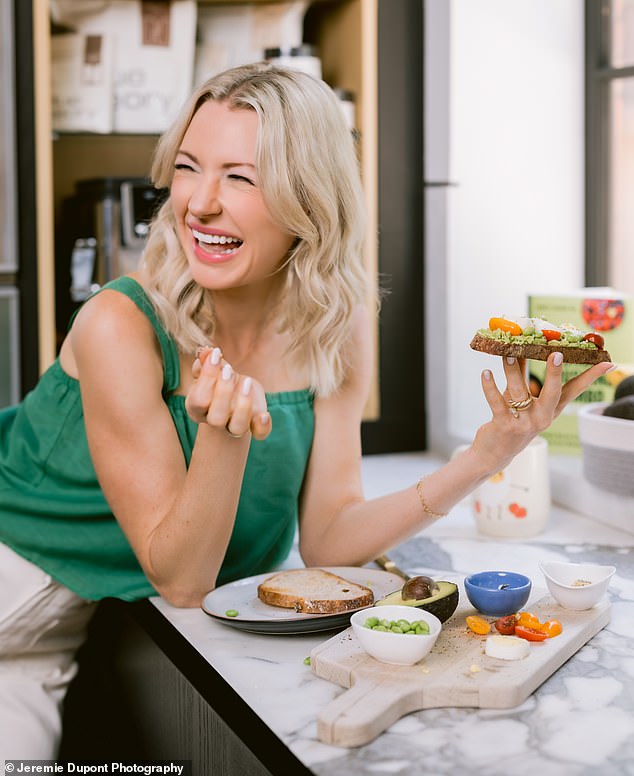
Using the Hunger Crushing Combo method, you can still eat naked carbs like toast, but combine them with protein, fiber and healthy fats
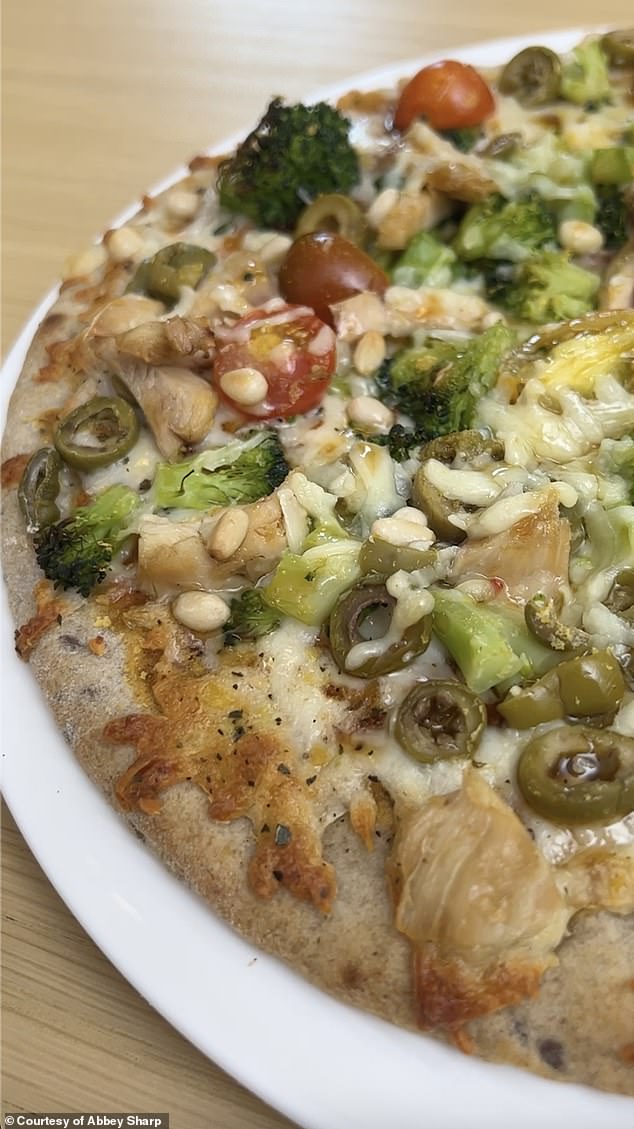
On family pizza night, load your slice up with grilled chicken, mixed vegetables and olives
If you love cookies, try serving them on a snack plate with pear (fiber), walnuts (healthy fats), and cheese (protein) to temper the blood sugar spike.
On family pizza night, load your slice up with grilled chicken, mixed vegetables and olives.
And if you’re a breakfast bagel lover, build a sandwich with canned tuna, sliced veggies and greens, and smashed avocado.
After just a few months of adding Hunger Crushing Compounds to the naked carbs I loved, the food noise in my head petered out, the incessant cravings disappeared, my sleep, digestion, energy and mood improved, and I settled into my healthiest, happiest weight and body.
And this isn’t just my unique response – we have so much research to support why a nourishing abundance mindset, instead of the restrictive mentality I was trapped in for so long, is the key to long-term behavior change.
When we’re no longer distracted by the impending doom of the next D-day, we have the mental capacity to listen to our bodies’ true needs and wants, and space in our lives for acts of self care that actually fill our cup.
The Hunger Crushing Combo Method works because it’s not another restrictive diet that depends on your willpower to white-knuckle through discomfort. It works with your biology and psychology to help optimize your health, regardless of your goal, life stage, or preferences.
For example, research suggests that combining foods rich in fiber, protein and healthy fats can help reduce blood sugar spikes by 30 to 50 per cent, can spontaneously (and effortlessly) help support excess fat loss and muscle growth, and can significantly reduce the long term risk of heart disease, cancers, type 2 diabetes and other chronic disease.
And it does all of this without restriction, deprivation or denial.
No risk, all rewards. No scarcity, just abundance. No fear, just loads of delicious, nourishing food.
It’s simple science and a massive mindset shift. Welcome to a brand new world of fueling your body with confidence and joy. You’ll never look at a box of kids’ cereal the same way again.
The Hunger Crushing Combo Method by Abbey Sharp is published by Balance, January 13