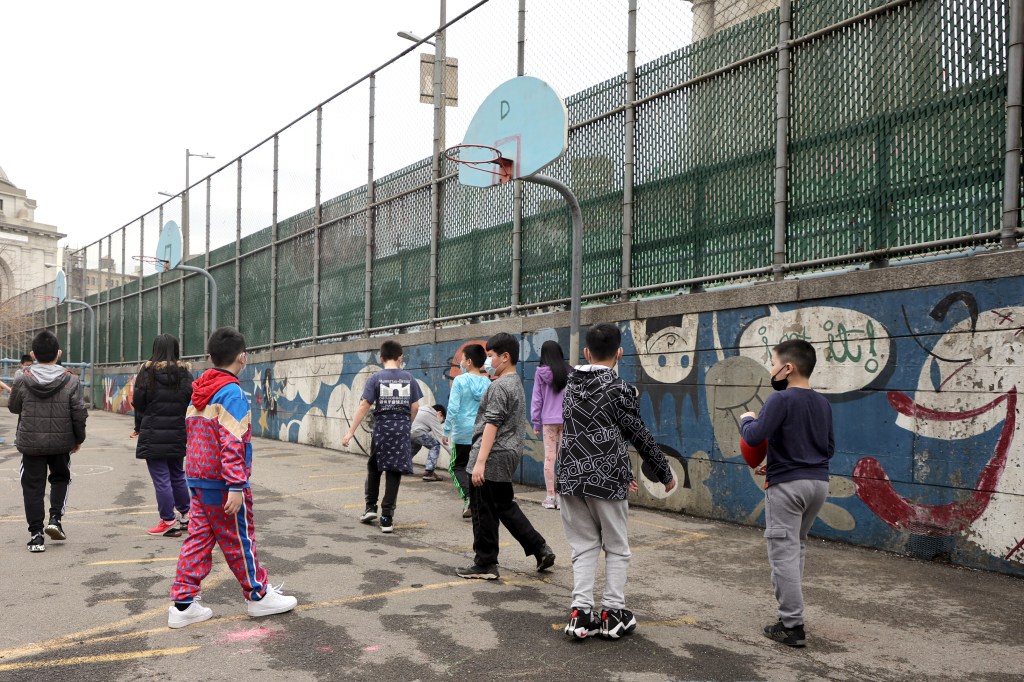
As classes resume tomorrow after winter break, recess remains broken in public schools across New York City. Every minute of the school day counts, both inside and outside the classroom. However, recess is often chaotic and unstructured. A study by the American Academy of Pediatrics shows access to developmentally appropriate play can promote cognitive, language, and self-regulation skills, as well as social and emotional skills that build executive function in a child’s growing brain.
In a large and complex public school system, recess can fall through the cracks. A City Council report on recess from the 2024-25 school year found that 14% (around 90,000) of K-12 students in schools across the five boroughs do not get enough physical activity during the school day. Fixing this problem calls for a strategic and comprehensive approach.
Asphalt Green’s Recess Enhancement Program (REP) strikes a balance between encouraging the free play necessary to build confidence and develop social skills, while also structuring the time to foster inclusivity, fitness and fun. In practice, this means keeping rules and requirements to a minimum while our enthusiastic coaches organize engaging and welcoming activities and games for children of all abilities and ages.
Social engagement helps children develop important physical and emotional skills, which leads to improved academic performance. A study by Asphalt Green and Hunter College conclusively found that students who participated in REP received 52% more vigorous physical activity compared to those not in REP or in unguided traditional recess — a clear demonstration that structured play allows students to receive ample physical activity.
But this only happens when recess is done correctly. As we continue to emerge from the pandemic, it’s clear that the development of strong social skills is critical for children to thrive. With childhood obesity and comorbidities at an all time high, utilizing recess for social physical activity has never been more important.
There is also a direct link between non-native English speakers being disproportionately affected by this lack of physical activity, such as the 36% of non-native English speaking students in Eastern Queens (District 23) and 33% in Lower Manhattan (District 1) that are not getting enough physical activity during the school day. Schools need to recognize and advocate for resources on these critical non-classroom moments that are equally as important to a student’s success at school and in developing lifelong healthy habits.
While organizations such as The American Academy of Pediatrics and the Centers for Disease Control have cited recess as a crucial component to the school day, the majority of research findings focus solely on recess as a way to receive physical activity, without emphasis on the quality or style of recess being offered.
A bill introduced by state Sen. James Skoufis would direct the state commissioner of education to conduct a study of recess held in charter and public elementary schools from kindergarten through sixth grade. The proposed study would collect data on the frequency and duration of recess, if recess is supervised and whether it includes structured or unstructured play, among other variables.
REP stands apart from different recess programs across the country, as other models require significant training and placement of coaches in schools, making it harder for instructors to balance free play with structure, as well as costs being too expensive for schools to afford. Asphalt Green provides partial funding for 35 schools that participate in REP, while the rest of the cost falls on the school to cover.
With budget cuts, some schools can no longer continue to participate in REP, resulting in children losing out on critical playtime and opportunities to be active during the school day. The size and complexity of New York City’s public school system requires buy-in from local elected officials, the city Department of Education, and school leadership; Asphalt Green tailors REP to each school they run by programming activities based on their students, school structure, and physical space–all with quantifiable results.
With each passing school year more and more children are losing critical opportunities for physical and social activity that set them up for a successful academic school year and healthy long term habits. The City Council and New York City Department of Education should commit to funding recess programming to ensure students are set up for success in every aspect of their academic experience. Investing in REP would ensure students develop these important life skills and attributes that last long beyond the classroom and childhood.
The time to fix recess is now. Let’s help New York City public school students run into the future with confidence.
Brackett is the CEO of Asphalt Green.