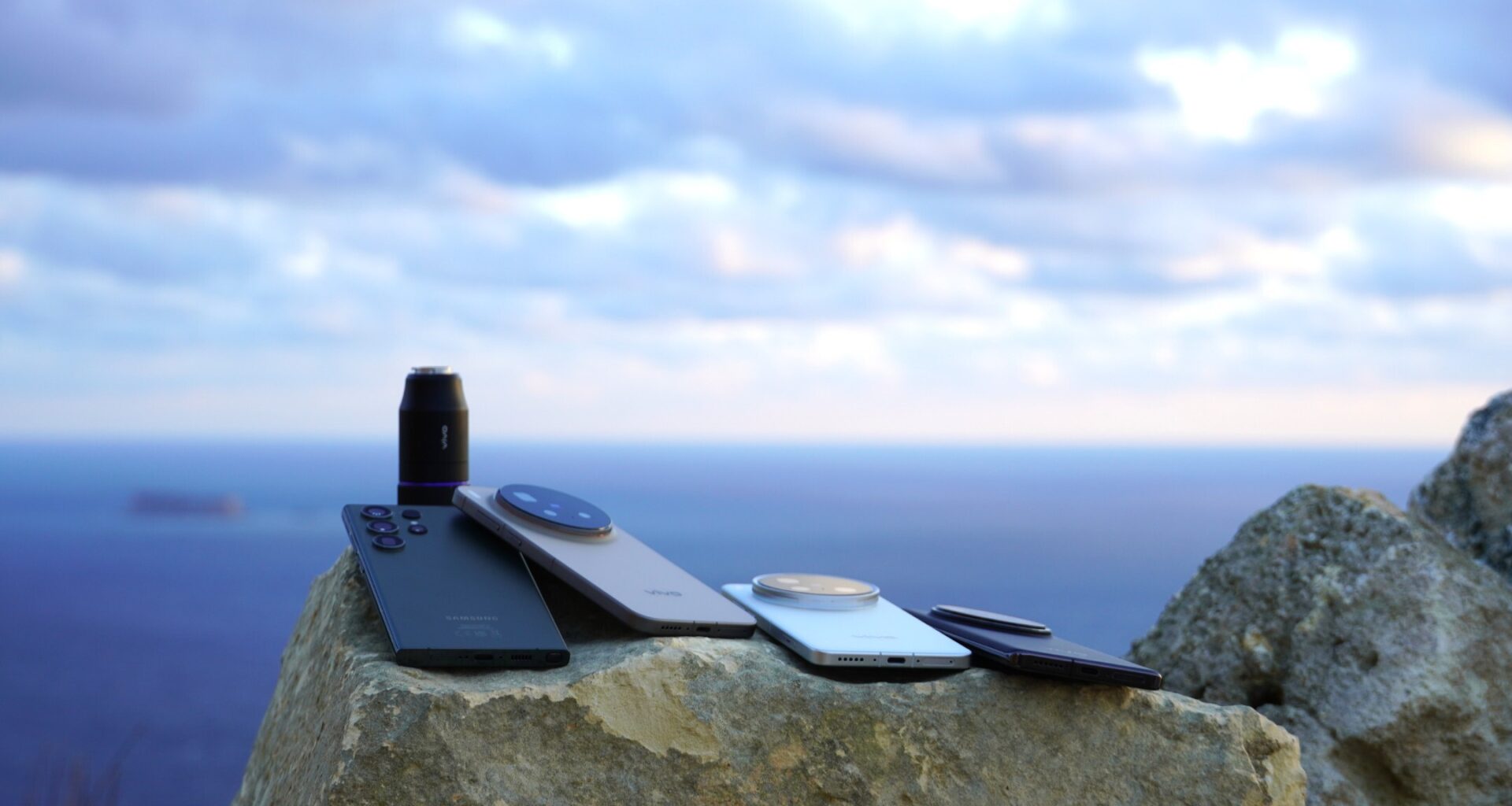
My conclusion from this fairly extensive photo comparison is as follows: aside from the ultra-wide-angle camera, the Vivo X300 Pro is a worthy successor to the Vivo X200 Ultra and is no longer really comparable to the Vivo X100 Pro, despite the latter being only two years old. In everyday use, I hardly miss its 1-inch sensor; in many situations, the LYT-828 in the Vivo X300 Pro delivers a similar level of detail along with more dynamic images. The front-facing camera has also improved significantly and now offers a wider field of view.
Where the Vivo X200 Ultra still has a clear justification is the camera button – which may return on the Vivo X300 Ultra, but has already been removed from the Vivo X300 – and in its ultra-wide-angle camera, which remains unmatched for still photography at the moment. There is little reason to mourn the Galaxy S23 Ultra anymore, even though its 10x telephoto lens can still produce surprisingly good, if sometimes rather flat-looking, images in daylight.
If you ordered the camera kit with the Zeiss teleconverter for the Vivo X300 Pro, it serves as a capable replacement, even if carrying an additional lens is not always convenient. The results produced by this combination, both during the day and at night, speak for themselves. Together wih the advantages already discussed in Part 1 – such as the significantly improved 4K120 video recording and the extensive options for customizing images to suit individual preferences – the Vivo X300 Pro positions itself convincingly as a flagship camera smartphone for 2026. A detailed review covering the rest of the hardware beyond the camera is available separately.